12 Best Places in Europe for Christmas

Hamburg skyline in winter with Christmas trees

Hamburg, Germany

The best places in Europe for Christmas arrange themselves around firelight, ritual, and table. A market stall in Nuremberg or a midnight choir in Seville are the substance of a European Christmas, built over centuries. What makes the time around Christmas and New Year worth crossing an ocean for is that so many places compress their most distinctive traditions into this time, so a single trip can move through several completely different versions of "festive" without repeating itself.

That variety is also what makes this the hardest season to plan well on your own. A market in one town closes by December 23, a Midnight Mass seat in another requires arriving hours early, and a Wigilia dinner with a local family isn't bookable through a hotel concierge. The destinations below were chosen because each does something the others don't, be it a specific ritual, food, or reason it belongs on this list rather than a generic one.

Extraordinary travel begins with the human touch and our destination specialists design every journey with meticulous care and attention to detail. No two Zicasso itineraries are the same because no two travelers are. Your specialist builds a private, fully personalized route around your pace, interests, and access to people and places most visitors never reach. They work with local guides, hoteliers, and artisans to arrange your time so you can savor each city's rituals, whether that means a private tasting of French bûche de Noël, an evening watching Croatian bakers prepare cabbage rolls and flatbread in a family kitchen, or a private morning with a Portuguese family learning how they set the table for bacalhau on Christmas Eve.

1. Italy

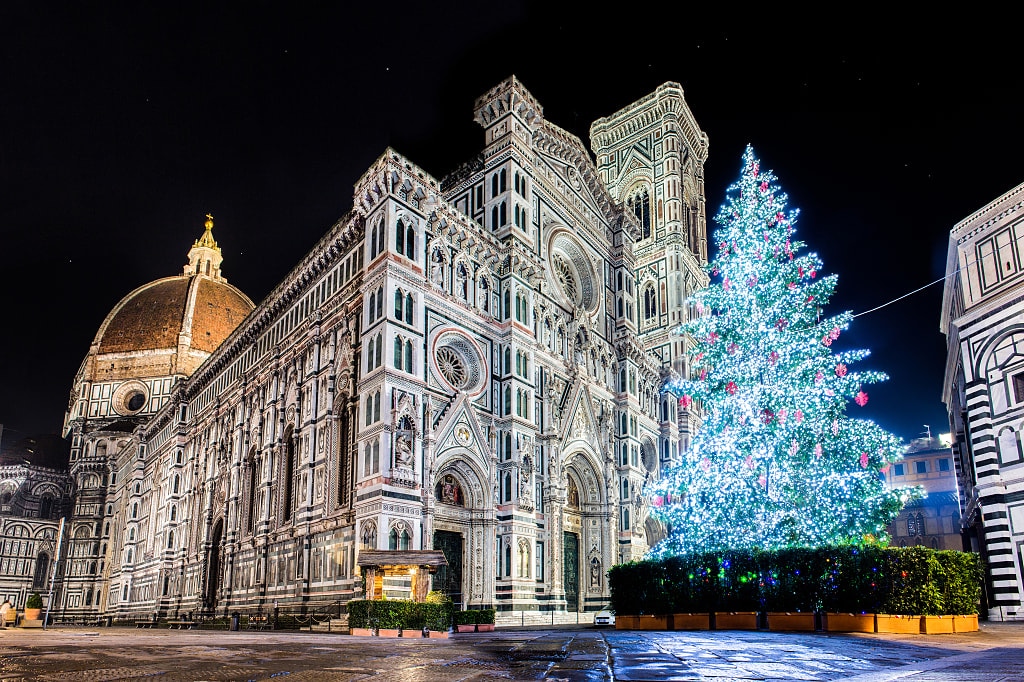
Christmas tree light up at night, in front of the Duomo in Florence, Italy
Florence, Italy

Most "does-it-all" claims fall apart under a real itinerary because moving between registers usually means moving between regions that don't talk to each other. Italy is the exception due to its geography: a north-south spine compact enough that alpine snow and coastal light sit a few train hours apart, with rail infrastructure built to move between them without a wasted day. That's why, in a single week, you can enjoy Midnight Mass at the Vatican and a day on the Dolomites' slopes as one continuous story rather than two vacations stitched together.

What to Expect

  • Market Circuit: Roman Christmas markets showcase carved nativity figures and blown-glass ornaments alongside panforte fruitcake and cups of vin brulé, turning iconic squares into intimate winter hubs.
  • Sacred Midnight: Midnight Mass at the Vatican, with seating privately arranged in advance, places you at the heart of Catholic Christmas, where incense, choral music, and candlelight inside St. Peter's Basilica fuse into a singular night.
  • Alpine Slopes: Skiing the Dolomites pairs dramatic limestone peaks with mountain rifugi serving spezzatino stew and creamy polenta after a day on the runs.
  • Sweet Rituals: Panettone studded with candied orange peel and pandoro dusted in vanilla sugar reveal how differently northern and southern Italy bake for the season.
  • Epiphany Legend: La Befana, the folk figure who delivers chocolate coins and licorice on January 6, extends the celebration well past the 25th into a second round of gift-giving.

A Journey Through History

  • Roman Roots: Italy's Christmas Eve and Epiphany traditions trace back to pre-Christian winter solstice rites that the early Church absorbed rather than erased.
  • Papal Continuity: Midnight Mass at the Vatican descends from a liturgical tradition the Basilica has hosted since the earliest centuries of the papacy.
  • Regional Divergence: North-south political fragmentation before Italian unification in 1861 is why alpine and Mediterranean regions still bake, cook, and celebrate so differently.
  • La Befana's Origin: The witch-like gift-bringer of January 6 predates Santa Claus in Italian folklore, tied to Epiphany rather than Christmas Day.
  • Renaissance Nativity: Italy helped popularize the presepe, or nativity scene, a tradition credited to St. Francis of Assisi's 13th-century living nativity in Greccio.

Where to Enjoy Your Visit

  • Rome: Piazza Navona's Christmas market and the Vatican's Midnight Mass anchor a capital that carries the sacred and the festive at once.
  • Cortina d'Ampezzo: This Dolomite resort town pairs alpine skiing with a chic, storybook village center for an après-ski Christmas evening.
  • Florence: The city's smaller, artisan-focused markets and its Duomo make for a quieter, more refined take on Tuscan Christmas.
  • Bolzano: Sitting at the edge of German-speaking South Tyrol, Bolzano's market blends Austrian gluhwein culture with Italian food and architecture.
  • Venice: St. Mark's Square and a Christmas gondola ride offer one of Europe's most photographed Christmas backdrops.

Learn more: Best of Italy Vacation in 12 DaysItaly travel guide

2. Germany

Sledding at the Ore Mountains Nature Park in Germany
Ore Mountains, Germany

The case for Germany doesn't range across traditions the way it is for Italy; it's depth within one tradition or market culture, expressed town differently by town. Dresden's Striezelmarkt carries the weight of its centuries-long history and a stollen-baking culture that predates the market. Nuremberg's Christkindlesmarkt runs on a guild-era toy-making legacy that still shapes what's sold in its stalls. Trier folds Roman ruins into a market square that feels older and quieter than its more famous rivals.

None of these are the same experience wearing a different name and Germany's rail network is precise enough to move between all three without losing a day to logistics. This is what makes a German Christmas market tour work as a single trip rather than three separate day visits.

What to Expect

  • Market Tradition: Christmas markets in Dresden, Nuremberg, and Trier each carry their own specialty: wooden toys, hand-painted nutcrackers, mugs of glühwein and kinderpunsch, with no two stops repeating the last.
  • Forest Runs: Skiing the Black Forest blends wooded trails with village hospitality, where mountain huts serve käsespätzle and smoked sausage after the slopes.
  • Spiced Comforts: Cinnamon-and-clove glühwein and lebkuchen gingerbread, iced or chocolate-dipped, are the flavors that define German Christmas baking and brewing.
  • Castle Circuit: A private, after-hours tour of Neuschwanstein or Heidelberg pairs historic architecture with illuminated courtyards, giving the season an added layer of pageantry.
  • Road Journey: A Bavarian road trip threads alpine peaks and lakeside villages, with stops for schneeballen pastries and warming schnapps.

A Journey Through History

  • Medieval Origins: Dresden's Striezelmarkt is widely credited as one of Europe's oldest Christmas markets, dating to the 15th century.
  • Guild Craftsmanship: Nuremberg's toy-making reputation grew out of its medieval metalworking and woodworking guilds, whose techniques still shape the market's handmade goods.
  • Advent Custom: The glühwein and gingerbread stalls trace back to Advent traditions that turned market squares into gathering points during the darkest weeks of the year.
  • Royal Patronage: Many German Christmas markets grew under the patronage of local dukes and electors, who used the season's festivities to project civic pride.
  • Reunification Revival: Markets in the former East Germany, including Dresden's, saw a surge in scale and visibility after reunification restored open access to their historic squares.

Where to Enjoy Your Visit

  • Nuremberg: The Christkindlesmarkt in the Hauptmarkt square is one of the most visited in the world, framed by Gothic church spires.
  • Dresden: The Striezelmarkt in the Altmarkt pairs centuries of history with the city's famous stollen bakeries.
  • Rothenburg ob der Tauber: This walled medieval town turns its entire center into a year-round Christmas village, intensified further in December.
  • Munich: Marienplatz's market sits beneath the city hall's Neo-Gothic tower, with the Tollwood winter festival adding a modern counterpoint nearby.
  • Trier: Germany's oldest city layers a Roman-era backdrop, including the Porta Nigra, behind its market stalls.

Learn more: Christmas in Germany: Picturesque Villages and Enchanting CastlesGermany travel guide

3. England

Snowy street in the Cotswolds village of Broadway
Broadway in the Cotswolds, County of Worcestershire, England

An English Christmas is deliberately undramatic: a pub fire, a high street, or a walk through frosted fields. That restraint is what makes the choral tradition land as hard as it does. Cathedrals like St Paul's weren't just decorated for the season; they were engineered centuries ago for exactly this kind of reverberation, and the carols sung inside them were composed with that acoustic in mind. Hearing them anywhere else is hearing a copy.

England is one of the only destinations on this list where the single moment of grandeur is deliberately surrounded by understatement rather than competing spectacle, so it actually registers as a lift rather than one more loud thing in a season full of them.

What to Expect

  • Market Moments: Christmas markets bring wooden huts, handmade candles, and stalls of mince pies and mulled cider to city squares, an easy entry point into local celebration.
  • Choral Evenings: Privately reserved seating at St Paul's Cathedral or a country parish carol service surrounds you with music written specifically for these acoustics.
  • Festive Flavors: Roast turkey with cranberry sauce, pigs in blankets, and brandy-buttered Christmas pudding anchor a meal built around courses.
  • Gift Strolls: Shopping along London's Regent Street or York's Shambles puts seasonal errands inside centuries-old architecture.
  • Quiet Countryside: Crisp walks through frost-covered fields lead to country inns pouring cask ales beside steak pie and other dishes built for cold weather.

A Journey Through History

  • Victorian Revival: Much of what feels like "traditional" English Christmas, from cards to trees to caroling as a public event, was popularized in the Victorian era.
  • Cathedral Acoustics: St Paul's Cathedral, rebuilt after the Great Fire of London in the late 17th century, was designed with a dome and stone construction specifically suited to choral resonance.
  • Carol Origins: Many English carols descend from medieval and Tudor folk songs later formalized by 19th-century composers and clergy.
  • Dickensian Imagery: Charles Dickens's A Christmas Carol helped fix the image of Victorian London streets, charity, and family gatherings as the template for an English Christmas.
  • Royal Tradition: The monarch's Christmas broadcast, now a national fixture, began as a radio address in the 1930s and is still part of how the country marks the day.

Where to Enjoy Your Visit

  • London: St Paul's Cathedral and Westminster Abbey anchor the capital's choral tradition, with Regent Street's lights framing the shopping season.
  • York: The Shambles, a narrow medieval street, transforms into one of England's most atmospheric Christmas shopping lanes.
  • The Cotswolds: Honey-colored stone villages and country inns offer the quieter, pub-fire version of an English Christmas.
  • Bath: Roman-era architecture and Georgian crescents host one of England's most elegant Christmas markets.
  • Cambridge: The King's College Chapel Festival of Nine Lessons and Carols is one of the most sought-after choral services in the country.

Learn more: English Christmas Tour: Majesty and Magic on DisplayEngland travel guide

4. Spain

Nativity scene at night in Zaragoza, Spain
Zaragoza, Spain

A nativity scene in most of the world is a handful of figures in a shop window, up for a month and forgotten. In Spain, belenes are built by crafters who work on them year-round. They are staged in dedicated rooms with moving parts and miniature landscapes, and displayed in a kind of informal competition between parishes and neighborhoods that locals follow from year to year.

Seville and Madrid's versions are the most elaborate expressions of that competitive tradition. This is why they read like a devotional art form on rotation instead of holiday decor and the reason this is the one destination on this list built around a visual rather than culinary or musical ritual.

What to Expect

  • Nativity Scenes: Elaborate nativity displays in Seville and Madrid churches and squares include miniature landscapes and moving figures, something that’s specific to Spain.
  • Sweet Traditions: Marzipan from Toledo, almond turrón from Alicante, and crumbly polvorones trace a flavor map across three distinct regions.
  • Sacred Spaces: A private, after-hours viewing of Seville's grandest belén, arranged with the parish itself, places you alone with an art form most visitors only glimpse in a crowd.
  • Song Streets: Caroling through Barcelona's Gothic Quarter or Salamanca's old town moves you through medieval lanes guided by guitar and tambourine.
  • Mountain Snow: Skiing and snowshoeing in the Pyrenees give way, at day's end, to tapas bars serving jamón ibérico and patatas bravas.

A Journey Through History

  • Franciscan Roots: Spain inherited the belén tradition from the same 13th-century Franciscan nativity custom that shaped Italy's presepe.
  • Moorish Confectionery: Turrón and marzipan descend from almond-and-honey techniques introduced during centuries of Moorish presence in Iberia.
  • Church Patronage: Seville and Madrid's grandest belenes were historically commissioned or hosted by parish churches competing for prestige within their neighborhoods.
  • Royal Christmas: Spain's monarchy has long staged an elaborate belén at the Royal Palace, reinforcing the tradition's status as high art instead of folk craft.
  • Andalusian Devotion: Andalusia's deep Holy Week and Christmas processional culture share the same civic-religious roots, expressed at opposite ends of the liturgical calendar.

Where to Enjoy Your Visit

  • Seville: The Cathedral, Plaza de España, and the city's elaborate belén displays anchor Andalusia's most devotional Christmas season.
  • Madrid: The Royal Palace's nativity and the city's Plaza Mayor market pair royal tradition with public celebration.
  • Barcelona: The Gothic Quarter's Fira de Santa Llúcia is one of Spain's oldest Christmas markets, held beside the cathedral.
  • Toledo: Marzipan workshops and a medieval skyline make this a compact, artisan-focused day trip from Madrid.
  • Salamanca: The university city's golden sandstone streets provide one of Spain's most atmospheric backdrops for caroling and evening walks.

Learn more: Romantic Andalusia: Granada, Córdoba, Seville TourSpain travel guide

5. Switzerland

Christmas market in Basel, Switzerland
Basel, Switzerland. Photo courtesy of Switzerland Tourism / Jan Geerk

The Swiss rail system is precise enough that a train's arrival can be planned to the minute months in advance. That precision is the point. It means a morning on the slopes in Zermatt can end the same evening at a market stall in Basel, with no buffer wasted on uncertainty, which, for a traveler, translates directly into more experience packed into the same number of days.

Italy offers range through its variety of climate and culture; Switzerland offers it through the sheer reliability of getting from one experience to the next, which is a different kind of luxury: time that isn't spent waiting, worrying, or rerouting.

What to Expect

  • Town Markets: Basel's Christmas markets run raclette and rösti stalls beside vendors selling carved wooden ornaments and beeswax candles.
  • Peak Adventures: Zermatt and the Jungfrau region turn winter into an active pursuit, with skiing, sledding, and snowshoeing for serious and casual visitors.
  • Song Gatherings: Caroling in Swiss towns moves between German, French, and Italian in a single evening, a linguistic layering unique to this country.
  • Baking Evenings: Walnut cookies spiced with cinnamon and clove are baked at home rather than bought, a tradition worth learning firsthand from a private cook.
  • Night Processions: The Klausjagen festival in Küssnacht, with lanterns, cowbells, and costumed marchers, adds a folkloric layer most visitors never expect.

A Journey Through History

  • Precision Origins: Switzerland's reputation for exact timekeeping and reliable rail grew out of the same 19th-century watchmaking industry that made precision a matter of national identity.
  • Alpine Tourism Roots: Zermatt and the broader alpine resort tradition trace back to 19th-century British mountaineers and the first Matterhorn ascent in 1865, which turned the region from a farming valley into a winter destination.
  • Market Guild Legacy: Basel's Christmas market descends from centuries-old guild and trade fair traditions in a city that has functioned as a commercial crossroads since the Middle Ages.
  • Linguistic Inheritance: Switzerland's German, French, and Italian caroling traditions reflect the country's formation as a confederation of culturally distinct cantons rather than a single unified nation-state.
  • Klausjagen's Folk Roots: The Küssnacht procession, with its lanterns and cowbells, descends from pre-Christian alpine customs meant to drive out evil spirits before the depths of winter, echoing Rauhnächte traditions found elsewhere in the Alps.

Where to Enjoy Your Visit

  • Basel: One of Switzerland's largest and oldest Christmas markets spreads across the Barfüsserplatz and Münsterplatz squares.
  • Zermatt: Car-free streets and Matterhorn views make this the country's signature alpine base for a Christmas ski trip.
  • Lucerne: The Chapel Bridge and lakeside old town offer a smaller, postcard-perfect market experience.
  • Montreux: The Christmas market along Lake Geneva pairs mountain backdrops with a milder lakeside climate.
  • Küssnacht am Rigi: This small town hosts the Klausjagen procession, one of Switzerland's most distinctive winter folk traditions.

Learn more: Best of Austria and Switzerland TourSwitzerland travel guide

6. Poland

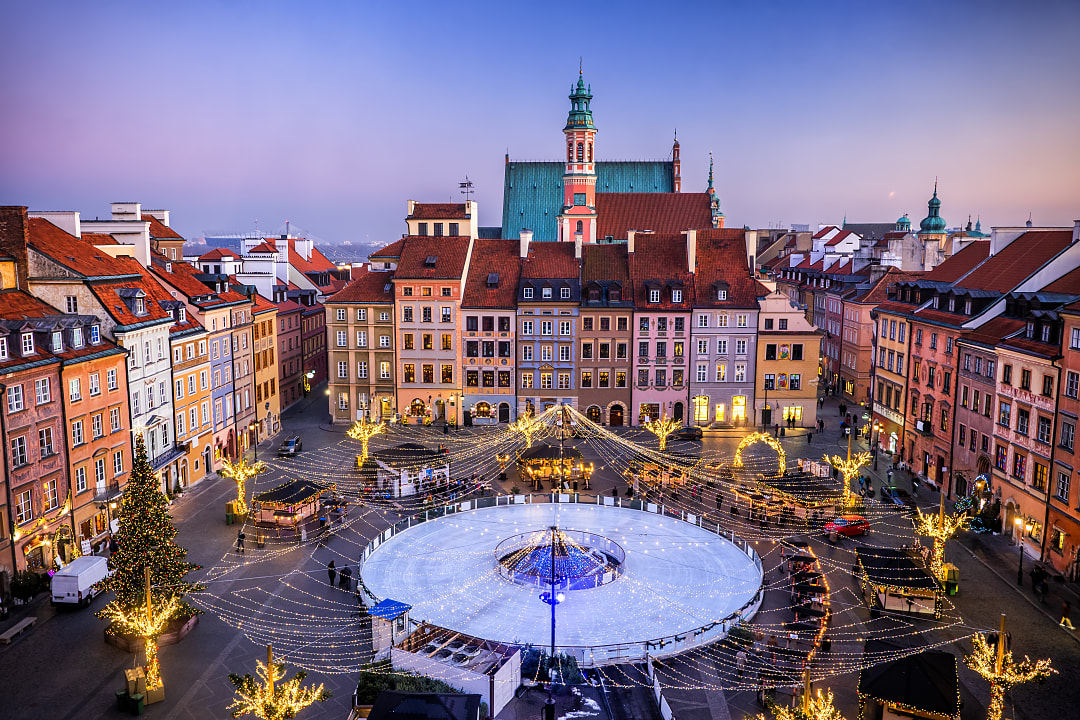
Christmas market in Warsaw, Poland
Warsaw, Poland

Every other destination on this list offers a version of Christmas that is staged, at least partly, for an audience: a market square, a cathedral service, a concert hall. Wigilia isn't staged for anyone. It's a family's exact ritual, the extra chair, the shared wafer, the wait for the first star, performed the same way whether or not a guest is present. This is why it can't be replicated at a hotel or bought as an add-on.

Experiencing it requires an actual seat at an actual table, arranged by someone with a real relationship to a Polish household, which is the reason this is the one entry on this list where access, not spectacle, is the luxury.

What to Expect

  • Home Customs: The extra chair for a stranger and the shared wafer are small gestures that reveal how relational Polish Christmas is at its core.
  • Wigilia Feast: A meat-free spread of carp, beetroot barszcz, and pierogi forms the centerpiece of Christmas Eve, the meal the entire season builds toward.
  • Night Songs: Groups singing kolędy through city streets and village lanes carry the holiday's music directly into public space.
  • Midnight Services: Midnight Mass, candlelit and wrapped in evergreen, gives the sacred half of the night equal weight to the domestic half.
  • City Fireworks: Warsaw's New Year's Eve fireworks mark the hard turn from Wigilia's quiet ritual to the following year's promise.

A Journey Through History

  • Pagan-Christian Blend: The empty place setting at Wigilia traces back to pre-Christian Slavic customs honoring ancestral spirits, later absorbed into Catholic observance.
  • Meatless Meaning: The traditional 12 meat-free dishes reflect the historical Advent fast still observed in Polish Catholic households on Christmas Eve.
  • Wartime Continuity: Wigilia's home-based ritual persisted through Poland's most difficult 20th-century decades, including wartime occupation and decades of communist rule, in ways public markets could not.
  • Communist-Era Suppression: Christmas markets and public religious display were restricted under communist rule, which is among the reasons the private, in-home Wigilia tradition remained so central to Polish identity.
  • Post-1989 Revival: Public Christmas celebrations, including Warsaw's city-wide festivities, expanded significantly after the fall of communism restored open religious and civic expression.

Where to Enjoy Your Visit

  • Kraków: The city's Rynek Główny market square and Wawel Cathedral offer the country's most atmospheric public Christmas setting.
  • Warsaw: Wigilia access, Midnight Mass at St. John's Archcathedral, and New Year's Eve fireworks over the Vistula anchor the capital's season.
  • Wroclaw: One of Poland's most decorated Christmas markets fills the city's colorful market square.
  • Zakopane: This mountain town in the Tatras adds a folk-culture, highland layer to a Polish Christmas itinerary.
  • Gdansk: The Hanseatic old town's brick architecture and waterfront market offer a northern, maritime take on the season.

Learn more: Luxury Poland tours and vacations

7. Austria

Christmas market in Vienna, Austria
Vienna, Austria

Rauhnächte predates Christianity: burning herb bundles to bless a home and protect livestock is an agrarian ritual that has survived, largely unchanged, in rural alpine villages for centuries. Vienna's classical music tradition is the opposite kind of inheritance, urbane, institutional, and performed in concert halls built to project imperial refinement.

Most countries have one lineage or the other; Austria has kept both fully alive at the same time of year. A morning watching a blessing ritual in a village like Alpbach and an evening at the Musikverein aren't a jarring contrast so much as two branches of the same national memory, which is the reason this pairing works instead of feeling like a mismatched itinerary.

What to Expect

  • Sacred Nights: Rauhnächte, the twelve nights of Christmas, bring rituals like burning herb bundles and frankincense to bless homes and protect livestock.
  • Market Evenings: Austrian Christmas markets stay human-scale, with hand-knitted scarves, wooden crib figures, and mugs of punsch or glühmost.
  • Baking Classes: Private, hands-on lessons in Vanillekipferl crescent cookies and jam-filled Linzer Augen turn a local tradition into something you take home.
  • Music Salons: Mozart and Strauss performances at Vienna's Musikverein or small choir recitals in village churches connect the season to Austria's musical inheritance.
  • Ice Structures: Ice pavilions and skating rinks near Vienna's Rathaus add a sculptural, playful layer to the city's winter architecture.

A Journey Through History

  • Pre-Christian Origins: Rauhnächte rituals descend from Germanic and alpine pagan practices meant to ward off evil spirits during the darkest nights of the year.
  • Habsburg Legacy: Vienna's concert hall culture and imperial Christmas markets grew under centuries of Habsburg patronage of the arts.
  • Silent Night's Birthplace: The carol, Silent Night, was composed and first performed in Oberndorf, near Salzburg, in 1818, and is still one of Austria's most significant contributions to global Christmas tradition.
  • Guild Market Roots: Vienna's Christmas markets descend from medieval "December markets" chartered by the city for craftspeople to sell goods before the holiday.
  • Court Music Tradition: The Vienna Philharmonic and its holiday programming trace directly back to the court orchestras that once performed exclusively for the Habsburg monarchy.

Where to Enjoy Your Visit

  • Vienna: The Rathausplatz Christmas market and the Musikverein concert hall let you move between folk and imperial Austria in the same day.
  • Salzburg: Mozart's birthplace and the nearby Silent Night Chapel in Oberndorf tie the city directly to Austria's most famous carol.
  • Alpbach: This Tyrolean village is known for keeping Rauhnächte rituals alive in an authentic, lived-in setting.
  • Innsbruck: The Golden Roof old town and surrounding mountains combine market culture with immediate access to alpine scenery.
  • Hallstatt: This lakeside village, one of Austria's most photographed, adds a fairy-tale backdrop to the season.

Learn more: Splendors of Austria, Germany, and Switzerland TourAustria travel guide

8. Croatia

Frozen waterfalls in Plitvice National Park, Croatia
Plitvice National Park, Croatia

There's an assumption baked into most "European Christmas" itineraries that authenticity requires snow, wool, a crackling fire. Croatia's traditions push back on that assumption without diluting it. St. Lucia's Day gift-giving and Christmas Eve mass in stone churches that predate most of Europe's Gothic cathedrals are just as rooted as anything in Germany or Austria; they're simply practiced in a Mediterranean climate that lets you walk the coast in a light coat afterward.

For a traveler deciding whether this season has to mean layering up, Croatia is the answer that it doesn't, without the trip seeming to be a compromise version of the real thing.

What to Expect

  • Saint's Day: St. Lucia's Day introduces early gift-giving and candlelit Advent wreaths well before the 25th arrives.
  • Mass Gatherings: Christmas mass inside ancient, evergreen-decorated churches reveals the spiritual core of the season in intimate settings.
  • Seasonal Tables: A private dinner with a Dalmatian family pairs roast turkey, duck, or goose with sarma cabbage rolls and lepinja flatbread for a table that mixes European tradition with local flavor.
  • Park Trails: Plitvice National Park in winter turns familiar paths into frozen, cinematic landscapes with icy cascades.
  • Coastal Midnight: New Year's Eve along the coast pairs mild air and sea views with fireworks, grilled fish, and fritule doughnuts in harborside squares.

A Journey Through History

  • Roman and Byzantine Roots: Dubrovnik's and Split's church architecture dates back to Roman and early Byzantine construction, among the oldest Christian sites on this list.
  • Illyrian and Slavic Layers: Croatian Christmas customs blend older Illyrian folk practices with Slavic traditions brought by settlers in the early medieval period.
  • Venetian Influence: Centuries of Venetian rule along the Dalmatian coast have shaped local architecture, cuisine, and civic festival culture, all still visible today.
  • Habsburg Inland Ties: Zagreb's Christmas market culture reflects its long history within the Austro-Hungarian Empire, closer in spirit to Vienna than to the coast.
  • Modern Independence: Croatia's public Christmas celebrations expanded significantly after independence in the 1990s, becoming a point of national and tourism pride.

Where to Enjoy Your Visit

  • Zagreb: Repeatedly recognized as one of Europe's best Christmas markets, the capital's Ban Jelačić Square anchors a Habsburg-inflected celebration.
  • Dubrovnik: The walled Old Town's stone streets and Adriatic views offer the most cinematic version of a Croatian Christmas.
  • Split: Diocletian's Palace provides an ancient Roman backdrop for the city's more understated seasonal traditions.
  • Plitvice Lakes National Park: Winter transforms the park's waterfalls and boardwalks into a quieter, icier version of its famous scenery.
  • Rovinj: This Istrian fishing town pairs pastel architecture with a mild coastal climate, so it’s ideal for an off-season Christmas visit.

Learn more: Best of Budapest to Dubrovnik Highlights TourCroatia travel guide

9. Hungary

Christmas market in Budapest, Hungary
Budapest, Hungary

Budapest's markets are good, but they're not the deepest on this list; Germany and Austria both go further on that front alone. What Budapest has that no market city does is a layer built entirely outside the cold: thermal baths fed by the same geothermal springs the Romans and Ottomans built bathing cultures around centuries ago and still open in winter.

Ending a market evening by soaking in a candlelit cave bath isn't an add-on excursion; it's a second, completely different register of the same night, restorative rather than festive, which is why Hungary earns a place among cities with far more famous markets.

What to Expect

  • Market Lanes: Budapest, Eger, and Debrecen line their streets with kürtőskalács chimney cakes, handmade ceramics, and hot mulled wine.
  • Saint Observances: St. Nicholas Day gives children chocolates and fruit left in polished boots by the door, a mid-season highlight distinct from Christmas Day itself.
  • Comfort Dishes: Halászlé, a paprika-rich fish soup made with river fish, shows how local ingredients shape the Hungarian festive table.
  • Night Services: Midnight Mass gathers communities in candlelit churches, with hymns and organ music carrying through the cold.
  • Thermal Retreats: A private soaking session at Miskolctapolca's cave baths, arranged outside public hours, offers mineral-rich, softly lit waters as a warm counterpoint to winter air outside.

A Journey Through History

  • Roman Baths: Budapest's thermal bathing culture traces back to Roman-era Aquincum, whose baths first tapped the same geothermal springs still used today.
  • Ottoman Bathhouses: Several of Budapest's historic bathhouses, including Rudas and Király, were built during the 16th- and 17th-century Ottoman occupation and are still used.
  • Austro-Hungarian Grandeur: Budapest's most opulent bathhouses, like Széchenyi, were expanded during the Austro-Hungarian era into the elaborate palaces travelers visit today.
  • Paprika's Arrival: Hungary's signature spice arrived via Ottoman and Balkan trade routes, later becoming central to festive dishes like halászlé.
  • Soviet-Era Continuity: Public Christmas markets were curtailed under communist rule and expanded rapidly again after 1989, mirroring Poland's pattern of revival.

Where to Enjoy Your Visit

  • Budapest: Vörösmarty Square's market and the Széchenyi or Rudas thermal baths let you pair festive shopping with restorative soaking in one visit.
  • Eger: This wine-region town blends a smaller, quieter Christmas market with nearby thermal baths of its own.
  • Debrecen: Hungary's second city offers a market experience with fewer crowds and a strong regional food identity.
  • Miskolctapolca: The cave bath complex here is one of Europe's more unusual thermal settings, carved directly into the rock.
  • Szentendre: This artists' town near Budapest adds a smaller-scale, craft-focused Christmas market day trip.

Learn more: Royal Cities of Central Europe: Tour Prague, Budapest, and Croatia

10. France

Eiffel tower and surrounding trees covered in snow
Paris, France

Most destinations on this list build a season-specific centerpiece: a market, a Mass, a particular night. France doesn't need one because the centerpiece already exists in how the country treats food every day of the year. December simply raises the stakes on a ritual that never went away.

A Christmas dinner in Paris, oysters and foie gras leading into a bûche de Noël a pastry chef has spent two days assembling, isn't a special addition to the season; it's the same reverence for the table France applies on an ordinary Tuesday, turned up. That's why France doesn't compete on markets or Masses the way its neighbors do, and doesn't need to.

What to Expect

  • Snow Icon: The Eiffel Tower, when dusted in snow, with the Champ de Mars lawns turning white, anchors a visit to one unrepeatable moment.
  • Paris Markets: Paris Christmas markets sell vin chaud, roasted chestnuts, and artisanal gifts like handmade soaps and linen textiles from small producers.
  • Gourmet Menus: A private tasting menu built around oysters, foie gras, and chocolate-hazelnut bûche de Noël turns a Christmas classic into the meal itself.
  • Alpine Runs: Skiing the French Alps pivots the day toward chalet evenings of fondue, tartiflette, and hot chocolate after the slopes.
  • Château Visits: Touring Loire Valley châteaux dressed in garlands and candlelit trees pairs historic architecture with seasonal decor that matches it.

A Journey Through History

  • Réveillon Tradition: The French Christmas Eve feast, réveillon, takes its name from the French word for "waking," referring to the vigil kept before Midnight Mass.
  • Bûche de Noël's Origins: The Yule log dessert descends from the older custom of burning a log through the 12 days of Christmas, a practice later reimagined by Parisian pastry chefs.
  • Alsatian Market Roots: Strasbourg's Christkindelsmärik, one of Europe's oldest Christmas markets, dates to the 16th century and reflects the region's Franco-German heritage.
  • Royal Gastronomy: France's association between Christmas and elaborate multi-course dining grew out of aristocratic culinary customs later adopted by the broader public.
  • Revolutionary Interruption: The public religious Christmas celebration was suppressed during the French Revolution's dechristianization campaigns and later restored under Napoleon.

Where to Enjoy Your Visit

  • Paris: The Champs-Élysées lights, Galeries Lafayette's tree, and a réveillon dinner make the capital the centerpiece of a French Christmas.
  • Strasbourg: Widely considered the birthplace of the French Christmas market, its Alsatian half-timbered old town leans into French and German tradition.
  • Colmar: This Alsace town's canals and market stalls offer a smaller, storybook alternative to Strasbourg.
  • Loire Valley: Chenonceau and Chambord dressed for the season combine royal history with seasonal decor.
  • Lyon: The Fête des Lumières lights up the city each December, adding a spectacle distinct from typical market culture.

Learn more: Best of France Tour: Starry City to Countryside ChateauxFrance travel guide

11. Scotland

Christmas market in Edinburgh, Scotland
Edinburgh, Scotland

A holiday banned for nearly four centuries doesn't just come back quietly when it's reinstated; it comes back smaller than the tradition that filled the gap while it was gone. Hogmanay had 400 years to become Scotland's real seasonal event and Christmas Day never fully reclaimed the ground it lost.

That history has a direct planning implication: a trip built around December 25 will feel muted next to Germany or Italy, but a trip timed toward December 31 lands in one of the largest public celebrations in Europe. Scotland rewards travelers who build the itinerary around the right date, not the assumed one.

What to Expect

  • Wildlife Views: Winter wildlife on the Isle of Arran, including red deer and seals, ties the season to Scotland's coastal and woodland landscape.
  • City Walks: Snow-covered private tours of Glasgow's Victorian and modern architecture end at snug cafés serving hot chocolate and shortbread.
  • Market Days: Scottish Christmas markets, which always feature mulled cider and handmade tartan scarves, center on crafts and family activities rather than spectacle.
  • Tasting Twists: Haggis bonbons, mince pies, and whisky-laced cranachan reinterpret national dishes for the festive table.
  • Song Traditions: Caroling under fairy lights in town squares and old kirkyards adds shared voices to Scotland's winter soundscape.

A Journey Through History

  • The Kirk's Ban: The Church of Scotland's Reformation-era leadership treated Christmas as a Catholic and "Popish" observance, effectively banning it from the mid-16th century onward.
  • 1958 Reinstatement: Christmas Day did not become an official public holiday in Scotland again until 1958, centuries after England restored it.
  • Hogmanay's Ascendance: With Christmas suppressed for so long, Scots shifted their major midwinter celebration to Hogmanay, New Year's Eve, which is still the country's larger event.
  • First-Footing: The Hogmanay custom of "first-footing," where the first guest to cross the threshold after midnight brings luck, dates back to older Norse and Scottish folk belief.
  • Fire Festivals: Torchlight processions like Edinburgh's Hogmanay events descend from older fire festivals meant to see out the old year and welcome the new one.

Where to Enjoy Your Visit

  • Edinburgh: The city's Hogmanay street party and torchlight procession are among the largest New Year celebrations in Europe.
  • Glasgow: Victorian architecture and a strong café culture make this the base for a quieter, city-focused December visit.
  • Isle of Arran: Winter wildlife watching and coastal walks offer a rural counterpoint to city-based Hogmanay plans.
  • Stirling: The historic castle and Old Town provide a smaller-scale, market-focused Christmas visit.
  • The Highlands: Loch-side villages and whisky distilleries add a quieter, scenery-driven layer to a Scottish holiday itinerary.

Learn more: Scotland tours and vacationsScotland travel guide

12. Portugal

Lisbon, Portugal
Lisbon, Portugal

December in the Douro gives you mild weather and the valley in its quietest stretch of the wine calendar. Weeks past harvest, cellars that spend the rest of the year managing crowds are nearly empty and unhurried. That timing is what makes a slow cruise or a cellar tasting here feel earned rather than incidental.

Where Germany and Austria reward those who want to cover ground, market to market, town to town, Portugal rewards the opposite: staying in one place, in one valley, and letting a dinner in Óbidos or a tasting in a near-empty cellar run as long as it wants to.

What to Expect

  • River Cruises: Decorated ships along the Douro River show Porto and its valley draped in lights, with glasses of tawny Port and plates of queijo da Serra cheese aboard.
  • Port Tastings: A private cellar tasting with a Porto vintner turns historic Port houses into intimate winter venues for the country's signature drink, from ruby to aged tawny.
  • City Market: Lisbon's Campo Pequeno Christmas market pairs its distinctive architecture with stalls of handmade ceramics, cork accessories, and pastéis de nata.
  • Village Table: A Christmas culinary tour in Óbidos could include dinner with a local family, dining on roasted cod, caldo verde soup, and bolo rei studded with candied fruit.
  • Sunlit Wines: Alentejo or Douro vineyards pour reds and whites alongside small plates, or petiscos, a gentler alternative to snowbound tastings elsewhere.

A Journey Through History

  • Age of Exploration Roots: Portugal's Christmas Eve reliance on bacalhau, dried salt cod, ties back to the country's maritime empire, when the fish was preserved for long voyages.
  • Port Wine's British Ties: The Douro Valley's Port wine trade dates to a 17th-century trade alliance with England, which still shapes the region's cellars and export houses today.
  • Monastic Sweets: Bolo rei and other festive pastries descend from recipes developed in Portugal's convents and monasteries centuries ago.
  • Moorish Agricultural Legacy: The Alentejo and Douro's terraced vineyards and irrigation techniques owe much to agricultural methods introduced during centuries of Moorish rule.
  • Post-Dictatorship Openness: Portugal's public Christmas celebrations expanded and modernized significantly after the end of the Estado Novo dictatorship in 1974.

Where to Enjoy Your Visit

  • Porto: Historic Port wine cellars along the Douro riverbank anchor the country's most tradition-steeped Christmas experience.
  • Douro Valley: Terraced vineyards and boutique wine estates offer the season's slowest, most unhurried pace.
  • Lisbon: The Campo Pequeno market and Belém's monastery-lined streets pair city energy with centuries of maritime history.
  • Óbidos: This walled medieval village hosts an intimate, family-style Christmas market inside its fortified center.
  • Sintra: Fairy-tale palaces dressed for the season make this a striking day trip from Lisbon.

Learn more: Best of Portugal Tour: 10 Days in Porto, Lisbon, and VilamouraPortugal travel guide

Explore the Best Places in Europe for Christmas

Christmas market in Bolzano, Italy
Bolzano, Italy

Twelve countries, 12 very different versions of the season: a market stall in one, a Midnight Mass in another, a thermal bath or a river cruise in a third. The common thread isn't snow or spectacle; it's that each of these places has kept a specific tradition alive long enough that visiting during these two weeks means experiencing something a summer trip never could.

Whatever the pace you're drawn to, market-hopping through Germany, Austria, and Hungary or settling into one place in Portugal or Croatia, this is a season where the calendar works against last-minute planning and where a private, fully personalized itinerary makes the difference between watching a tradition from behind a crowd and being let into it. That's the gap a Zicasso specialist closes: no fixed group tour or one-size-fits-all package, just a private trip built around exactly how you want this season to feel. Explore our European Christmas market tours and Europe travel guide to start building your custom itinerary with a destination specialist before the season's most in-demand experiences are gone.

32,000+ Verified Traveler Reviews