9 Best Cycling Destinations in Europe

Biker with view of Elba Island in Tuscany, Italy

Elba Island, Tuscany, Italy

The best cycling destinations in Europe allow you to move slowly enough to catch the smell of ripening grapes at the edge of a vineyard, yet fast enough to cover real ground. You could be in a hill town at breakfast, a coastal ruin by lunch, and a fishing harbor by the time the light turns gold. Europe rewards that pace because so much of what makes the continent extraordinary was built at a scale meant to be walked or pedaled, not driven past.

The range is what sets European cycling apart. Within a single, compact landmass sit glacier-fed alpine passes, sun-bleached Mediterranean cliffs, dead-flat polders reclaimed from the sea, and river valleys still lined with the same vineyards nobles once rode past on horseback. As a cyclist, you can trade a demanding mountain ascent for a leisurely canal path in the time it takes to board a train, without ever repeating the same kind of day twice.

Extraordinary travel begins with the human touch and our destination specialists design every journey with meticulous care and attention to detail. No two Zicasso itineraries are the same because no two travelers are. Your specialist builds a private, fully personalized route around your pace, interests, and access to people and places most visitors never reach. They work with local guides, hoteliers, and artisans to arrange your time so you can savor each region's rituals, whether that means a private tasting with a Tuscan winemaker, an evening spent with a Provençal lavender farmer, or a quiet morning cycling beside a Dutch cheesemaker on his way to open the shop.

1. Tuscany, Italy

Monteroni d'Arabia in Tuscany, Italy

Tuscany makes its case through contrast rather than spectacle. The hills that look so gentle from a car window turn out, from a saddle, to demand real effort, which is what earns you the reward of arriving at a hilltop town that has changed shape only gradually since the Renaissance. Cycling here forces you to feel the landscape’s geography the way medieval traders once did.

What to Expect

  • Cypress-lined climbs: Rides through Val d'Orcia string together long, exposed ascents flanked by the region's signature cypress avenues, with little shade and even less traffic.
  • Vineyard-terrace descents: Routes through Chianti drop through terraced vineyards where the gravel roads turn every descent into a slow-motion reveal of the valley below.
  • Hilltop town arrivals: San Gimignano and Montepulciano appear on the horizon well before you reach them, their towers rising over the ridgeline like a promise you have to earn.
  • Coastal flatland relief: Stretches near the Tuscan coast trade the hill climbs for flat, breezy riding past pine groves and quiet beach towns.
  • Agriturismo rest stops: Family-run farms along popular routes double as lunch stops, serving pecorino and cured meats made a few hundred yards from where you're sitting.

Where to Enjoy Your Visit

  • Siena: A historic base with quick access to the Val d'Orcia's classic gravel routes.
  • Greve in Chianti: The unofficial capital of Chianti's cycling scene, ringed by vineyard roads.
  • Montalcino: A hilltop wine town serving as a natural turnaround point for longer loops.
  • Pienza: A Renaissance "ideal city" surrounded by some of the region's most photographed farmland.
  • Lucca: Uniquely flat and enclosed by intact Renaissance walls, making it one of the easiest Tuscan towns for a gentle ride.

A private cycling day arranged around your own pace rather than a fixed group schedule is where a Zicasso specialist earns their keep, pairing a demanding morning climb with an afternoon reserved entirely for lingering. Explore Zicasso's Tuscany tours and vacations for more inspiration.
2. Provence, France

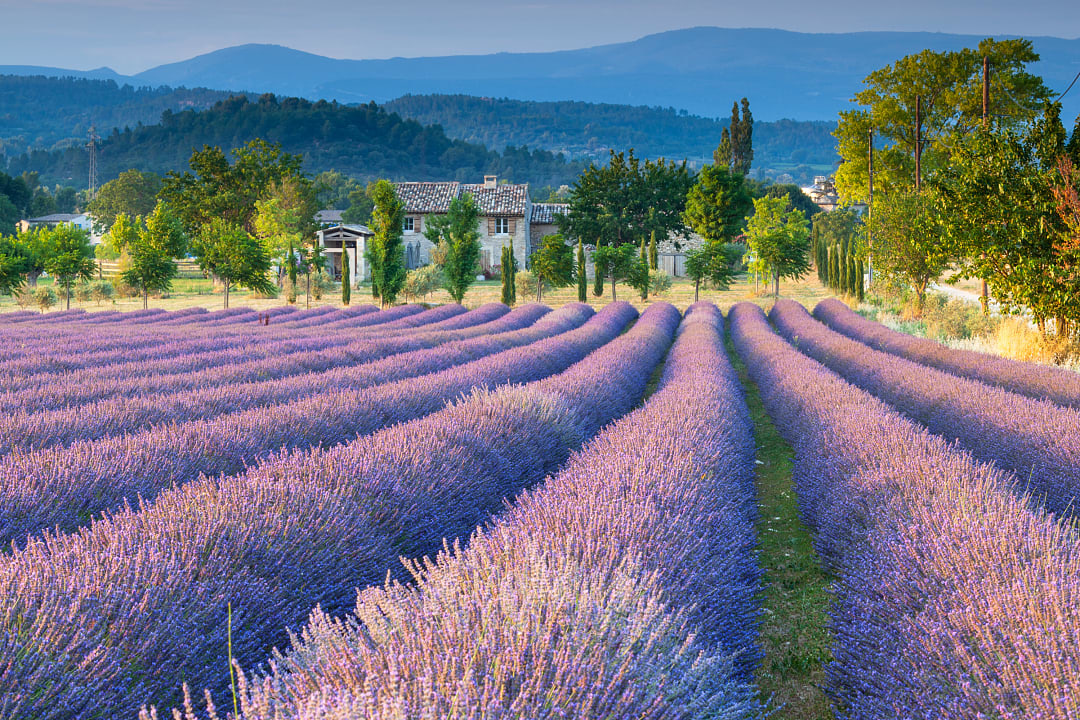
Road by lavender field in Provence, France

In Provence, you will experience landscapes less through what you see and more through what you smell. Lavender fields don't just look striking from a bike; they perfume the air for a mile before you reach them, layering into the scent of thyme, wild rosemary, and warm limestone dust kicked up by your tires. The region will reward you if you treat cycling as a sensory itinerary as much as a physical one.

What to Expect

  • Lavender-field stretches: Routes through the Luberon and Valensole plateau time their best days to the June and July bloom, when entire hillsides turn violet.
  • Hilltop village switchbacks: Villages like Gordes and Ménerbes sit atop steep approaches, rewarding the climb with stone lanes barely wide enough for a bicycle.
  • Olive-grove backroads: Quiet farm roads connect groves and small producers, many open to cyclists for impromptu tastings.
  • Roman road remnants: Sections of ancient Roman routes near the Pont du Gard let you trace paths more than 2,000 years old.
  • Riverside cooling breaks: The Sorgue River near Fontaine-de-Vaucluse offers shaded, flat riding as relief from the region's exposed climbs.

Where to Enjoy Your Visit

  • Gordes: A cliffside village and a natural base for exploring the Luberon's hill routes.
  • Aix-en-Provence: A larger city base with easy connections to surrounding countryside rides.
  • Joucas: A quieter alternative to Gordes, closer to the Luberon's back roads.
  • Isle-sur-la-Sorgue: Known for its canals, useful for flatter recovery rides.
  • Ménerbes: A hilltop village at the heart of some of the region's most scenic cycling terrain.

A Zicasso travel specialist can time a ride to the exact week a specific lavender field peaks or arrange a last-minute stop at a family-run olive mill. This is the kind of detail no fixed-departure tour can promise. Discover more with our customizable Wonders of Provence Tour: Art, Food, and Charm.

3. The Netherlands

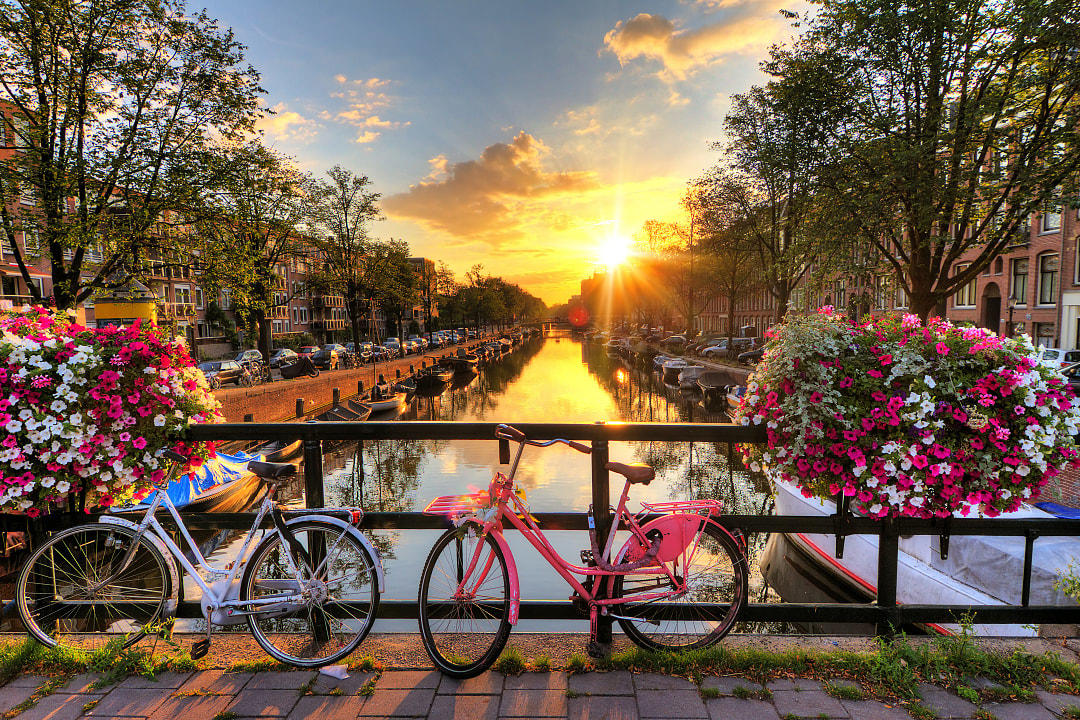
Amsterdam at sunset in The Netherlands

Few destinations make cycling as effortless as The Netherlands does. That ease is not an accident, but the result of centuries of deliberate infrastructure. Nearly 23,000 miles of dedicated paths, flat terrain reclaimed from the sea, and a culture that treats the bicycle as basic transportation rather than a leisure activity combine to make the Netherlands the rare place where you can relax entirely into the ride instead of managing traffic, gradient, or navigation.

What to Expect

  • Polder-flat riding: Land reclaimed below sea level creates uninterrupted flat cycling for dozens of miles at a stretch.
  • Tulip-field color: Spring rides near Lisse and the Bollenstreek pass through blocks of bulb fields in full bloom.
  • Windmill-dotted routes: Paths near Kinderdijk wind past working 18th-century windmills still used for water management.
  • Canal-side cruising: Amsterdam's ring canals and the country's dyke-top paths let riders trace the waterways that define the national landscape.
  • Cheese-farm detours: Small producer farms along countryside routes welcome cyclists for tastings between rides.

Where to Enjoy Your Visit

  • Amsterdam: The natural starting point, with canal-ring routes and rail connections to the countryside.
  • Haarlem: A smaller base with quick access to the tulip fields of the Bollenstreek.
  • Utrecht: Central positioning for routes through the country's "green heart."
  • Giethoorn: A canal village nicknamed the "Venice of the North," reachable by quieter countryside paths.
  • Delft: A compact, historic base for shorter rides among porcelain workshops and market squares.

For more details on The Netherlands, have a look at our Introduction to Europe Tour: Netherlands, Germany, Italy, and France.

4. Copenhagen, Denmark

Aerial view of road in Copenhagen, Denmark
Aerial view of Copenhagen, Denmark

Copenhagen inverts the usual hierarchy of urban transportation. Here, bicycles, not cars, get the widest lanes, the clearest priority at intersections, and the most direct routes across the city. That is the argument for cycling in Copenhagen. It's the default way locals actually experience their city, which means riding it yourself is the closest you will get to living like a Copenhagener for a day.

What to Expect

  • Harbor-bridge crossings: Cykelslangen ("the Cycle Snake") and similar elevated bike bridges carry riders directly over the harbor, bypassing car traffic entirely.
  • Waterfront promenade riding: Flat paths along the harbor connect Nyhavn's colorful facades to the modern architecture of Islands Brygge.
  • Christiania backroads: Quiet lanes through the city's alternative Freetown district offer a very different texture from the polished center.
  • Beach-path stretches: Routes north of the city reach quiet Øresund coastline beaches within an easy ride.
  • Design-district cruising: Slower rides through Frederiksberg pass boutique furniture showrooms and quiet residential streets.

Where to Enjoy Your Visit

  • Nyhavn: The colorful harbor district and a natural starting point for waterfront rides.
  • Vesterbro: A trendy, walkable (and highly rideable) neighborhood near the main train station.
  • Islands Brygge: A modern harborside district popular for its floating public baths.
  • Frederiksberg: A quieter, leafier district suited to slower exploratory rides.
  • Christianshavn: A canal-lined neighborhood with a distinctly different, more relaxed character from central Copenhagen.

Your Zicasso specialist can weave a private Copenhagen cycling day into a wider Scandinavian itinerary, pairing it with fjord scenery or a Baltic Sea crossing further along your route. See Zicasso's Best Scandinavia tours and vacations to start planning.

5. Amalfi Coast, Italy

City of Amalfi on the Amalfi Coast, Italy

The Amalfi Coast doesn't offer cycling's usual bargain of suffering traded for solitude. Instead, its roughly 34-mile coastal road is genuinely difficult. It is narrow, cliff-hugging, and steep in places, but delivers some of its best views to anyone willing to slow down and look, cyclist or not. The case for riding it isn't to escape the crowds, but that the road itself, engineered along a cliff face, turns transportation into the main event.

What to Expect

  • Cliffside hairpin climbs: The coastal road's switchbacks gain and lose hundreds of feet within a mile, framed by sheer drops to the Tyrrhenian Sea.
  • Fishing-village descents: Coasting into towns like Praiano rewards climbers with sudden views over pastel houses stacked toward the water.
  • Lemon-terrace passes: Inland detours climb past centuries-old lemon groves still tended on the same terraced slopes.
  • Ancient paper-mill detours: Side routes near Amalfi town lead to the ruins of medieval paper mills tucked into a narrow ravine.
  • Panorama rest points: Frequent cliffside pull-offs double as natural rest stops with unobstructed sea views.

Where to Enjoy Your Visit

  • Positano: The coast's most photographed town, ideal as a base for shorter, scenic rides.
  • Amalfi: The historic namesake town, central to the coastal road's most demanding stretches.
  • Ravello: Set higher above the water, offering quieter roads and sweeping overlooks.
  • Praiano: A smaller, less crowded town along the same coastal route.
  • Sorrento: A practical gateway town for riders looking to combine the coast with day trips to Pompeii or Capri.

A private guide familiar with the coastal road's blind curves and seasonal traffic patterns turns a demanding ride into a manageable one, timing your route around quieter hours rather than peak tourist traffic. Learn more through Zicasso's Amalfi Coast tours.

6. Andalusia, Spain

Plaza de Espana, Seville, Andalucia, Spain

Andalusia's terrain carries evidence of Roman, Moorish, and Christian rule in a way few other regions can claim, and cycling here means riding directly through that layered history instead of seeing it from a bus window. A single day's ride might pass a Roman bridge, a Moorish irrigation channel still carrying water after a thousand years, and a whitewashed village built around a Christian reconquest fortress. That’s three empires within a single ride.

What to Expect

  • Alhambra approach rides: Routes into Granada climb toward the fortress's red walls, with views opening up gradually rather than all at once.
  • Riverside old-town cruising: Flat paths along the Guadalquivir in Córdoba pass beneath the city's Roman bridge and mosque-cathedral.
  • Whitewashed hill-village climbs: Ronda's approach roads wind up toward a town split by a dramatic gorge, El Tajo.
  • Olive-grove backroads: Countryside rides pass through some of the densest olive cultivation in the world, stretching to the horizon in every direction.
  • Sherry-country flatlands: Routes near Jerez de la Frontera offer easier, flatter riding past vineyards producing the region's namesake fortified wine.

Where to Enjoy Your Visit

  • Granada: A base for rides toward the Alhambra and the surrounding Sierra Nevada foothills.
  • Córdoba: Centered on the old town's riverside paths and the Mezquita.
  • Ronda: Known for its gorge-spanning bridge and dramatic approach climbs.
  • Seville: A flatter, city-cycling base with easy access to the wider region by train.
  • Jerez de la Frontera: A quieter base suited to sherry-country rides.

A private specialist can pair a cycling day with an evening flamenco performance or a tapas crawl arranged around your specific tastes, turning physical effort into the setup for a very different kind of evening. Explore Zicasso's Tours of Southern Spain for more.

7. Algarve, Portugal

Faro, main town in Algarve, Portugal

Where the Amalfi Coast rewards suffering, the Algarve rewards accessibility. Its terrain rarely climbs past 1,000 feet, which means a rider without technical experience or serious fitness can still cover real distance along dramatic coastline in a single day. Expect sea cliffs, limestone grottoes, and medieval towns at a pace nearly anyone can sustain.

What to Expect

  • Sea-cliff coastal paths: Routes near Lagos trace the tops of golden sandstone cliffs above hidden coves.
  • Grotto-adjacent detours: Paths near Benagil pass close to the region's famous sea caves, best combined with a short boat detour.
  • Medieval-wall old towns: Rides through Silves pass beneath the town's Moorish-era castle walls.
  • Cork-forest inland routes: Quieter backroads move away from the coast into cork oak forests covering the Algarve's interior hills.
  • Fishing-harbor stops: Coastal towns like Alvor offer easy rest points with fresh seafood a few steps from the water.

Where to Enjoy Your Visit

  • Lagos: A lively base with quick access to the coast's most dramatic cliff routes.
  • Silves: The Algarve's former Moorish capital, inland and rich with medieval architecture.
  • Tavira: A quieter, less-touristed town on the eastern Algarve.
  • Alvor: A fishing town suited to shorter, flatter coastal rides.
  • Sagres: Perched at Portugal's southwestern tip, near dramatic cliffs once considered the edge of the known world.

Your specialist can extend an Algarve cycling day into a wider Portuguese itinerary, connecting the coast with Lisbon or the Douro Valley's steeper wine-country terrain. See Zicasso's Coastal Havens and City Discovery Portugal Tour.

8. Loire Valley, France

Chateau de Chenonceau in Loire Valley, France

The Loire Valley earns its cycling reputation through density. Few regions pack so many royal châteaux into so short a distance, connected by flat, well-marked riverside paths originally laid out for far gentler purposes than exploration. Riding here means crossing, in a single afternoon, the same ground that once separated one king's summer retreat from another's hunting lodge.

What to Expect

  • Riverside towpaths: Flat paths along the Loire itself link major châteaux with minimal elevation change, ideal for long, easy days.
  • Châteaux avenues: Tree-lined roads leading to Chambord and Chenonceau were designed for horse-drawn carriages, and now serve cyclists just as well.
  • Vineyard backroads: Routes near Vouvray and Chinon pass through appellations producing some of France's most distinctive white wines.
  • Troglodyte-village detours: Side paths near Saumur lead to homes and wine cellars carved directly into the region's soft limestone cliffs.
  • Royal-forest shortcuts: Wooded paths through the Sologne offer shaded relief from the valley's more exposed river routes.

Where to Enjoy Your Visit

  • Amboise: A historic riverside town within easy reach of several major châteaux.
  • Chinon: Known for its medieval fortress and surrounding vineyards.
  • Blois: Centrally positioned for rides toward Chambord and Cheverny.
  • Saumur: A base for troglodyte cave visits and sparkling wine tastings.
  • Tours: The valley's largest city, useful as a rail gateway for longer touring routes.

A specialist can arrange a private tasting inside a working chateau cellar as the natural endpoint to a day's ride, the kind of access that turns a cycling day into something closer to a private audience with the region's history. Discover more with Zicasso's Bordeaux and Loire Valley Wine Tour.

9. Julian Alps, Slovenia

Zelenci Pond in the Slovenia's Julian Alps

The Julian Alps make their case by omission as much as scenery. Wedged between Austria, Italy, and Switzerland's far more visited alpine ranges, Slovenia's mountains offer nearly identical drama, but with a fraction of the traffic, which means a cyclist here earns quiet roads that would be unthinkable a short drive away in any of its neighbors.

What to Expect

  • Vršič Pass switchbacks: One of the highest paved roads in the Alps climbs through more than 50 hairpin turns to a summit over 5,000 feet.
  • Soča River valley riding: Flat and rolling paths trace the Soča's brilliant emerald water through Triglav National Park.
  • Lake Bohinj loop: A quieter alternative to Lake Bled, ringed by cycling paths with far fewer visitors.
  • Vineyard-hill routes: The Goriška Brda wine region near the Italian border offers gentler rolling terrain than the high Alps.
  • WWI trail remnants: Sections of the historic Soča Front pass preserved trenches and memorials from the First World War.

Where to Enjoy Your Visit

  • Bled: The country's best-known base, near Lake Bled and within reach of the high passes.
  • Bohinj: A quieter lakeside alternative, closer to Triglav National Park's interior.
  • Kranjska Gora: A mountain town positioned at the base of the Vršič Pass.
  • Bovec: A base along the Soča River, popular for both cycling and whitewater sports.
  • Kobarid: A small town central to the region's WWI history and river-valley routes.

Incorporate a day of cycling into our customizable Wine and Alpine Splendor Tour in Central Europe.

Plan for the Best Cycling Destinations in Europe

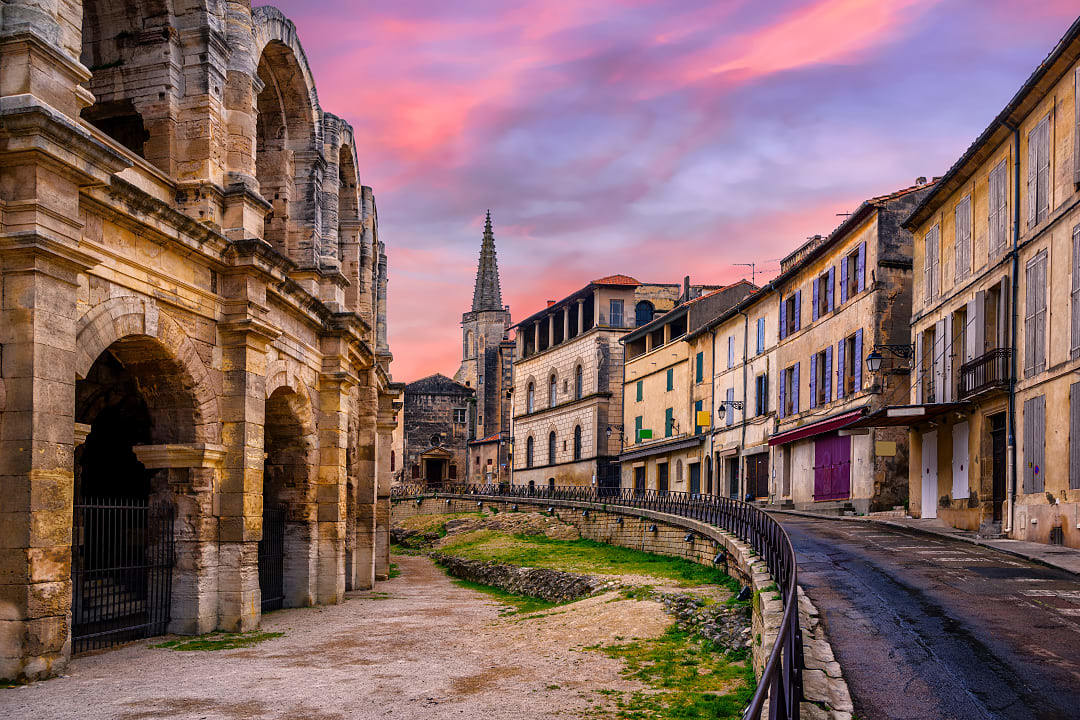
City of Arles in Provence, France

A bicycle asks something a car never does: that you notice the grade of a hill, the direction of the wind, and the exact moment a lavender field gives way to olive groves. Europe rewards that attention because so much of its landscape, from Renaissance hill towns to reclaimed Dutch polders, was shaped over centuries by people moving at a human pace. Pedaling through it is often the closest a traveler gets to experiencing it the way it was built to be seen.

Find inspiration for your Zicasso cycling trip with sample Europe tours and vacations or explore our Europe travel guide to learn more about where to go, when to go, and what to do before speaking with a private travel specialist. They can design a cycling itinerary around your pace, fitness, and interests.

32,000+ Verified Traveler Reviews