

When visiting New Zealand, remember that the seasons are opposite of those in the Northern Hemisphere. Summer is from December to February, autumn from March to May, spring from September to November, and winter from June to August.
New Zealand’s southerly position creates dynamic ecosystems that change dramatically from the North Island’s top beaches to the South Island’s fjords. The best time to travel will depend on whether you wish to visit in the bustling high season or the quieter shoulder and low seasons.
High Season: January and February
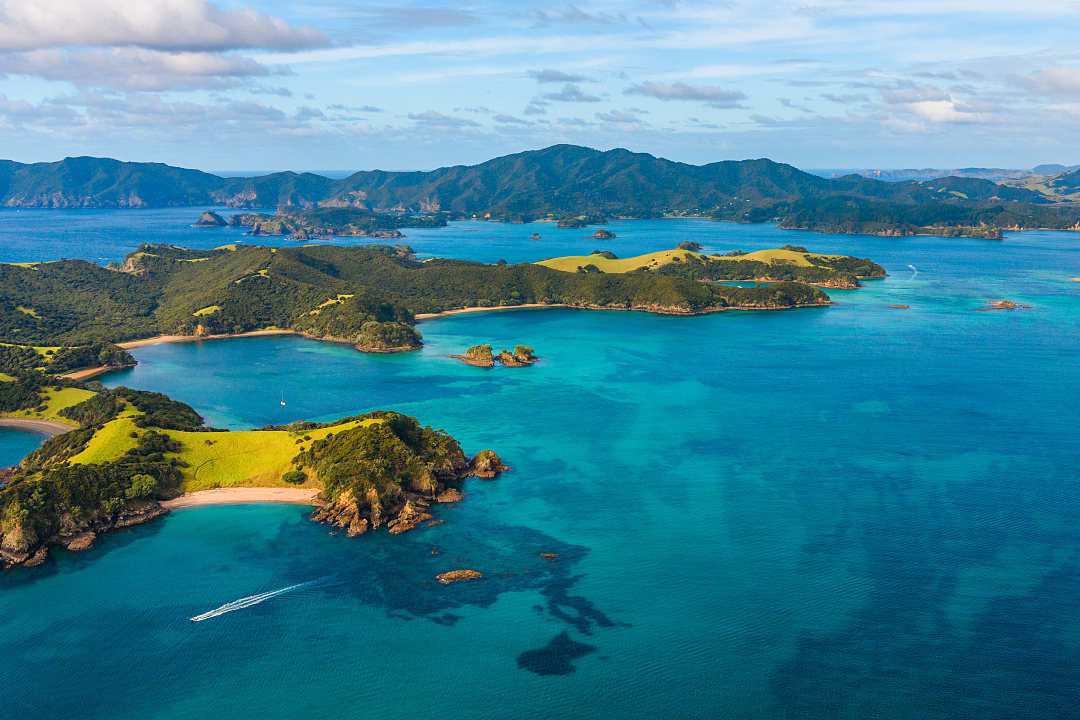
January and February, in the high season, are the perfect summer months to visit New Zealand’s North and South islands. The warm weather is ideal for visiting the many beaches or sailing the waters in search of playful dolphins. The celebrated outdoor lifestyle is in full swing. The country's climate offers a more tropical feel at the Bay of Islands and cooler, continental temperatures in Fiordland National Park.
What to Expect
- Warm Sand: Feel the unique, dark volcanic sand of the West Coast beaches warm your feet as you walk toward the surf.
- Sailing: Hear the snap of a sail and the calls of dolphins as you cruise the clear waters of the Bay of Islands on a private charter.
- Lakefront Life: Experience the lively hum of Queenstown's waterfront, with people dining outdoors late into the evening, glasses clinking against a mountain backdrop.
- Cool Mist: Feel the fine, cool mist from Huka Falls on your face, a refreshing contrast on a warm North Island day.
Shoulder Season: September, October, March, and April
The shoulder months of September, October (spring), March, and April (autumn) are the best times to visit New Zealand. The weather is comfortable and the landscapes are vivid. In spring, the country is temperate after the snow season, while fall brings a canvas of deep browns, reds, and golds. The greatest benefit is the absence of crowds, making popular destinations more accessible for bike riding, wildlife spotting, hiking, and stargazing.
What to Expect
- Autumn Colors: See the brilliant gold and crimson foliage of Arrowtown reflected in the clear, still waters of the Arrow River.
- Spring Blooms: Smell the sweet, delicate scent of cherry blossoms in Christchurch or see the vibrant lupins carpeting the fields near Lake Tekapo.
- Quiet Trails: Hear the satisfying crunch of gravel under your hiking boots on a quiet trail in Abel Tasman National Park, the beach at the end all your own.
- Night Skies: Feel the crisp, cool night air as you gaze up at the impossibly clear, dense star canopy of the Aoraki Mackenzie Dark Sky Reserve.
Low Season: July and August
July and August are the best months to experience New Zealand in the winter low season. Outside of the mountains and the southern tip of the South Island, winter is generally mild, with crisp, clear skies. It is a great time to enjoy the snow-covered volcanic peaks or access quiet valleys. From relaxing in geothermal pools to whale watching, winter offers a different perspective on the islands.
What to Expect
- Fresh Snow: Hear the soft shush of your skis on fresh powder in the Southern Alps, with the deep blue of Lake Wakatipu far below.
- Geothermal Warmth: Feel the velvety, mineral-rich water of a natural hot spring envelop you, steam rising into the cold, sharp air.
- Whale Songs: Hear the deep, sudden whoosh of a sperm whale's blow echoing across the still, cold water in Kaikoura.
- Sharp Air: Breathe in the clean, cold air, so clear it makes the mountain landscapes seem even sharper and closer.


