Accessing the Inaccessible: After-Hours Tours of Italy's Icons

Sistine Chapel, Rome.

Sistine Chapel, Rome.

Accessing Italy’s great icons usually means joining the crowds, with timed entries, security lines, and rooms where you catch only quick glimpses of masterpieces over other visitors’ shoulders. “Skip‑the‑line” has become the default promise, but in practice, it often means entering the same packed spaces a little faster, with the same noise, bottlenecks, and strictly defined routes once you are inside. True private or after‑hours access is something else entirely: you are in the building when it is closed to the public, numbers are sharply limited, and the atmosphere shifts from crowd management to quiet, curated immersion.

Zicasso travel specialists carefully orchestrate these experiences to anchor your time in Rome, Florence, Venice, and beyond. A well‑planned itinerary might pair a sunset aperitivo with a private visit to the Sistine Chapel, follow a slow morning in Florence with an after‑hours Uffizi visit, or have you step onto the Colosseum’s arena floor just as the sky turns indigo and the last daytime groups have gone. When woven thoughtfully between neighborhood walks, countryside stays, and leisurely meals, these visits become the emotional high points of an Italy journey, transforming familiar icons into intimate encounters that feel fundamentally different from anything a standard “skip‑the‑line” tour can offer.

Extraordinary travel begins with the human touch and our destination specialists design every journey with care, insight, and personal attention. They use their on‑the‑ground relationships to secure genuine after‑hours and private access to add depth to your journey rather than prestige. They listen closely to how you like to travel, including how long you enjoy lingering with art, then choreograph a sequence of evenings that matches your desires. The result is a trip on which Italy’s most famous sites feel comfortably within reach and become places you inhabit rather than rush through.

How Specialists Unlock After‑Hours Access

Venice, Italy.
Venice, Italy.

The phrase “skip‑the‑line” suggests exclusivity, but often it only changes how you enter, not how you experience an icon once inside. What differentiates Zicasso’s approach is a focus on genuine private or after‑hours access, where doors open when they are closed to the public and the entire mood of the visit changes. Rather than funneling you into a timed daytime slot, a specialist builds your itinerary around these evenings, coordinating guides, transfers, and dinner reservations so you arrive rested and ready to savor the quiet.

  • Work with your specialist to distinguish between standard “fast‑track” or “small‑group” entry and true after‑hours access, ensuring your budget is focused on experiences that change the site's feel rather than just the length of the queue.
  • Let them map which cities and nights are best suited to these special visits, so an after‑hours Vatican or Colosseum doesn’t follow an overnight flight or long transfer, but lands when you’re acclimated and alert.
  • Rely on their relationships with trusted local partners who understand each site’s specific rules, security procedures, and seasonal schedules, so your private or after‑hours slot is properly confirmed and realistically timed.
  • Benefit from private guides who are used to working in near‑empty spaces, adjusting their pacing and storytelling to the quiet: lingering longer in a chapel, looping back to a room you loved, or pausing for reflection.
  • Have your evening framed with thoughtful touches like aperitivo beforehand, a short walk, or a late dinner afterward. This way, the experience feels like a complete, narrative arc rather than an isolated ticketed event.

Use a customizable Best of Italy: Rome, Florence, and Venice journey as a foundation, then ask your specialist to show you where genuine after‑hours access will make the biggest impact on your trip.

The Vatican Museums and Sistine Chapel: Beyond the Crowd

Sistine Chapel, Rome.

By day, even with skip‑the‑line access, the Vatican Museums and Sistine Chapel are defined by crowds: you bypass the queue outside, but once inside, you join a slow‑moving current of people, with only fleeting moments in front of masterworks. A private or after‑hours visit rewrites that script, trading the press of daytime groups for hushed galleries, more flexible routes, and real time inside the Sistine Chapel. Instead of shuffling shoulder‑to‑shoulder, you and your guide can pause, double back, and let individual works breathe.

  • Enter after closing, when standard tours have ended, so “access” means not just skipping the line, but stepping into galleries where only a handful of visitors are present and you can actually choose your vantage point.
  • Move through key collections like the Raphael Rooms, classical sculpture halls, and Gallery of Maps without the constant jostling and noise of daytime visits, allowing your guide’s commentary to be conversational rather than shouted over a crowd.
  • Spend unhurried time in the Sistine Chapel, where limited numbers mean you may find space to stand or sit quietly, absorbing the ceiling and Last Judgment without being rushed along by attendants trying to keep traffic flowing.
  • Notice details, such as brushstrokes, expressions, and subtle colors, that are almost impossible to register during a typical “skip‑the‑line” slot, when your focus is split between the art and the mass of people around you.
  • Step back into the Roman evening with energy to spare, your specialist having arranged a nearby trattoria or wine bar so the shift from sacred art to everyday life feels gentle and seamless.

Look to a Rome‑centered itinerary like our Luxury Tour of Rome, Tuscany, and the Amalfi Coast and ask your specialist to include an after‑hours Vatican visit.

The Human Behind the Access

Sculptures in the Vatican Museums, Rome.

These are not generalist escorts moving groups through a fixed script; they are specialists, often academics, art historians, or archaeologists who have spent years building relationships with the institutions that grant after-hours access. They notice where your attention lingers, adjust their pacing accordingly, and offer layered, conversational storytelling that is impossible in a crowd. They understand that after a long day of travel, you may want narrative depth or companionable quiet, and they calibrate accordingly.

  • Ask your Zicasso specialist about the background of the guide assigned to each private visit, whether they have a specialism in Renaissance art, classical archaeology, or Venetian history, so the commentary genuinely deepens your understanding rather than skimming the surface.
  • Expect flexibility that daytime tour guides cannot offer: the ability to linger in a room you love, skip a gallery that doesn't interest you, or revisit a work you passed earlier because the schedule belongs to you rather than the crowd.
  • Treat the pre-visit conversation as part of the experience; many specialist guides will take a few minutes before you enter to orient you, explain what you are about to see, and invite your questions, turning the threshold moment into something deliberate rather than rushed.
  • Use your Zicasso specialist to ensure continuity where possible, so that the same guide who walked you through the Vatican might also join you for an evening at the Colosseum, building a relationship over the course of your trip rather than meeting a new stranger each night.
  • Ask your specialist to share guide profiles before you travel, so you can signal which areas of expertise matter most and arrive at each private visit with a sense of who you are spending the evening with.

The Colosseum and Underground Levels: Arena in the Quiet

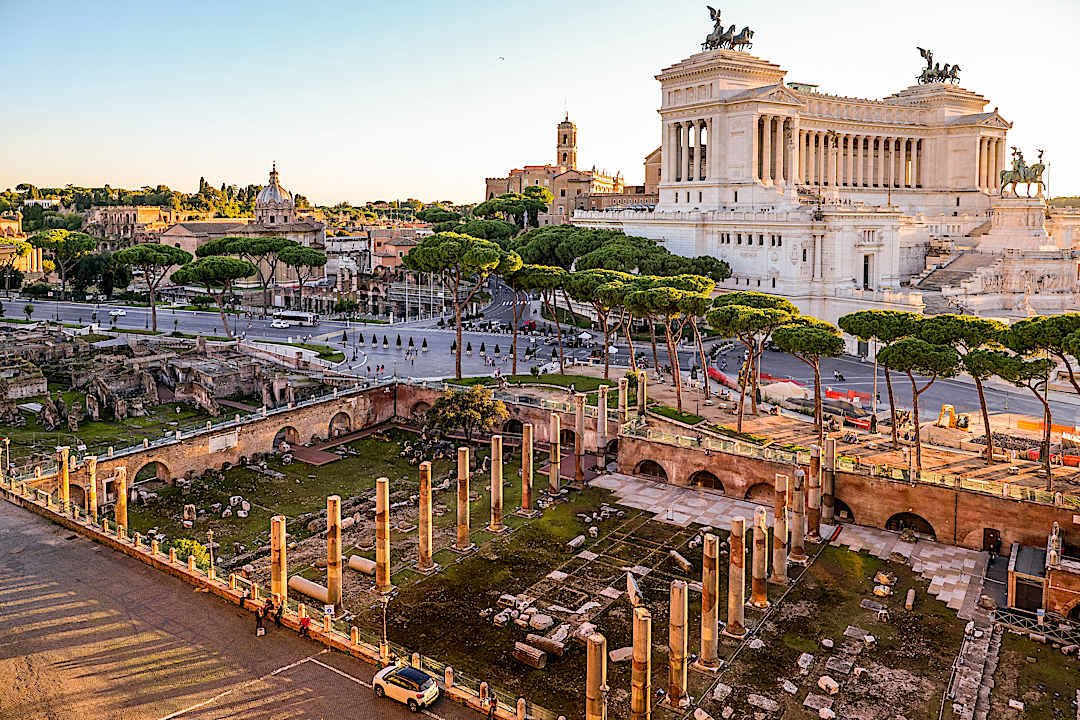
Capitoline Hill, Rome,  Italy.
Capitoline Hill, Rome, Italy.

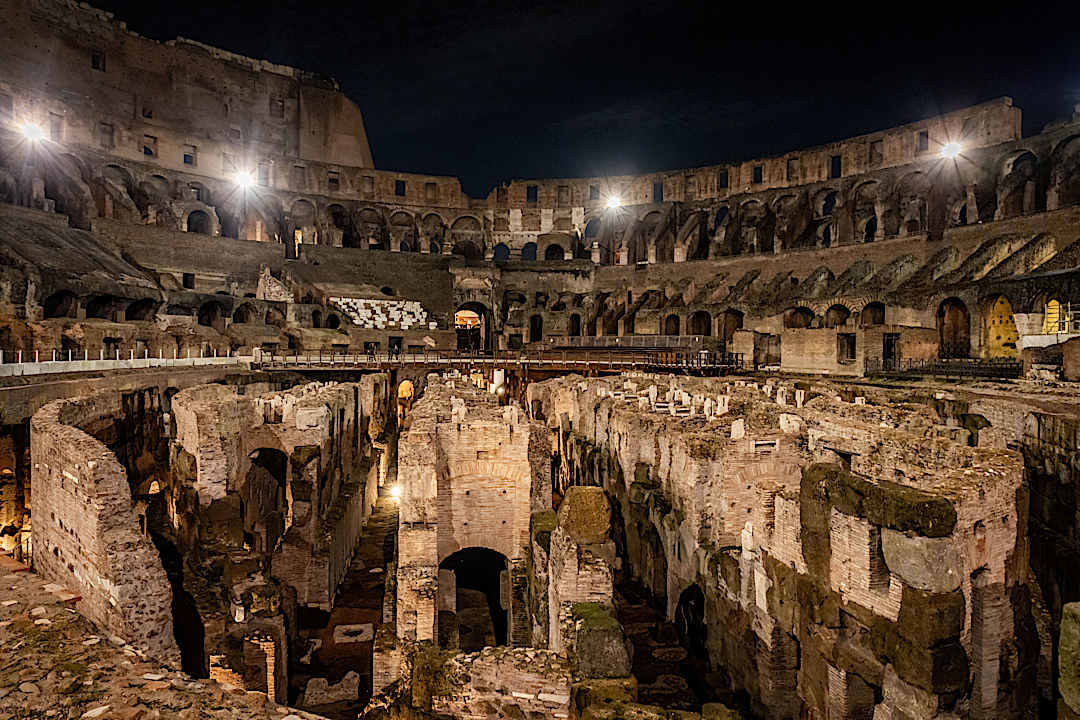
Most Colosseum experiences, even the “priority” or “express” ones, still unfold amid crowds: you may bypass the longest line, but once inside, viewpoints are busy, photos are filled with strangers, and sections like the arena floor or hypogeum are tightly timed. After‑hours access, particularly when it includes the underground and arena, transforms the monument into a nearly stage‑set environment, where the emptiness becomes part of the experience. With fewer people and softer light, it’s easier to imagine the roar of ancient Rome and the mechanics beneath the spectacles.

  • Step onto the arena floor via a reserved entrance in the evening, when regular visitors have gone; instead of waiting your turn at the rail, you can walk, circle, and take in the scale without jockeying for space.
  • Descend into the hypogeum when it is quiet enough to hear your guide’s voice echo off stone, with time to understand how pulleys, cages, and corridors once worked together beneath the sand.
  • Enjoy unobstructed views across the interior and out toward the Forum, unhurried by the pressure of large groups queuing for photo spots.
  • Experience the changing light as day turns to night, with the arches and corridors gradually illuminated, instead of visiting under the flat midday sun when much of the nuance is washed out.
  • Combine the visit with an evening stroll or a short drive past the Forum and Capitoline Hill, where your specialist can time it so you see the ancient center glowing under the stars rather than clogged with daytime traffic.

Consider a Rome to Amalfi Coast tour and speak with your specialist about replacing a standard “express” Colosseum ticket with a true after‑hours arena and underground experience that reveals the monument at its most atmospheric.

The Uffizi Gallery: Masterpieces at Your Pace

Uffizi statues, Florence, Italy.

In Florence, many travelers book “skip‑the‑line” Uffizi entries only to find themselves queuing at security, then packed shoulder‑to‑shoulder in front of Botticelli and Caravaggio. The ticket may save time at the door, but not inside the galleries, where controlled but heavy foot traffic governs how long you can linger. An after‑hours visit to the Uffizi flips that dynamic: the same masterpieces, but in quieter halls, with sightlines cleared and a guide who can adapt to your interests instead of the crowd’s inertia.

  • Enter once the museum has closed to the public, so the corridors are populated by a small number of special‑access visitors rather than the broad daytime tide.
  • Stand in front of works like The Birth of Venus and Primavera as long as you wish, instead of briefly squeezing into a gap before being nudged aside by the next group.
  • Follow a route customized by your guide, perhaps focusing on early Renaissance innovations, Medici patronage, or specific artists you love, because you are not constrained by the need to keep up with a large tour.
  • Look outward as well as inward. Pause at windows that frame the Arno and Ponte Vecchio at dusk; during the day, these spaces are often too congested to fully enjoy.
  • Step out into Florence’s evening streets with time for a late dinner in the historic center, your specialist having aligned the museum’s special hours with a relaxed, walkable plan for the rest of the night.

Use a Northern Italy itinerary as a starting point, and ask your specialist to identify when an after‑hours Uffizi visit will have more impact than simply adding another daytime “skip‑the‑line” museum slot.

A Perfect After-Hours Evening, Hour by Hour

Enjoy a private evening tour at the Colosseum in Rome.

Abstract promises of quiet galleries and uncrowded masterpieces only go so far; what makes after-hours access genuinely compelling is the texture of the evening itself, the way one moment flows into the next and the whole experience feels composed rather than transactional. To make that tangible, consider how a private evening at the Colosseum and its underground levels might unfold: a sequence of smaller details, each arranged by your specialist, that together produce something far removed from a ticketed attraction.

  • Arrive at a nearby enoteca around 6.30pm for a glass of Frascati and a brief conversation with your guide, who uses this relaxed setting to sketch the history of the arena and prime your eye for what you are about to see, so the visit itself begins before you cross the threshold.
  • Enter at dusk, when the stone shifts from warm amber to cooler grey and the last light catches the upper arches, your guide leading you directly to the arena floor, where you can stand at the center and absorb the scale in near silence.
  • Descend into the hypogeum as the sky darkens overhead, moving through vaulted corridors with your guide's voice the only sound echoing off two-thousand-year-old stone.
  • Surface into the upper tiers as the floodlights come on fully, offering an unobstructed panorama across the Forum toward the Palatine Hill, a view most visitors only see crowded with other cameras, now entirely your own.
  • Walk or transfer to a trattoria in Testaccio or the nearby Celio neighborhood for a late dinner, arriving somewhere around 9pm with the evening's images still fresh, your specialist having chosen a restaurant that feels like a natural continuation of the night rather than an afterthought.

St. Mark’s Basilica: Venice in Gold and Shadow

St. Mark's Basilica, Venice, Italy.

In Venice, even priority access to St. Mark’s Basilica typically means joining long, shuffling lines inside, with attendants urging visitors to keep moving as they crane for a glimpse of gold mosaics. You may enter a bit sooner, but the experience is still governed by volume. An after‑hours or private visit, by contrast, quiets the basilica and lets the light be carefully managed: mosaics revealed in stages, reflections on marble floors, and time to absorb the building as a whole rather than in fragments.

  • Cross the threshold into a mostly empty basilica, where your first impression is of spaciousness and quiet, not the crush of a daytime crowd.
  • Watch as lights are brought up selectively to reveal the domes and vaults; without constant movement around you, your eyes can adjust and you can read the iconography more clearly.
  • Spend time with features like the Pala d’Oro and intricate floor mosaics at a human pace, instead of being swept past them in a hurried line.
  • Hear your guide’s voice at a normal volume, allowing for more nuanced storytelling about Venice’s maritime power, the blend of Eastern and Western influences, and how the basilica functioned in its heyday.
  • Step back into St. Mark’s Square when it is calmer, perhaps after the day‑trippers have left, turning what is often a hectic daytime visit into a serene, almost theatrical evening.

Choose a sample Venice itinerary before working with your specialist to secure after‑hours access to St. Mark’s Basilica instead of relying on generic “priority-entrance” tours.

Beyond the Headliners: Palaces, Theaters, and Hidden Chapels

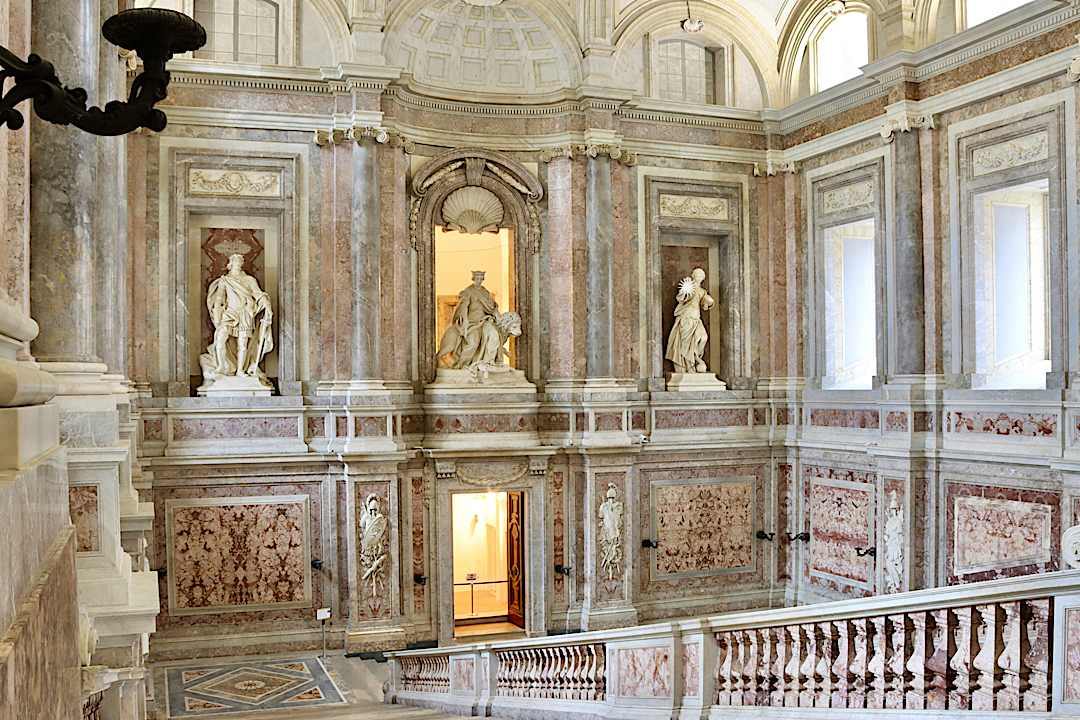
 The Royal Palace, Caserta, Italy.
The Royal Palace, Caserta, Italy.

Skip‑the‑line products tend to cluster around the same big names, but some of Italy’s most unforgettable private experiences take place in less obvious settings: a noble palazzo normally glimpsed only from the street, a historic theater where you can step backstage, or a small chapel whose frescoes are easily overlooked in the usual rush. Here, true exclusivity is not about queue‑jumping at all; it is about gaining access to spaces most visitors never see in any form.

  • Let your specialist suggest a palace, villa, or chapel suited to your interests, be they art, music, or politics, where they can arrange entry outside public hours or into rooms closed to regular visitors.
  • Experience the difference between a quick, public walk‑through and a private visit where lights are turned on for you, doors are unlocked, and the story of the place unfolds gradually.
  • Enjoy the freedom to move through salons, loggias, or backstage corridors without following a fixed, crowded route, allowing your guide to improvise based on your questions and reactions.
  • Use these visits to deepen your sense of each city beyond its most famous icons: a private theater in Parma, a frescoed villa outside Florence, or a lesser‑known palazzo in Rome can become a personal highlight.
  • Balance marquee after‑hours experiences with one or two of these under‑the‑radar visits so your trip feels layered and surprising, not just a circuit of well‑known names with upgraded tickets.

Seasonal Considerations: Timing Your Private Access

A couple enjoying the more quiet streets of Rome.

After-hours and private access to Italy's great sites is not uniformly available across the calendar, with the season you choose shaping not only availability, but also the quality of the experience. Summer brings the longest evenings and the most atmospheric light, but also peak demand, meaning private slots book up well in advance. The shoulder seasons, from April through early June and September through October, tend to offer the most favorable combination of availability, temperature, and calm. A Zicasso specialist understands this and will steer you toward timing that makes your combination of sites feel cohesive rather than compromised.

  • Book private and after-hours slots as early as possible, regardless of season, since genuine access involves institutional arrangements that cannot be confirmed at short notice, particularly for the Vatican and Uffizi.
  • Consider late September or October if the Sistine Chapel is your priority: The summer heat has eased, evening light lingers pleasantly, and the contrast between the quiet interior and the warm Roman streets outside feels especially vivid.
  • Be aware that some private access formats, including certain Colosseum arena and hypogeum combinations, operate on seasonal schedules and may not be available in winter, making it essential to confirm specifics with your specialist rather than assuming year-round availability.
  • Use the shoulder season to layer private evenings with more spontaneous daytime exploration. Then the streets are quieter and wandering between a neighborhood lunch and an evening at the Uffizi feels unhurried in a way that July rarely allows.
  • Discuss your travel dates with your specialist before finalizing your itinerary, so the sequence of private visits is built around confirmed availability rather than retrofitted to a calendar that may not accommodate every site you have in mind.

Practicalities: Choosing When Private Access Truly Matters

A couple enjoys art together in a museum in Italy.

Not every site needs to be experienced after hours and not every “special” ticket fundamentally changes what you will feel. The art of planning lies in knowing where true private access will transform your experience and where a smartly timed standard visit is enough. A Zicasso specialist helps you make these distinctions, so you invest in evenings that matter and avoid paying a premium for a slightly faster version of the same crowded reality.

  • Begin by ranking your icons so your specialist can suggest which merit after‑hours focus and which work well with a well‑timed daytime slot or smaller‑group tour.
  • Understand clearly, before you book, whether an offer represents genuine private/after‑hours access or simply a “skip‑the‑line” or “early-entry” format that still shares the space with many others.
  • Consider your tolerance for crowds: if you are particularly sensitive, channel more of your budget into a few transformative private evenings rather than many minor upgrades.
  • Allow your specialist to space out late nights, pairing them with lighter days so that you arrive at each special visit rested and able to appreciate the quiet.
  • Remember, the goal is not to privatize every moment, but to punctuate your journey with a handful of extraordinary, uncrowded encounters that you will remember long after the trip ends.

Start with a customizable Grand Tour of Italy’s Baroque Art and Architectural History, then work with your Zicasso specialist to decide where true private or after‑hours access will most powerfully elevate your experience.

Beyond Rome, Florence, and Venice: Private Access Across Italy

Spello, a small village in Umbria, Italy.

The concentration of after-hours content around the three main cities can obscure the fact that some of Italy's most extraordinary private experiences take place elsewhere entirely. Sicily offers after-hours access to Greek temples that predate the Colosseum by centuries, Pompeii can be experienced in the early morning before the day-trip buses arrive, and in the hill towns of Umbria or the palazzi of Lecce, private access means unlocking rooms that see almost no visitors at any hour. For travelers who want to build a journey around less-charted ground, these alternatives offer the same quality of intimate encounter without the same weight of expectation.

  • Ask your specialist about early-morning rather than after-hours access at sites like Pompeii and the Valley of the Temples in Agrigento, where it is the first light rather than the last that empties the spaces and transforms the atmosphere.
  • Explore Umbria and Le Marche as alternatives to Tuscany, where smaller towns often grant access to frescoed churches, noble family archives, and medieval fortresses that have no formal ticketing system at all, making the specialist relationship the only route in.
  • Consider Southern Italy and Sicily for a journey built around ancient rather than Renaissance history, where private arrangements at archaeological sites, Norman cathedrals, and Baroque piazzas can feel genuinely rare rather than simply premium.
  • Balance one or two headline private experiences in a major city with a lesser-known private encounter elsewhere, so the trip has a genuine variety of pace and setting rather than simply repeating the same format across three urban stops.
  • Ask your specialist explicitly which sites outside the main cities they have direct relationships with, since the most memorable private access in places like Palermo or Matera often depends entirely on personal connections that no booking platform can replicate.

Start with a customizable Southern Italy tour, asking your specialist to incorporate private access in less-visited regions.

Traveling with Families and Multigenerational Groups

A family visits the Milan Cathedral.

Private and after-hours access changes character significantly when children, teenagers, or elderly travelers are part of the group, and in most cases, it changes for the better. A 10-year-old overwhelmed by daytime crowds at the Colosseum can find the same space genuinely thrilling after hours, while a grandparent who struggles with jostling groups can move through the Raphael Rooms at their tempo. The specialist's role is to calibrate each private experience to the group's composition, ensuring extraordinary access becomes a shared memory, not a logistical challenge.

  • Discuss the ages, interests, and physical needs of every traveler with your specialist before they design the itinerary, so guides can be briefed accordingly and routes adapted to avoid unnecessary stairs, long standing periods, or overwhelming sensory environments.
  • Look for guides with specific experience working with mixed-age groups in private settings, since the storytelling register that engages a twelve-year-old in the hypogeum is quite different from the one that works for adult art enthusiasts, and the best guides shift naturally between the two.
  • Consider splitting the group for some visits if interests diverge sharply, with your specialist arranging parallel experiences, perhaps an after-hours Vatican for the adults while younger travelers join a cooking class or evening gelato tour, then reuniting for dinner.
  • Frame the private experiences for children in advance using your guide's suggestions, since children who arrive knowing they are about to walk where gladiators walked, or stand beneath the ceiling Michelangelo painted lying on his back, engage entirely differently than those who arrive without context.
  • Use the flexibility of private access to build in genuine rest: if an elderly traveler or young child needs to sit quietly for ten minutes mid-visit, a private arrangement accommodates that without disrupting anyone else or losing your place in a group.

Photographing Italy’s Icons Without the Crowds

A couple taking pictures in Verona, Italy.

These are among the most visually extraordinary spaces on earth, and experiencing them without strangers filling every frame changes what you can capture as profoundly as it changes what you can feel. After-hours access does not guarantee a photographic free-for-all, since each institution has its own rules around flash, tripods, and restricted areas, but it does offer something no daytime ticket can: the realistic possibility of a composed image that reflects the space as it actually looks.

  • Confirm photography rules for each site with your specialist before you travel, since policies on tripods, monopods, and flash vary significantly between the Vatican, the Uffizi, and the Colosseum, and knowing them in advance avoids disappointment on the night.
  • Bring a small, lightweight tripod or gorilla pod if low-light interior photography matters to you, since the warm, carefully managed lighting of an after-hours visit is beautiful but rarely bright enough for handheld shots at shutter speeds that eliminate motion blur.
  • Ask your guide to advise on the best moments during the visit to pause for photography, since they will know when lighting is at its most dramatic, which angles are clearest, and when other visitors present are likely to be elsewhere in the space.
  • Consider hiring a professional photographer to join one private evening, a service your specialist can often arrange, so that you appear in the images rather than simply behind the camera; a photograph of your family standing alone in front of Botticelli's Primavera is a genuinely rare document.
  • Remember that some of the most powerful images from a private visit are not of the art itself, but of the experience: a guide's gesture toward a fresco, a child's face tilted upward at the Colosseum's arches, or the texture of lamplight on ancient stone.

When planning a trip like our Capturing Italy: Photography Tour of Venice and Po Delta, ask your specialist whether a professional photographer can be incorporated into one or two of your private evening visits. However, confirm photography policies for each site before finalizing your itinerary.

What to Do When Plans Shift

Vatican Museums, Rome.

Even the most carefully arranged private access is subject to the unexpected: an institution closes for a state visit or conservation emergency, a delayed flight leaves you too exhausted for a late evening, or weather makes an outdoor transfer impractical. The difference often lies in how gracefully the disruption is handled. A Zicasso specialist anticipates these possibilities, maintaining relationships with alternative venues and holding backup options in reserve so a changed plan is like a considered pivot rather than a disappointment.

  • Establish early in your planning conversation what your specialist's protocol is if a confirmed private slot is canceled at short notice, including how they communicate with you, what alternatives they hold in reserve, and whether any financial protection applies.
  • Understand that some disruptions are foreseeable. The Vatican occasionally closes sections for papal events, the Uffizi for conservation work, and the Colosseum for film productions. Your specialist should know these calendars and have planned around them.
  • Trust the pivot: if your specialist suggests replacing a canceled after-hours Uffizi with a private visit to a frescoed Medici villa outside the city, the alternative often turns out to be the most memorable evening of the trip precisely because it arrived without expectation.
  • Build at least one free evening into your itinerary as genuine breathing room, so that if a private visit needs to be rescheduled, there is a natural place in the calendar to absorb the change without compressing everything else.
  • Stay in touch with your specialist throughout the trip, not just at the planning stage. The relationships that secured your access in the first place are also the fastest route to a solution if something needs to change while you are already in Italy.

Access the Inaccessible by Planning Your Italy Trip with Zicasso

Florence, Italy.
Florence, Italy.

When you look back on a journey through Italy, it is rarely the “fast access” lane you remember; it is the feeling of standing in a nearly empty chapel, gallery, basilica, or arena and sensing its history settle around you. The difference between a commoditized skip‑the‑line tour and genuine private or after‑hours access is the difference between efficiency and intimacy: one optimizes entry, the other transforms experience. Choosing the latter turns famous sites into personal memories instead of crowded obligations.

Zicasso’s Italy specialists are dedicated to understanding not just what you want to see, but how you want to feel while you are seeing it. They distinguish between tickets that merely move you through the system faster and those that open doors when the world outside has gone quiet. They then build itineraries that balance those rare evenings with relaxed days, characterful hotels, and seamless logistics. With guidance from Zicasso’s Italy travel guide and curated Italy tours and vacations, you can move beyond the promise of “skip‑the‑line” to a journey defined by depth, atmosphere, and access that genuinely feels inaccessible to most.

31,000+ Verified Traveler Reviews