Sabi Sand vs Kruger: Where Should I Travel?

Safari in the Kruger National Park, South Africa.

Safari in the Kruger National Park, South Africa.

Sabi Sand and Kruger National Park are not two competing safaris. They are one ecosystem with two rulebooks. An unfenced, 31-mile boundary between them, opened in 1993, lets the same herds and prides move freely from one side to the other, so the wildlife question is already answered before you book anything: it is the same wildlife.

What is not the same is who controls your access to it. Kruger is a public national park where a rental car and a daily conservation fee get you onto tar roads alongside every other visitor. Sabi Sand is a private reserve where a ranger takes you off-road at a nightly rate that can run into thousands of dollars. Choosing between them or planning a trip that uses both comes down to how much that control over the sighting is worth to you, not to which side of the boundary sounds more prestigious.

Extraordinary travel begins with the human touch and our destination specialists design every journey with meticulous care and attention to detail. No two African safaris unfold the same way, because no two travelers weigh price, proximity, and privacy in the same measure. Your specialist can build a route through Kruger, Sabi Sand, or a combination of both, sparing you the hours of comparing SANParks tariffs, exchange rates, and dozens of private lodges to find the one that matches what you actually want from the bush.

Where is Sabi Sand?

Lodge in Sabi Sands, South Africa.

Sabi Sand sits in the Lowveld of Mpumalanga Province, on Kruger National Park's western edge, where the Sabi and Sand Rivers that give the reserve its name cut through roughly 160,000 acres of riverine bush and open savanna. First established by a group of private landowners in 1934 and formally organized under its current name in 1948, it is widely credited as South Africa's first private game reserve, built by families who were excised from the land when Kruger was proclaimed.

The reserve has no public entrance. Guests fly directly onto a private airstrip within one of its lodge concessions, so the geography a visitor experiences is whatever stretch of riverine bush that specific lodge holds traversing rights over, rather than the reserve as a single unified space.

Where is Kruger?

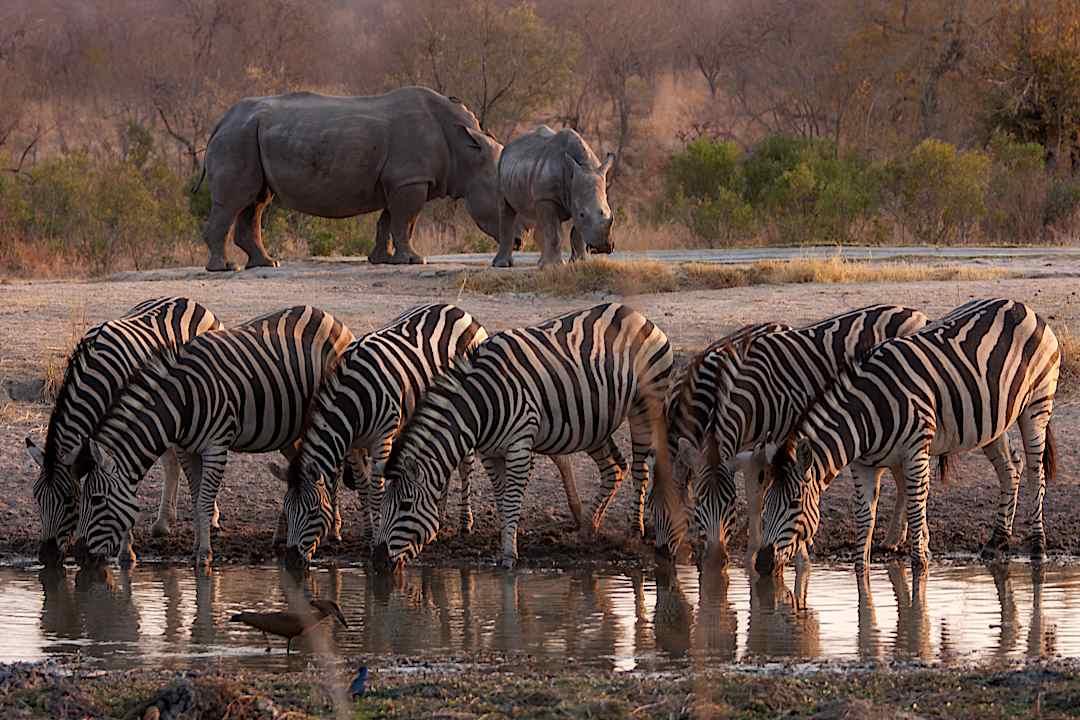
Herd of zebras in the Kruger National Park.

Kruger National Park stretches nearly 7,500 square miles across South Africa's Mpumalanga and Limpopo provinces, running roughly 220 miles from its southern gates near Malelane to its northern reaches at the Limpopo River, which forms the border with Zimbabwe and Mozambique. Within that span, the terrain shifts from the granite koppies and riverine forest of the south to the mopane woodland and baobab-studded plains of the far north, a range of habitat that no single private reserve, including Sabi Sand, can match.

SANParks manages Kruger and it has been continuously protected in some form since 1898, making it one of Africa's oldest conservation areas. A network of tar and gravel roads connects a dozen public rest camps, from Skukuza in the south to Punda Maria in the north, giving self-drive visitors a scale of access that a privately gated reserve was never designed to offer.

What are the Similarities Between Sabi Sand and Kruger?

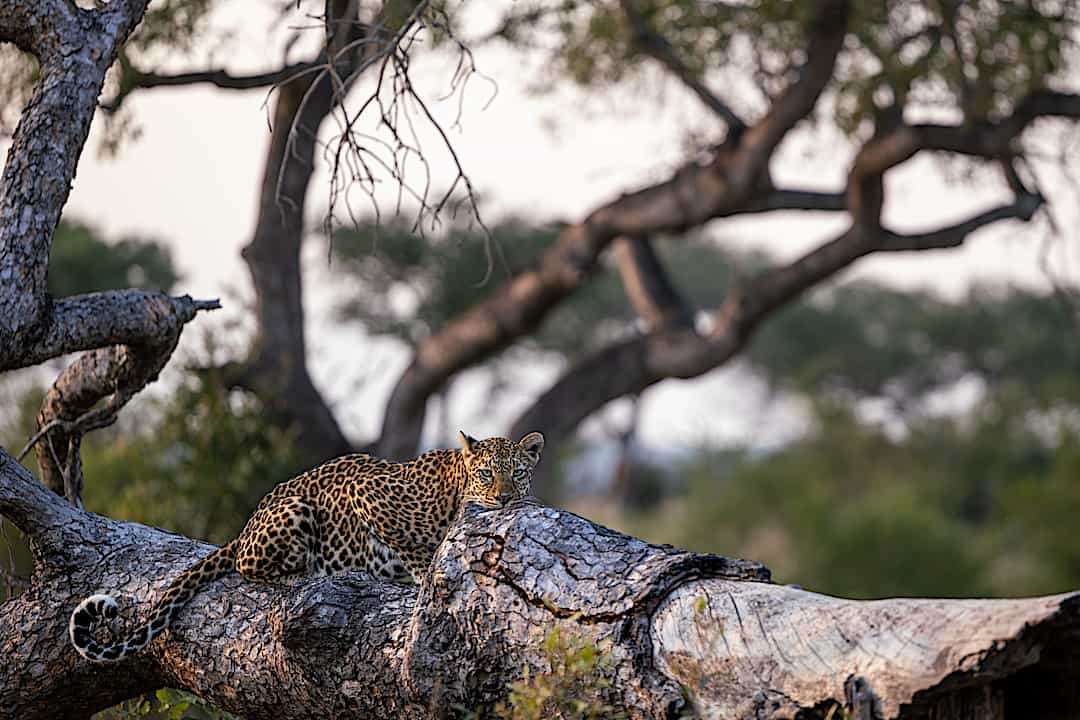
Leopard sighting in Londolozi, Sabi Sands.

Both sit inside the same open ecosystem, which is the reason the comparison exists at all.

  • Shared wildlife: Wildlife moves across the unfenced boundary between them without regard for who owns which side, so a lion pride denned in Sabi Sand this month may be hunting inside Kruger's public sections by the next and a leopard that dens near a Sabi Sand lodge one season may raise its next litter well inside Kruger's boundary. The Big Five, along with the region's cheetah, wild dog, and hippo populations, are equally present on both sides and neither reserve can claim an animal or a sighting as exclusively its own.
  • Climate and season: Both are lowveld malaria regions with a dry winter season, roughly May through September, when thinning vegetation and animals clustering at rivers and waterholes make sightings easier throughout the ecosystem. The wet summer months bring lusher scenery and newborn animals, but denser bush, so the seasonal trade-off between visibility and greenery applies equally on either side of the fence line.
  • Access route: Both are reached the same way from overseas, through Johannesburg, then a short domestic connection into the region. From there, Kruger's public rest camps and Sabi Sand's private airstrips both sit within a similar radius of the same regional airports, so the international leg of the journey looks identical regardless of which side a traveler ultimately books.

It is worth noting that a handful of private concessions inside Kruger's boundary operate under off-road rules similar to Sabi Sand, blurring the regulatory line that otherwise separates the two. They are a small exception within Kruger's public, SANParks-run majority, which is what the rest of this comparison refers to.

What are the Differences between Sabi Sand and Kruger?

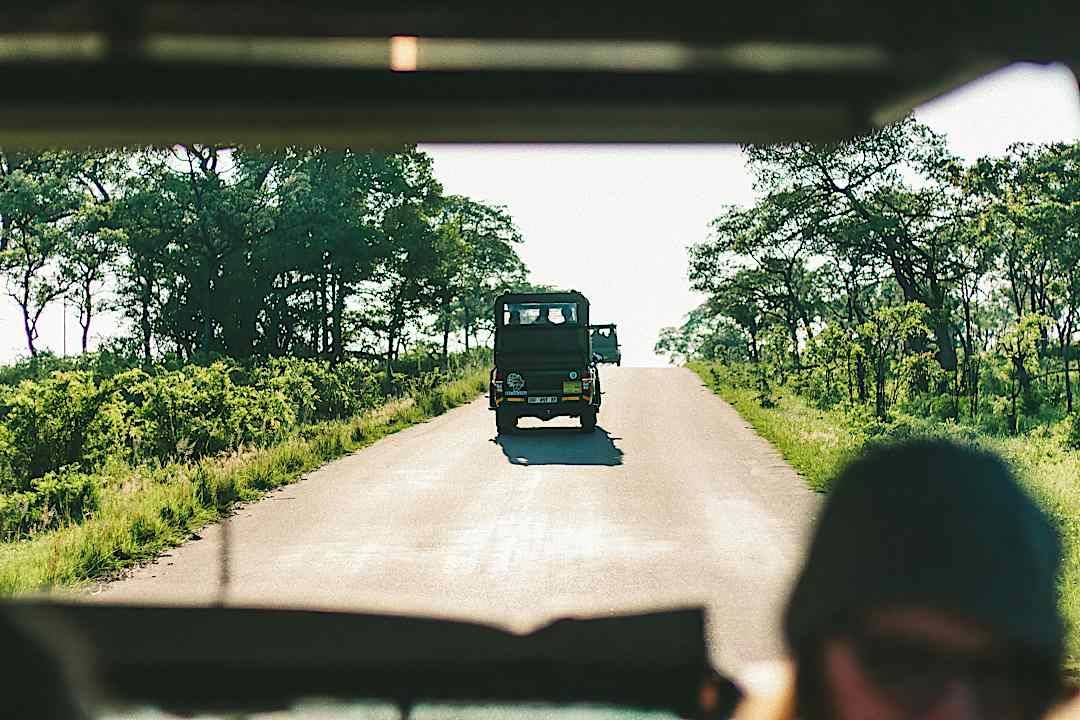
Safari in the Kruger with multiple vehicles, South Africa.

The differences that matter between Sabi Sand and Kruger are not geographic. They are regulatory. Kruger's public sections are managed by South Africa's national parks authority and every vehicle inside them, whether self-driven or guided, operates under rules built for a park that admits any paying visitor. Sabi Sand is privately owned by a consortium of landowners and their lodges. This lets the reserve set its own rules for a much smaller, much more controlled number of guests, and price accordingly: Kruger's current SANParks daily conservation fee for international visitors runs around $33 per person, while Sabi Sand lodges range from about $330 per person, per night, sharing at entry-level properties to more than $2,150 a night at the most exclusive camps.

  • Off-road tracking: Kruger vehicles must stay on designated roads, so a sighting is whatever happens to be visible from the tar. Sabi Sand rangers can drive into the bush to follow an animal and reposition the vehicle as the scene develops.
  • Vehicle limits: Kruger has no cap on vehicles per sighting and popular areas can draw 10 or more at once. Sabi Sand lodges generally hold sightings to two or three vehicles at a time.
  • Night drives: Self-drive visitors in Kruger must be back at camp by sunset and guided night drives from the main rest camps are limited and often full. Night drives are a standard, included part of nearly every evening at a Sabi Sand lodge.
  • Sighting information: Guided vehicles in Kruger do use radios to share sightings, but that coordination is split across many independent tour operators and self-drive visitors are left working from communal sighting boards at rest camps that are updated only periodically. In Sabi Sand, every guest rides in a guided vehicle and the small number of lodges sharing the reserve keeps that radio network unusually tight, so a find reaches every other vehicle within earshot almost the moment it happens.
  • Access model: Kruger admits day visitors and self-drive tourists through its public gates. Sabi Sand has no day-visitor option at all; the only way in is as an overnight lodge guest, typically arriving by light aircraft onto a private airstrip.

None of this makes Kruger's wildlife less real or that of Sabi Sand more exotic. It changes how close you get to it, how much control your guide has over the outcome, and how many other vehicles share the moment with you.

Does Sabi Sand or Kruger Have Better Wildlife?

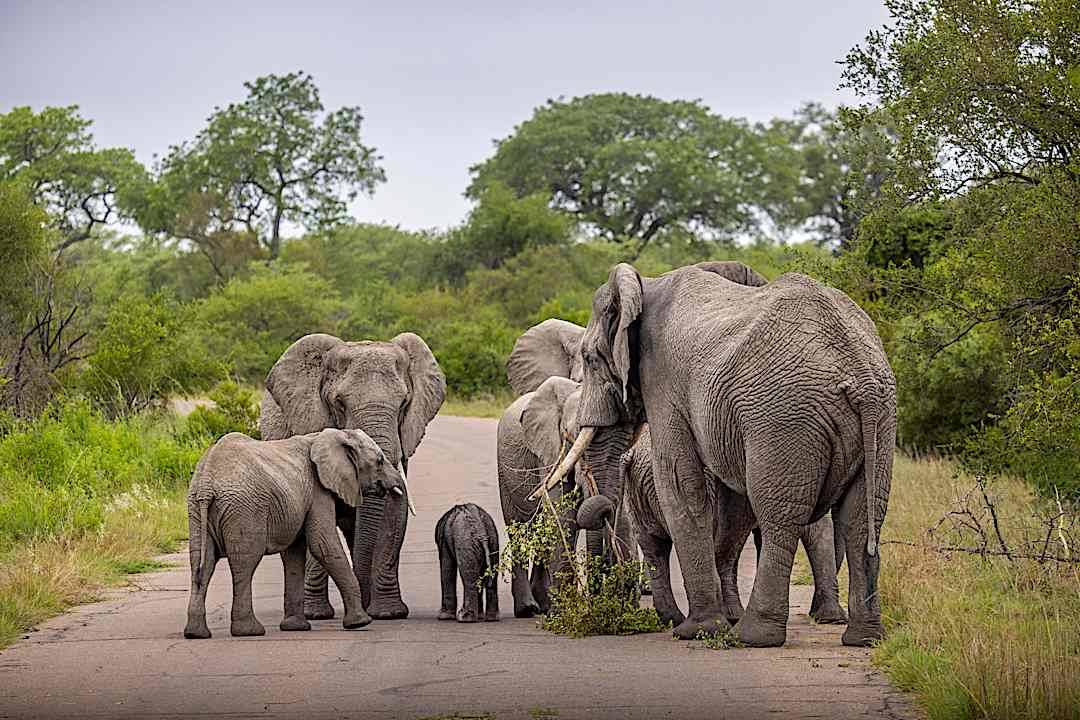
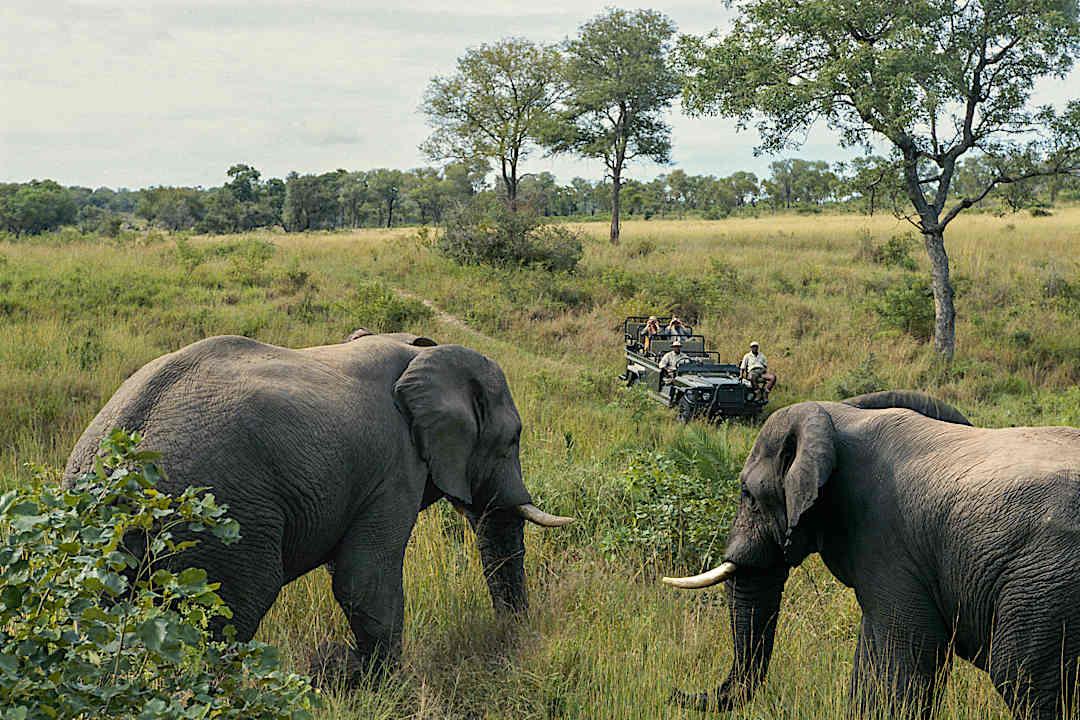
Herd of elephants in the Kruger National Park.

Neither has better wildlife because it is the same wildlife. The question worth asking is which reserve gives you a better view of it. For sheer density of predator sightings, leopards in particular, Sabi Sand has the clear edge. Its leopards have been habituated to vehicles over decades and rangers empowered to leave the road can close a sighting from 165 feet away to 15, a gap Kruger's on-road rule cannot close no matter how skilled the guide.

Kruger's advantage runs the other way: variety of habitat over the course of a longer stay. A multi-day drive through Kruger moves across granite hills, riverine forest, mopane woodland, and open plains, each holding a slightly different mix of species, so a traveler who stays four or five nights sees a wider cross-section of the ecosystem than a single Sabi Sand concession, however excellent, can show in the same time. If the priority is the single best leopard photograph of the trip, choose Sabi Sand. If the priority is the fullest possible picture of how this landscape actually changes across its range, choose Kruger.

What Are the Top Activities in Sabi Sand?

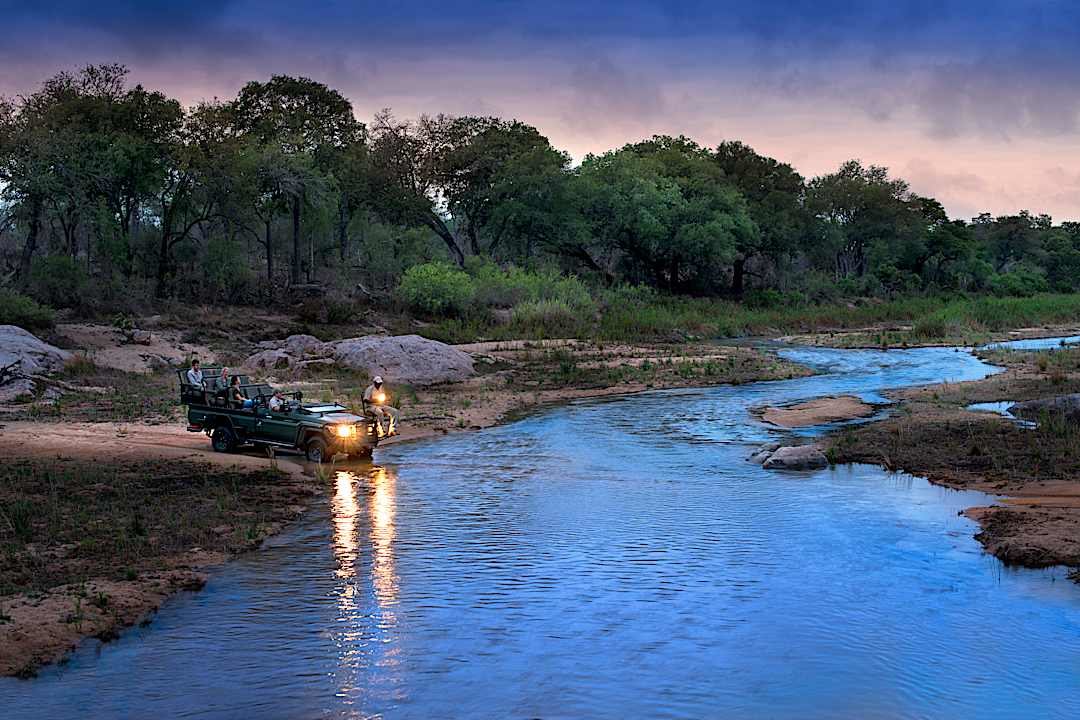
Nighttime game drive in Sabi Sands, photo credit South Africa and Beyond Tengile River Lodge

Every activity at a Sabi Sand lodge is guided, which is exactly what makes the list of things to do feel more like a curated evening than a checklist. Twice-daily game drives, morning and late afternoon into evening, form the spine of each day, punctuated by a ranger and tracker team working together on foot when a fresh print or alarm call is worth following.

  • Off-road game drives: Rangers track specific animals into the bush rather than waiting for them to cross a road.
  • Night drives: Spotlights pick out nocturnal species, civets, genets, and owls that a daytime drive never reveals.
  • Walking safaris: Armed guides lead small groups on foot to read tracks, dung, and birdsong at a pace a vehicle cannot match.
  • Bush dinners: Private, lantern-lit dinners set up in the reserve turn an ordinary evening into an occasion.
  • Photographic hides: Several lodges maintain ground-level hides at waterholes, giving photographers an eye-level vantage most vehicles cannot offer.

For travelers who want proximity over acreage, our travel specialist often recommends building a trip around properties like the ones featured in our Cape Town Tour and Sabi Sand Safari.

What Are the Top Activities in Kruger?

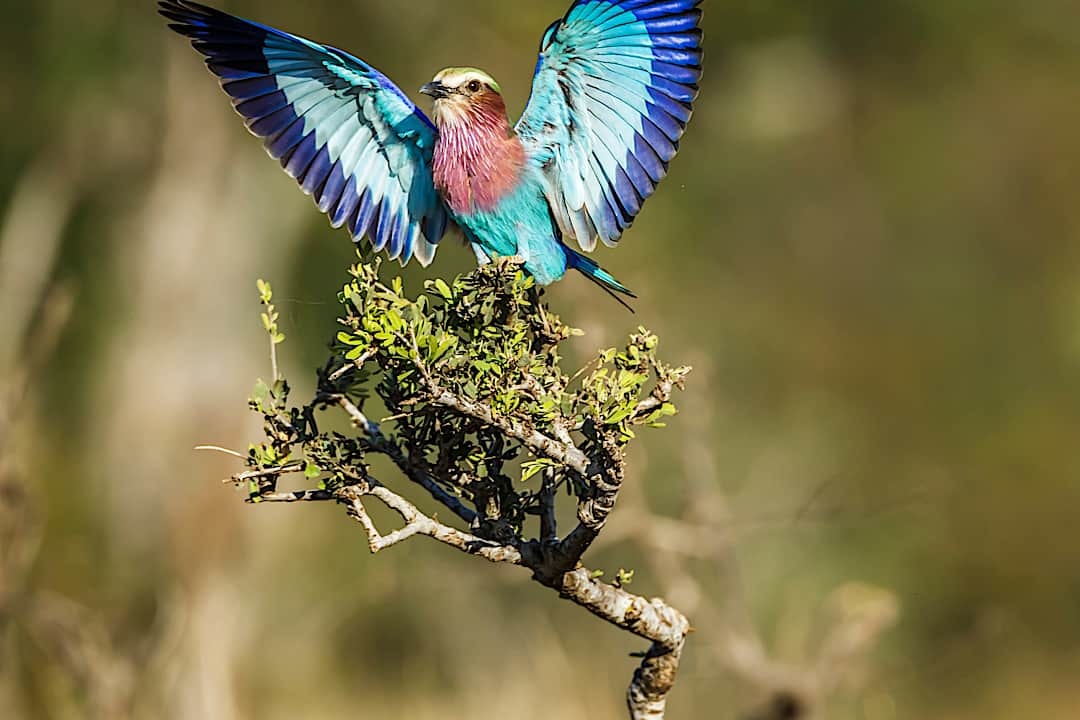
Lilac breasted roller sighting in the Kruger National Park, South Africa.

Kruger's activities lean toward independence and the range on offer reflects a park built for every kind of visitor rather than one built around a handful of lodges.

  • Self-drive game drives: Set your own route and pace along Kruger's tar and gravel road network, stopping wherever the sighting holds your attention.
  • Guided sunrise and sunset drives: Rest camps run their own open-vehicle drives for visitors who want a guide's eye without booking a private reserve.
  • Guided walking trails: Multi-day backpack trails and shorter morning walks, led by armed field rangers, are available from several camps.
  • The Panorama Route: Blyde River Canyon and God's Window sit within easy reach of Kruger's southern gates, adding dramatic escarpment scenery to a safari-focused trip.
  • Birdwatching: With more than 500 recorded species across the park's varied habitats, Kruger draws serious birders as reliably as it draws Big Five travelers.

For travelers weighing Kruger as their anchor, our travel specialist can build the trip around our best Kruger National Park safaris.

Is It Easier to Travel to Sabi Sand or Kruger from the US?

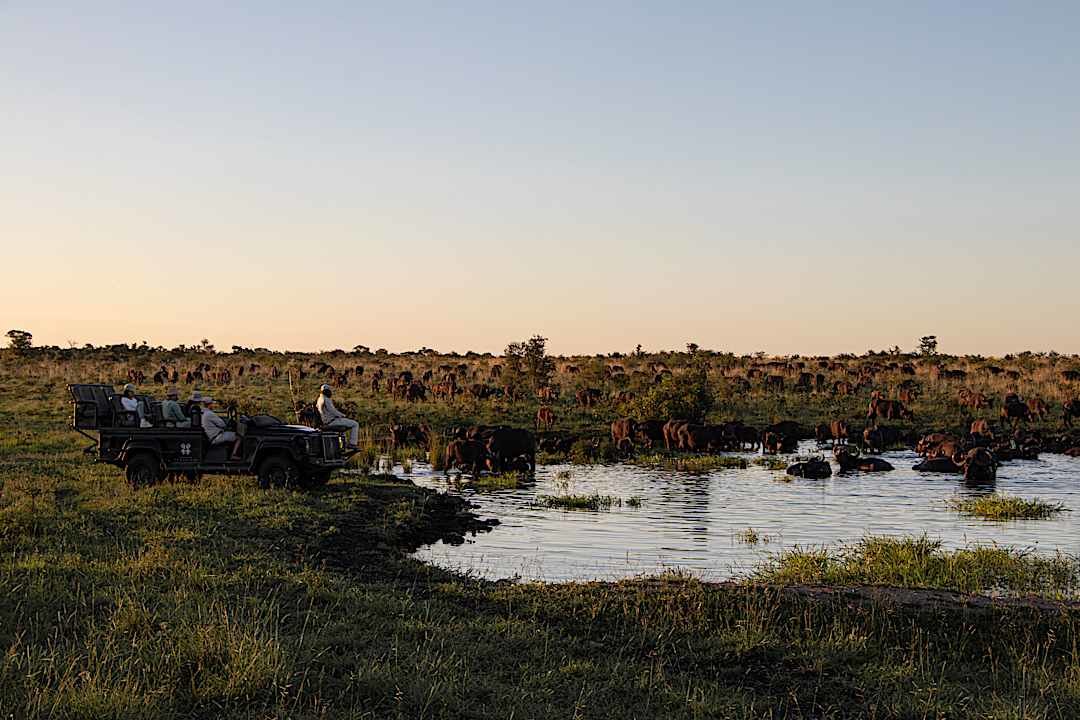
Game drive in the Kruger park, featuring buffalos.

Getting to the region is identical either way: most itineraries from the US connect through a European or Gulf hub into Johannesburg's O.R. Tambo International Airport, then a short domestic leg the rest of the way. Where the two diverge is what happens after that domestic leg.

Kruger offers a genuine choice. Travelers can fly into Kruger Mpumalanga International Airport or Skukuza Airport for a short transfer to a rest camp or rent a car in Johannesburg and self-drive the four to six hours to the park's southern gates, arriving on their schedule and at a fraction of the cost of a charter. Sabi Sand offers no such choice: every guest connects onto a light aircraft, either from Johannesburg directly or via a stop at Kruger Mpumalanga International Airport, that lands on the lodge's own airstrip. That makes Sabi Sand the more effortless arrival, since the specialist-arranged transfer is the only variable to manage, and Kruger the more flexible one, since a self-drive traveler controls the timing and cost of that final leg themselves.

Can You Combine Sabi Sand and Kruger in One Trip?

Elephant sighting during a safari.

The real answer is not Sabi Sand or Kruger, but Sabi Sand and Kruger, since the unfenced border turns the move between them into a short transfer rather than a fresh journey. A common pattern is to spend two or three nights in Kruger first, for scale and a taste of self-drive-style exploration from a rest camp or a Kruger-based lodge, then cross into Sabi Sand for the final nights, trading wide landscapes for close, guided intimacy before flying out. Reversing the order works just as well for travelers who want the luxury first and the sense of open wilderness as a closing act.

Deciding whether to split the trip or commit fully to one reserve is exactly the kind of calculation worth handing to a specialist rather than working out alone: comparing a rest-camp stay against a dozen candidate lodges across two reserves, each with its own airstrip, transfer time, and price tier, is a multi-hour research project and getting the transitions between them arranged in advance is what keeps a combined trip feeling seamless rather than logistically stressful.

The tradeoff to weigh is mainly one of time: a single-reserve stay of four or five nights in Sabi Sand alone delivers a complete, unhurried safari, while splitting a shorter trip across two reserves can mean less time settled into either one. And because the two reserves are run by entirely different operators under entirely different rules, a multi-reserve itinerary is exactly where the Zicasso Assurance earns its keep: your specialist manages the details on the ground while Zicasso monitors the trip in the background, ready to adjust a transfer or a lodge booking if a flight shifts or a camp's availability changes, so any delay doesn't unravel the rest of the week. Trips like our Kruger and Sabi Sand Safari for First Timers show how the pairing plays out over a full week.

Choose Kruger For:

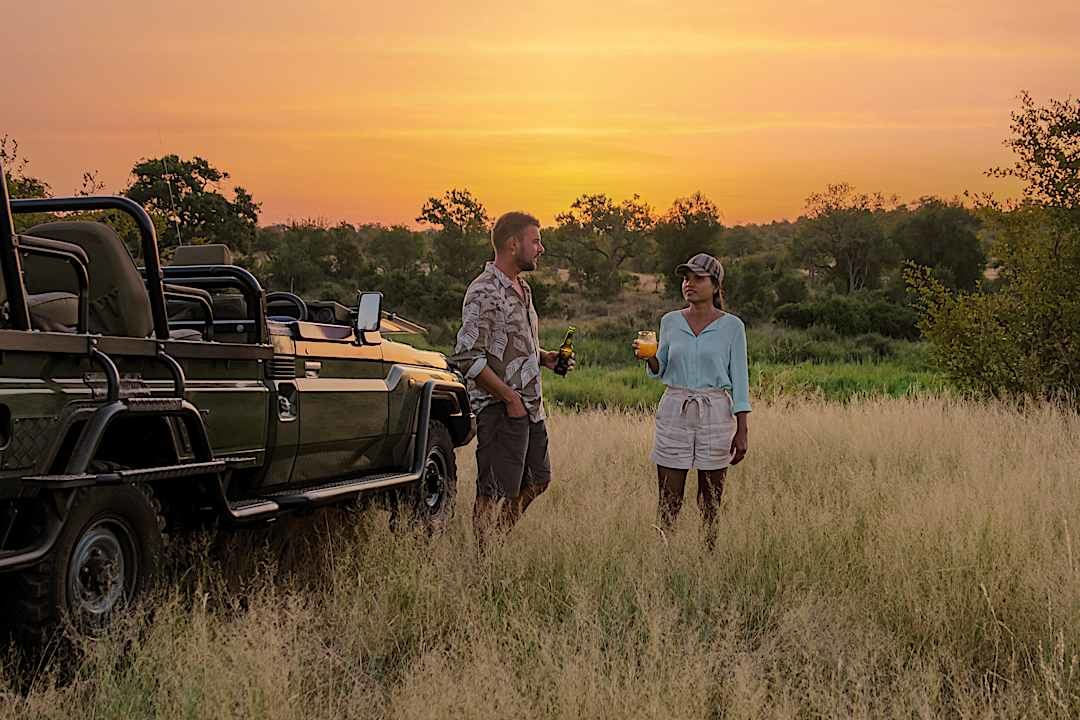
Couple enjoying a sunset safari in the Kruger National Park.

Kruger is the right anchor for travelers who want a safari that feels vast rather than curated. At nearly 7,500 square miles, spanning open savanna, mopane woodland, and riverine forest, the park has room for a family to set its pace, a photographer to chase specific light, or a self-drive couple to simply follow a road and see what the morning brings. You can pull your car off to the side of a quiet gravel road at a waterhole, cut the engine, and wait as a breeding herd of elephants files down to drink, with no other vehicle in sight and no schedule pulling you away. It is also the far more affordable way into this ecosystem, with rest-camp accommodation costing a fraction of a private lodge's nightly rate.

  • Self-drive freedom: You can drive yourself, buy a conservation permit, and set your itinerary without ever booking a guide.
  • Landscape variety: Kruger's scale means a multi-day stay moves through several distinct habitats rather than one concession.
  • Budget flexibility: Rest camps and public campsites bring a Big Five safari within reach of travelers who would never consider a private-reserve rate.
  • Family independence: Children can nap, wander a fenced rest camp, or skip a game drive without disrupting a shared itinerary.
  • First-time scale: For a traveler who has never seen Africa's size and diversity up close, Kruger delivers that scale in a way a smaller private reserve cannot.

Choose Sabi Sand For:

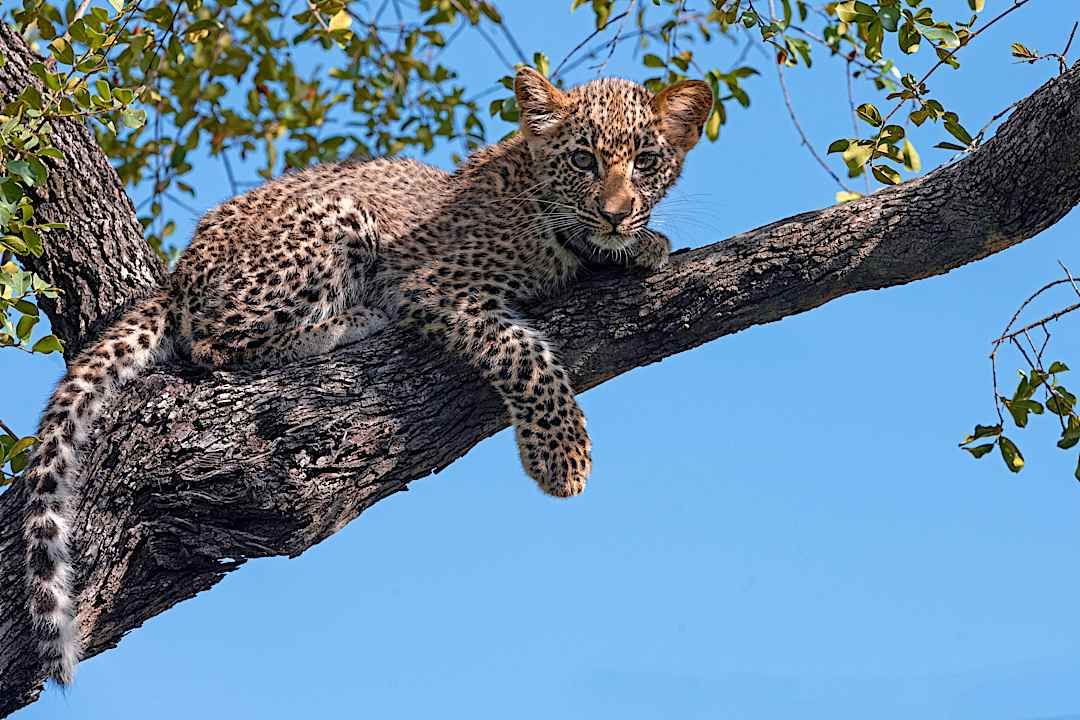
Baby leopard sighting at Sabi Sands.

Sabi Sand is the right anchor for travelers whose priority is proximity, not acreage. This is the reserve where a leopard, habituated to vehicles over generations, might walk past your open-sided safari vehicle close enough for you to hear it breathe or where a ranger will cut the engine and let you sit in silence a few feet from a kill. That intimacy comes from limiting the reserve to a handful of lodges, each holding traversing rights over its own stretch of bush. Rates shift by lodge, season, and exchange rate, which is the kind of moving target a specialist tracks so you don't have to.

  • Leopard density: Sabi Sand is widely regarded as one of the most reliable places anywhere to see leopard, a reputation built on decades of habituation rather than luck.
  • Guided intimacy: Every activity, from the game drive to the bush walk, is led by a ranger and tracker team working a reserve they know intimately.
  • Privacy at sightings: With sightings capped at two or three vehicles, the moment stays yours rather than becoming a small traffic jam.
  • Night and walking safaris: Included night drives and guided walks open up a nocturnal and on-foot side of the bush that a public park rarely offers.
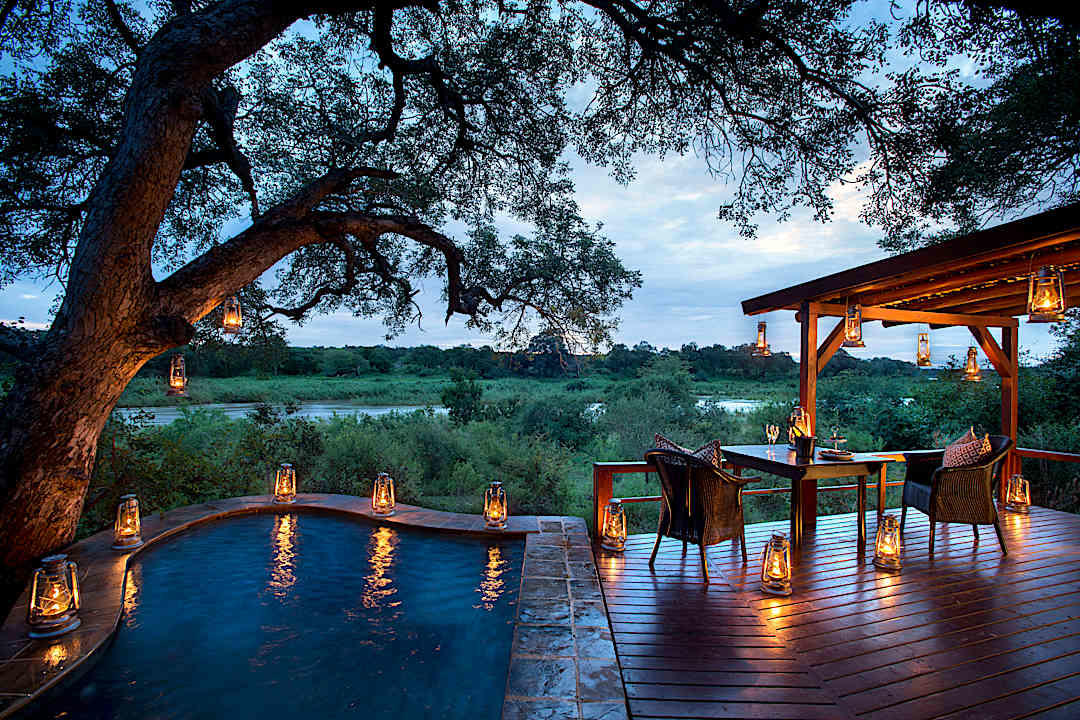
  • Uncompromised luxury: Suites, plunge pools, and multi-course dining sit inside the reserve itself, so the wildlife experience and the five-star stay share the same address.

Frequently Asked Questions

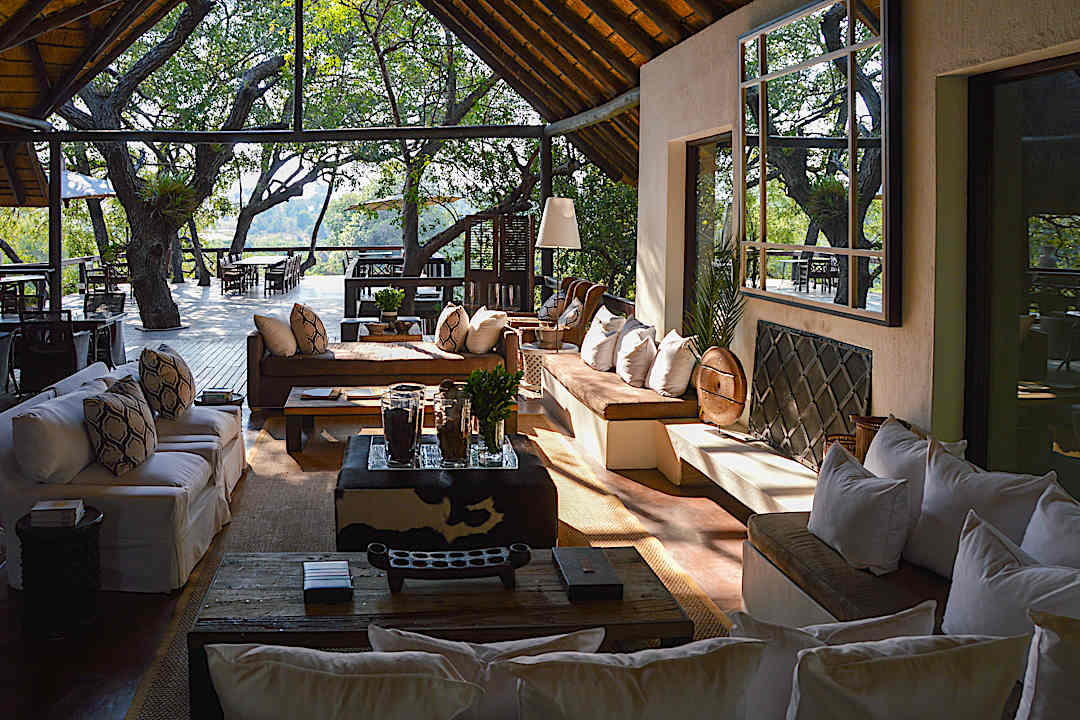
Luxury Resort in Sabi Sands, photo supplied by MORE Family Collections.

Is Sabi Sands worth the extra cost over Kruger? For travelers who care most about close, low-traffic sightings and the highest odds of a great leopard encounter, those who have experienced both say yes. For travelers who care more about scale, independence, or keeping the budget down, Kruger delivers excellent Big Five viewing without that premium.

How do you choose between Sabi Sand and Kruger for a first African safari? Start with what the trip is meant to deliver, not which name sounds more prestigious. A first-timer who wants an intimate, guided, closely tracked encounter tends to prefer Sabi Sand, while one who wants to explore a large, varied landscape at their pace or on a tighter budget tends to prefer Kruger. A specialist can also blend the two into a single itinerary, so the decision doesn't have to be either-or.

Can I do a self-drive safari in Sabi Sand the way I can in Kruger? No. Sabi Sands has no day-visitor or self-drive option; every activity is guided and access is limited to overnight lodge guests. Kruger is the one built for independent travel, with public roads, rest camps, and a rental car all a visitor needs.

Is Sabi Sand technically part of Kruger National Park? No. Sabi Sands is a privately owned reserve on Kruger's western edge, sharing an unfenced border, but managed entirely separately from SANParks. The wildlife and the ecosystem are shared; the ownership and the rules are not.

Does Zicasso build itineraries that combine Kruger and Sabi Sand? Yes. Because the two sit on either side of an open border, a specialist can sequence a stay that moves between them, such as our Kruger and Sabi Sand Safari for First-Timers, without the traveler having to arrange the transfers or compare lodges alone.

What is the best time of year to safari in Sabi Sand or Kruger? The dry winter months, roughly May through September, favor both reserves equally, since thinning vegetation and animals gathering at limited water sources make sightings easier across the ecosystem. Neither reserve has a meaningfully better season than the other; the choice of when to go matters far less here than the choice of where.

Is Kruger too crowded to be worth visiting? Not necessarily. Crowding concentrates around the most popular rest camps and peak-season dates. Choosing a quieter camp, a less-traveled section of the park, or a shoulder-season date restores much of the space that draws travelers to Sabi Sand.

Discover More About Safari in the Sabi Sand and Kruger Ecosystem

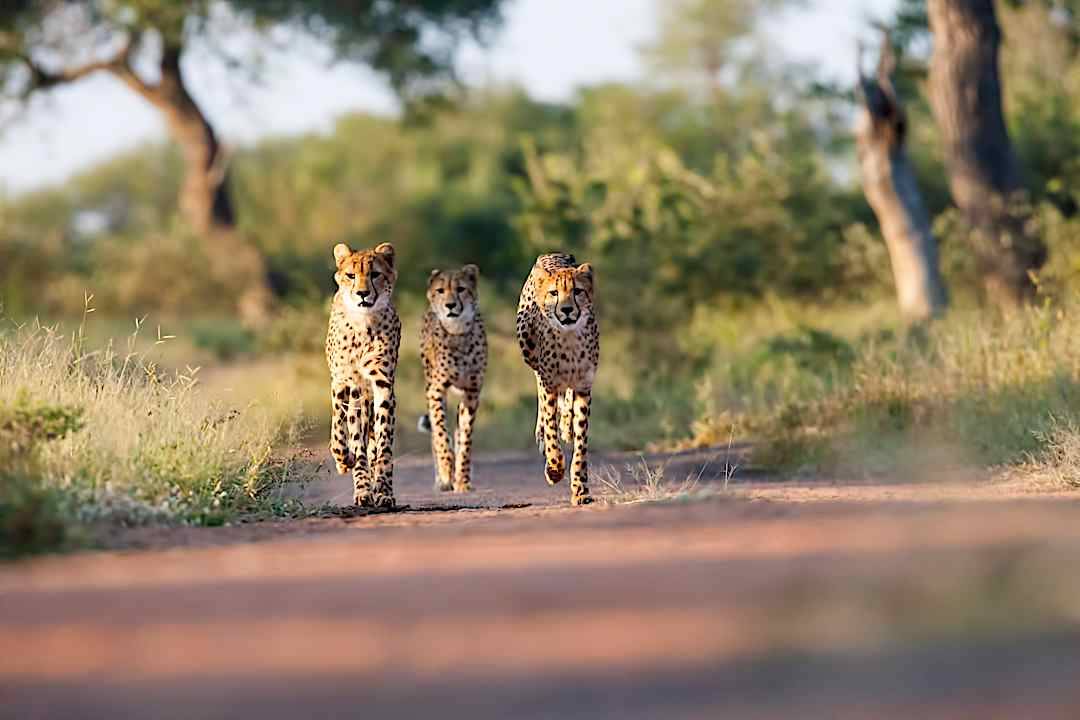
Cheetahs running in the Kruger National Park.

The right trip, whether it's a Kruger self-drive, a Sabi Sand lodge stay, or a week that moves between both, comes down to how much control over the sighting and how much privacy at it is worth to you. Kruger will always be the more accessible way to see this landscape. Sabi Sand will always be the more intimate one.

Our travel specialists build both kinds of trips, and plenty that combine them, across the wider region. For more inspiration, explore our African safari travel guide and our best South Africa safari tours to start planning.

34,000+ Verified Traveler Reviews