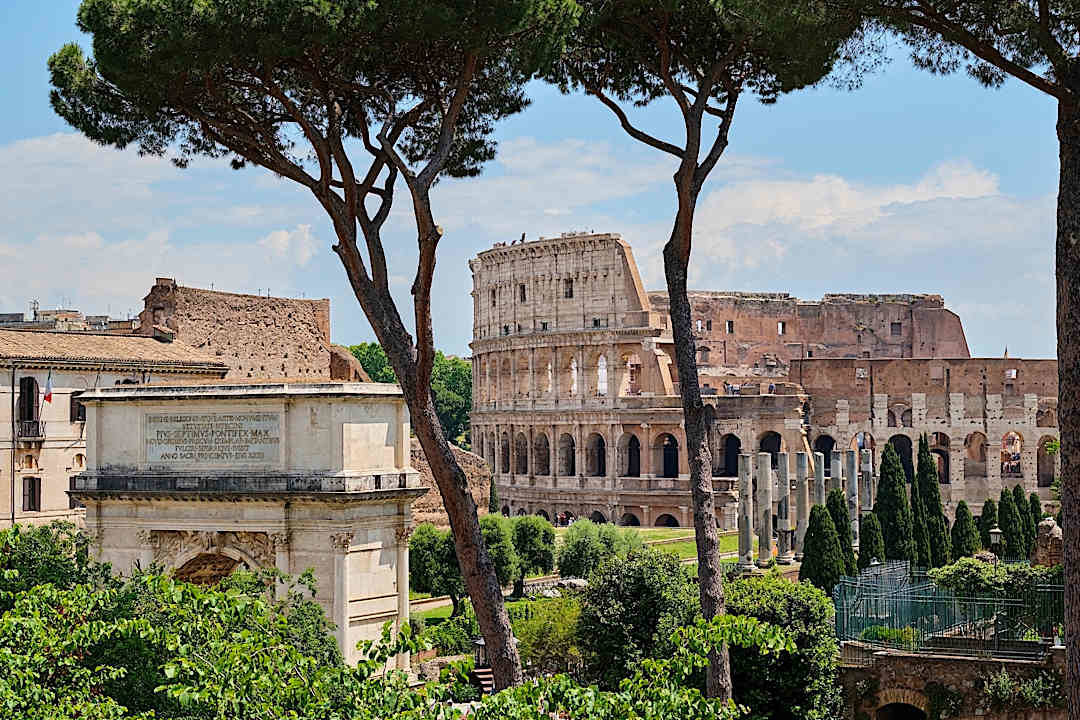
Rome earns its place at the start of an Italy itinerary because nowhere else compresses this much history into a walkable footprint. That density rewards the tightly scheduled, timed-entry approach most first-time travelers already plan around.
The Case for Starting in Rome
Rome's density is the reason it belongs at the start of an Italy itinerary, not a reason to rush past it. The Pantheon's dome, poured as unreinforced concrete under Hadrian, is still the largest of its kind anywhere in the world and sits an eight-minute walk from the Trevi Fountain. Beneath the cobblestones, imperial-era buildings sit half-buried under medieval churches later absorbed into a Renaissance street plan. The Colosseum, the Vatican, and the Forum are famous because they earned it, not because a marketing department decided they should be.
Each of the four major sites sits close enough to reach on foot, but rewards a different kind of attention. At the Colosseum, knowing what you are standing in the middle of pays off. The Pantheon rewards looking straight up. The Forum rewards understanding what is missing as much as what remains. St. Peter's rewards patience, since its true scale only registers once you are standing directly beneath the dome.
- The Colosseum took eight years to build, begun under Vespasian in 72 AD and dedicated by his son Titus in 80 AD, with a fourth story added two years later under Domitian.
- It was built largely with Jewish slave labor following the sack of Jerusalem, using an estimated 100,000 cubic meters of travertine quarried 20 miles away in Tivoli and held together with iron clamps.
- The amphitheater measures 620 by 513 feet and once held as many as 50,000 spectators across four stories.
- The Pantheon's dome is exactly as wide as it is tall, a sphere that would fit perfectly inside the rotunda, poured without a single piece of steel or iron reinforcement.
- Its 16 front columns are solid Egyptian granite, quarried and shipped across the Mediterranean in single pieces; three on the left are later replacements that do not quite match the originals.
- The Roman Forum sat buried under centuries of earth and debris, known to medieval Romans as Campo Vaccino, the Cow Field, before 19th-century excavation began uncovering it down to the level Julius Caesar would have known.
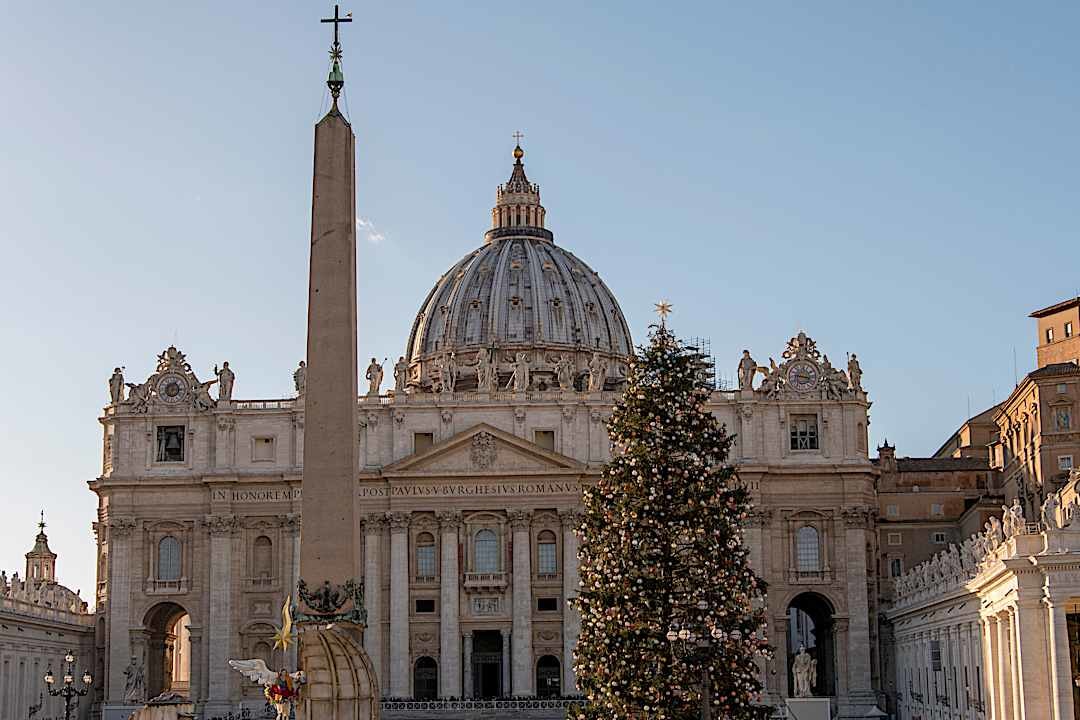
- St. Peter's Basilica is still the largest church interior in the world by volume, its dome designed by Michelangelo in his 70s and completed after his death.
None of these details change whether the sites are worth visiting. They change what a visitor notices once inside. It’s the difference between walking through a famous building and understanding why it has stayed famous for 2,000 years.
A City Built in Layers
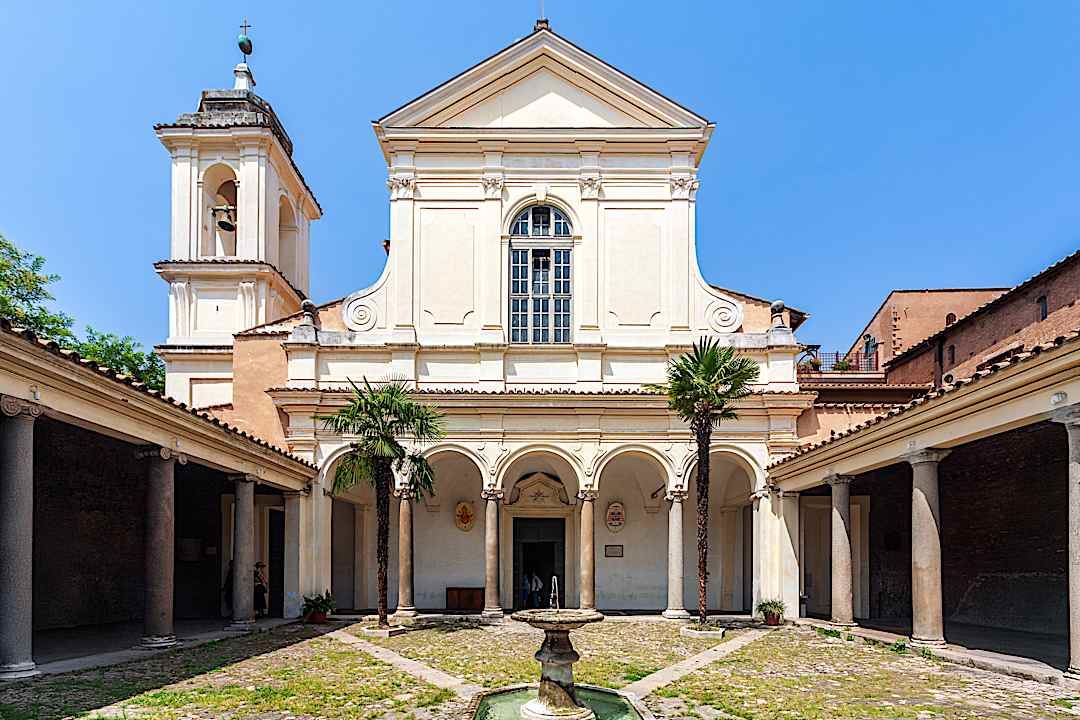
One thousand three hundred feet from the Colosseum, a plain 12th-century church called San Clemente hides something most visitors never learn is there. Beneath the basilica sits a fourth-century church, its walls covered in early medieval frescoes. Beneath that church sits a first-century Roman house. Inside that house, in the third century, someone converted a private room into a Mithraeum, a windowless shrine to Mithras, a Persian sun god worshipped in secret by Roman soldiers who believed in discipline over spectacle. The altar is still there, carved with the god slaying a bull. Descend far enough into the lowest level and you can hear water running somewhere in the dark, the remains of a spring or an ancient aqueduct still finding its way toward the Tiber 2,000 years after the room above it stopped being used for anything at all.
The Mithraeum did not stay hidden by accident. When Christianity became Rome's dominant religion in the fourth century, builders did not abandon the shrine below; they packed one of its rooms with rubble and built directly on top of it, burying a rival religion under the foundations of the one that replaced it.
- The Irish Dominican order has served as custodian of the basilica since the 17th century and excavation of the lower two levels only began in the 1850s under an Irish Dominican prior named Joseph Mullooly.
- The fourth-century church's frescoes include dialogue written in early Italian vernacular rather than Latin, one of the earliest written records of the language shifting toward the Italian spoken today.
- Initiates into the Mithraic cult were believed to stand beneath a grating as bull's blood was poured over them during initiation, a ritual tied directly to the altar carving of Mithras slaying a bull.
- Membership was restricted to men, mostly soldiers and merchants, organized into seven ranks of initiation that required secrecy, leaving few written records behind.
- Roman guides have given the site an unofficial nickname, the Lasagne Church, for the way history sits stacked in edible-looking layers straight down through the floor.
- Visiting the excavated lower levels requires a separate ticket from the free ground-floor basilica and each visit runs about 30 minutes underground.
- More than half a dozen Mithraea have been identified elsewhere in Rome, including one beneath the Baths of Caracalla, which means San Clemente's is remarkable not for being unique, but for being unusually well preserved and accessible.
Every layer at San Clemente represents someone deciding what to build on top of what came before rather than starting over on empty ground. Rome does not display its history so much as accumulate it, one century built directly on the bones of the last and San Clemente is the one place in the city where you can walk down through all of it at once.
The Question Worth Asking
The real question is not whether the Colosseum or the Vatican deserve the trip. It is what happens on day four, once the major sights are checked off and the itinerary still has 10 days left to fill. Most travelers answer by adding another famous city, absorbed at the same pace as Rome, which keeps the itinerary expanding sideways instead of changing shape. Pairing Rome with a region built on a completely different historical pace solves that problem directly.
A specialist can build the Roman leg of your trip around the version of the city that fits you: crowd-heavy landmarks on a first visit or a quieter route through places like San Clemente on a return trip. For more inspiration, take a look at our Rome tours and vacations.