10 Most Romantic Places in Spain for Couples

Couple at the Alhambra in Granada, Spain

The Alhambra in Granada, Spain

The most romantic places in Spain for Couples are Granada, for the Alhambra’s palaces and gardens; Seville, for the lanes of Barrio Santa Cruz and its flamenco; and Ronda, a small town divided by El Tajo gorge. Granada is the most romantic city in Spain for couples because the Alhambra and the white lanes of the Albaicín face each other across one valley, making a palace visit and sunset at the Mirador de San Nicolás easy to combine.

This guide covers romantic cities in Spain, small towns such as Ronda, Segovia, and Ávila, and coastal towns including Cádiz and San Sebastián. For romantic islands in Spain, add Mallorca or Menorca after a city route for coves, fishing villages, and time by the sea. Each entry includes a lesser-known stop, a recommended length of stay, the best time to visit, and nearby places that fit naturally into the same trip.

Extraordinary travel begins with a human touch and our destination specialists design every journey with care, insight, and personal attention. As you consider the most romantic places in Spain, use the following information as a guide before connecting with our travel experts to help you plan your trip.

1. Granada

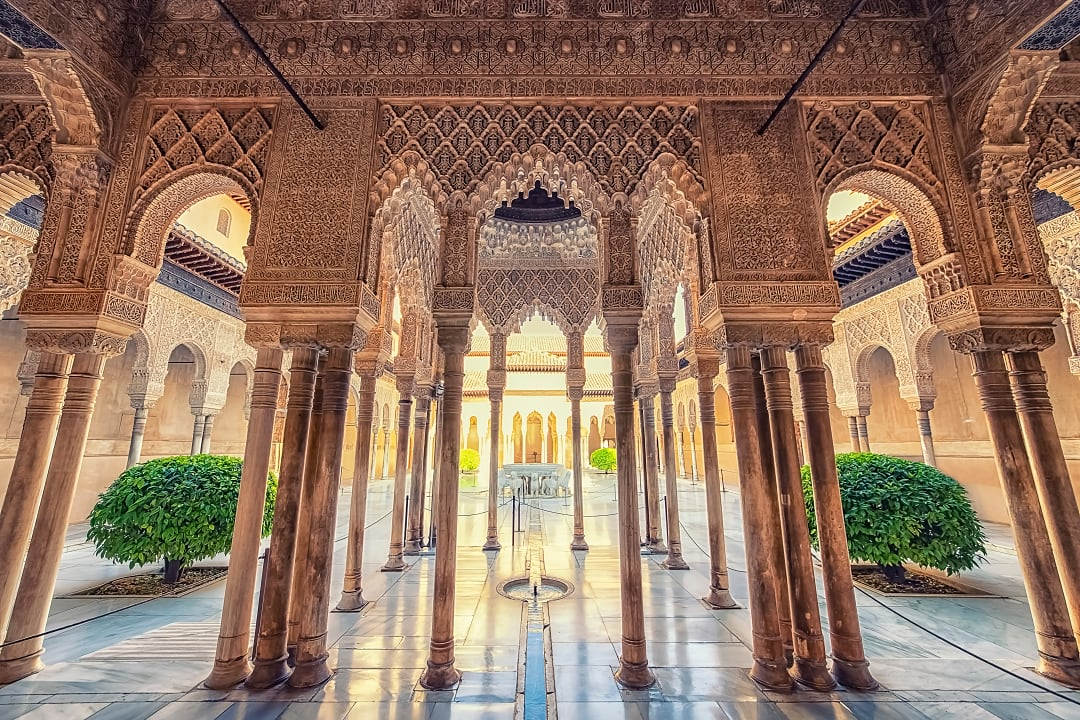
Court of the Lions at the Alhambra in Granada, Spain

Why Granada: The Alhambra and Albaicín Share One Valley

Book the Alhambra for late afternoon, then cross the valley to the Albaicín, also called the Albayzín, for sunset. The Nasrid rulers built their palaces around courtyards, running water, and carved plasterwork that changes as daylight fades. From the Mirador de San Nicolás, the Alhambra’s walls turn gold and red as the sun drops behind the city.

A History Worth Walking Through

The Alhambra and its Generalife gardens were the final stronghold of Nasrid rule on the Iberian Peninsula, which ended in 1492. The Nasrid Palaces developed over roughly 150 years under successive rulers. The Comares Palace dates largely to Yusuf I in the mid-14th century, while Muhammad V added the Palace of the Lions later that century.

What to Expect

  • Nasrid Palaces: Reserve a timed entry to the Comares Palace and Court of the Lions, allowing at least 90 minutes.
  • Mirador de San Nicolás: Walk through the Albaicín for the classic sunset view across the valley.
  • Sacromonte flamenco: Watch a cave flamenco performance in Sacromonte, on the hillside beside the Albaicín. For more on flamenco, see our Most Romantic Things to Do in Spain for Couples.
  • Albaicín teahouses: Stop for mint tea along Calle Calderería Nueva below the Albaicín.
  • Hammam evening: Book an Arab-style bathhouse for warm pools and a slower end to the day.

Beyond the Highlights: The Bañuelo, an 11th-century Arab bathhouse at the foot of the Albaicín, is among Spain’s best-preserved examples. Allow about 30 minutes.

Recommended length of stay: 2–3 days

Best time to go: March through May and September through November, when daytime temperatures are comfortable for Albaicín's steep lanes.

Pair it with: Córdoba, typically about 1.5 hours by high-speed train, or Ronda, about two hours by road.

Where to stay: Spain’s paradores are historic state-run hotels, some within historic complexes..

Our Seville and Granada Tour: Romance in the Heart of Andalusia includes time in Granada.
2. Seville

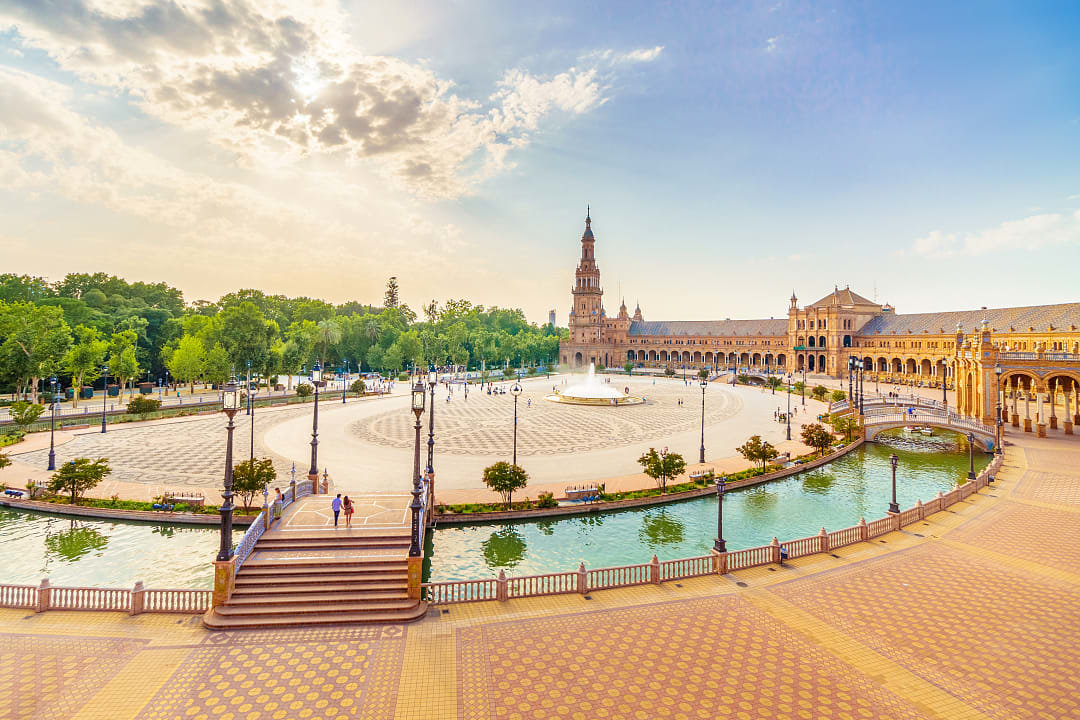
Plaza de España in Seville, Spain

Why Seville: Historic Lanes, Courtyards, and Late Evenings

Seville’s historic center is among Europe’s largest, and Barrio Santa Cruz, the old Jewish quarter, is its most atmospheric area for walking. Narrow lanes open onto small squares planted with orange trees, and spring evenings are warm enough for outdoor dinners after 9 p.m.

A History Worth Walking Through

The Royal Alcázar of Seville, also called the Real Alcázar, began as a 10th-century fortress and remains an official royal residence. Its centerpiece, the Palace of Pedro I, was built in the 1360s. The building combines Christian patronage with Islamic-style craftsmanship in the Mudéjar style.

What to Expect

  • Real Alcázar: Reserve the first entry of the day for the palace gardens, courtyards, and pavilions.
  • Flamenco: See a tablao performance in Triana or central Seville. Speak to your travel specialist about arranging flamenco classes and tickets to performances.
  • Barrio Santa Cruz: Walk the old Jewish quarter in the evening, when its squares and lanes are lit.
  • Triana tapas: Cross the Guadalquivir for tapas bars and ceramics workshops in Triana.
  • River views: Take a sunset boat trip on the Guadalquivir for views of the Torre del Oro.

Beyond the Highlights: The Museum of Fine Arts, in the former Convent of La Merced, holds works by Murillo and Zurbarán. Allow about one hour.

Recommended length of stay: 2–3 days

Best time to go: March through May and October through November. Summer is extremely hot and temperatures regularly exceed 100°F.

Pair it with: Córdoba, about 45 minutes by high-speed train, or Cádiz, about 1 hour 45 minutes by train.

Our Romantic One-Week Tour of Seville and Madrid also includes Ronda and Toledo.

3. Barcelona

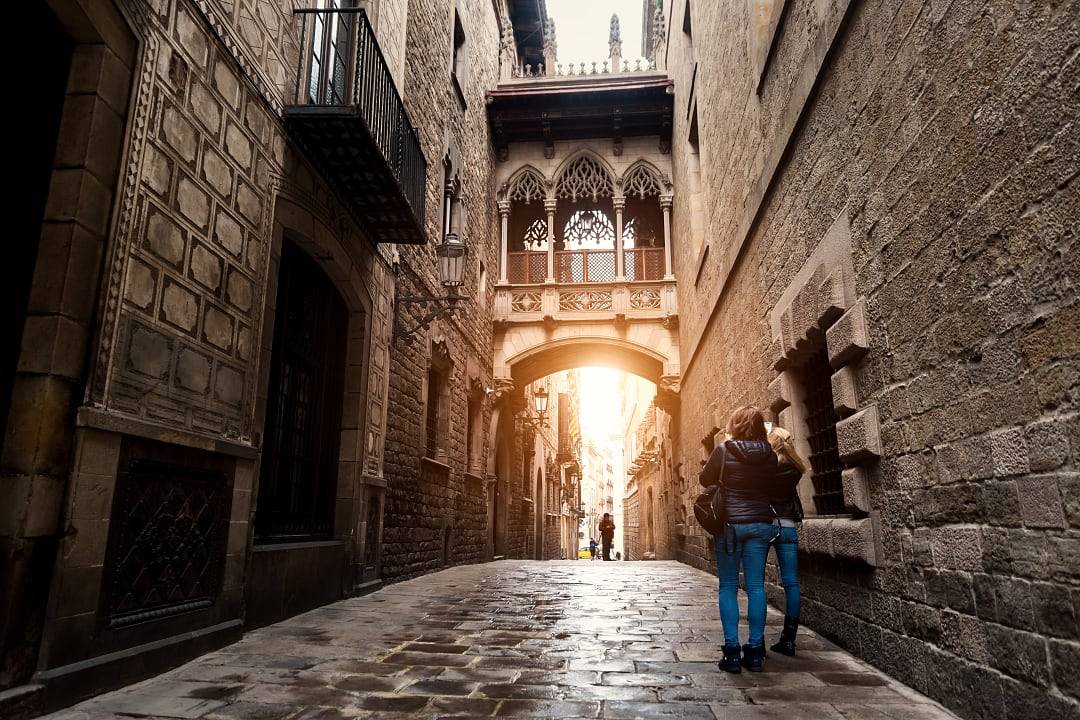
Couple in the Gothic Quarter of Barcelona, Spain
Gothic Quarter of Barcelona, Spain

Why Barcelona: Gaudí, Medieval Streets, and the Mediterranean

Barcelona brings together Gaudí architecture, the Gothic Quarter, and the Mediterranean within short rides of one another. Start with the Basílica de la Sagrada Família in the morning, when light through the stained glass fills the nave with color.

A History Worth Walking Through

Construction on the Sagrada Família began in 1882. Work on the church continues, with completion schedules changing as construction progresses. Gaudí lived in the house now called Casa Museu Gaudí in Park Güell from 1906 to 1925.

What to Expect

  • Sagrada Família: Book an early or late private entry, when low sun brings color through the east or west windows.
  • Catalan coast: Take a short sunset boat trip along the coast.
  • Cava: Have a glass of cava on a rooftop terrace overlooking the city.
  • Park Güell: See the serpentine mosaic bench. The story goes that its curves were shaped to fit a seated body.
  • Casa Museu Gaudí: Visit the house where Gaudí lived for almost two decades.

Beyond the Highlights: Torre Bellesguard is a Gaudí house built from 1900 to 1909 on the site of a medieval royal residence. It stands in the hills north of central Barcelona.

Recommended length of stay: 4–5 days

Best time to go: May through June and September through October, when temperatures are milder and the sea is warm enough for coastal time.

Pair it with: Girona, about 40 minutes by high-speed train, or the Costa Brava, about 1.5 hours by road.

Our Magical Couples Getaway to Barcelona includes Montserrat and Girona.

4. Toledo

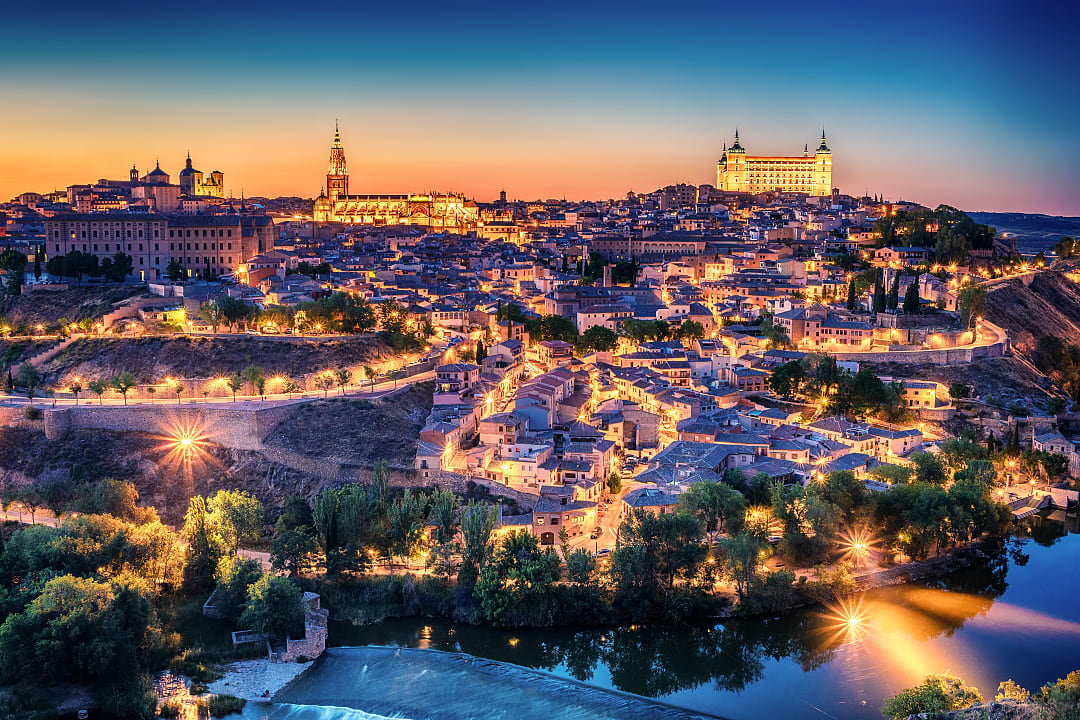
Toledo, Spain
Toledo, Spain

Why Toledo: A Hilltop City Within the Tagus Bend

Stay overnight in Toledo. The city is approximately 30 to 35 minutes from Madrid by high-speed train and its narrow streets are busiest during the day. The Tagus River wraps around much of the hilltop old town, where alleys, stairways, and small squares connect Jewish, Muslim, and Christian landmarks.

A History Worth Walking Through

Roman, Visigothic, Islamic, Jewish, and Christian communities shaped Toledo’s walled core over many centuries. UNESCO designated the historic city a World Heritage Site in 1986 because of the depth and visibility of those layers.

What to Expect

  • Old-town walk: Explore the maze of lanes after daylight hours, when day visitors have returned to Madrid.
  • Toledo Cathedral: Visit the cathedral’s stained glass, choir, and treasury.
  • Mirador del Valle: Cross the Tagus for the classic sunset view of Toledo’s skyline and river bend.
  • Damascene craft: Visit a workshop to see the local metal-inlay tradition.
  • Dinner with a view: Reserve a restaurant with a terrace facing the old town or Tagus valley.

Beyond the Highlights: Santa María la Blanca, a former synagogue with rows of white horseshoe arches, is a short walk from the Monastery of San Juan de los Reyes. Together, they show Toledo’s Jewish and Christian heritage.

Recommended length of stay: 2–3 days

Best time to go: March through May and September through November. Summer afternoons can be hot.

Pair it with: Madrid, generally about 30 to 35 minutes by high-speed train. See the Castile route below.

Where to stay: Secure accommodation in a parador outside the historic center, with panoramic views over the city.

Our Romantic Getaway to Spain tour includes Madrid and Toledo.

5. Segovia

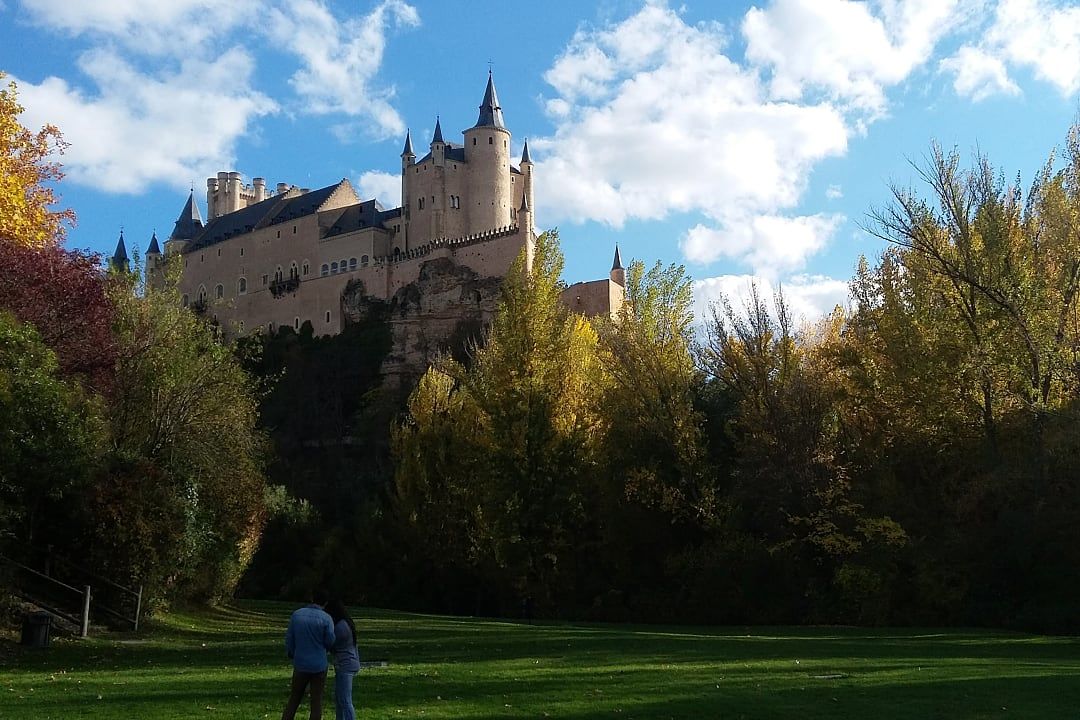
Couple in a park with a view of the Alcázar in Segovia, Spain
Alcázar in Segovia, Spain

Why Segovia: A Roman Aqueduct Above a Compact Old Town

Segovia’s aqueduct dominates the Plaza del Azoguejo, while its cathedral and Alcázar sit within walking distance through the old town. The city works as a day trip from Madrid, though an overnight stay gives you time for the aqueduct after the busiest sightseeing hours.

A History Worth Walking Through

Segovia and its aqueduct became a UNESCO World Heritage Site in 1985. The aqueduct is generally dated to the late 1st or early 2nd century CE and continued supplying water to the city into the 20th century.

What to Expect

  • Aqueduct: See the two-level arches from the Plaza del Azoguejo.
  • Alcázar: Visit the castle on the rock spur at the far end of the old town.
  • City walls: Follow accessible stretches of the historic walls for views toward the Eresma Valley.
  • Roast suckling pig: Reserve a traditional meal in the old town.
  • Jewish Quarter: Walk the old Jewish Quarter below the cathedral.

Beyond the Highlights: The Church of the True Cross, or Vera Cruz, is a 12-sided Romanesque church outside the walls with views back to the Alcázar. Allow about 30 minutes.

Recommended length of stay: 1–2 days

Best time to go: April through June and September through October. Winters on the plateau are cold and can bring snow.

Pair it with: Madrid, with some high-speed services taking under 30 minutes, or Ávila, about one hour by road.

6. Ronda

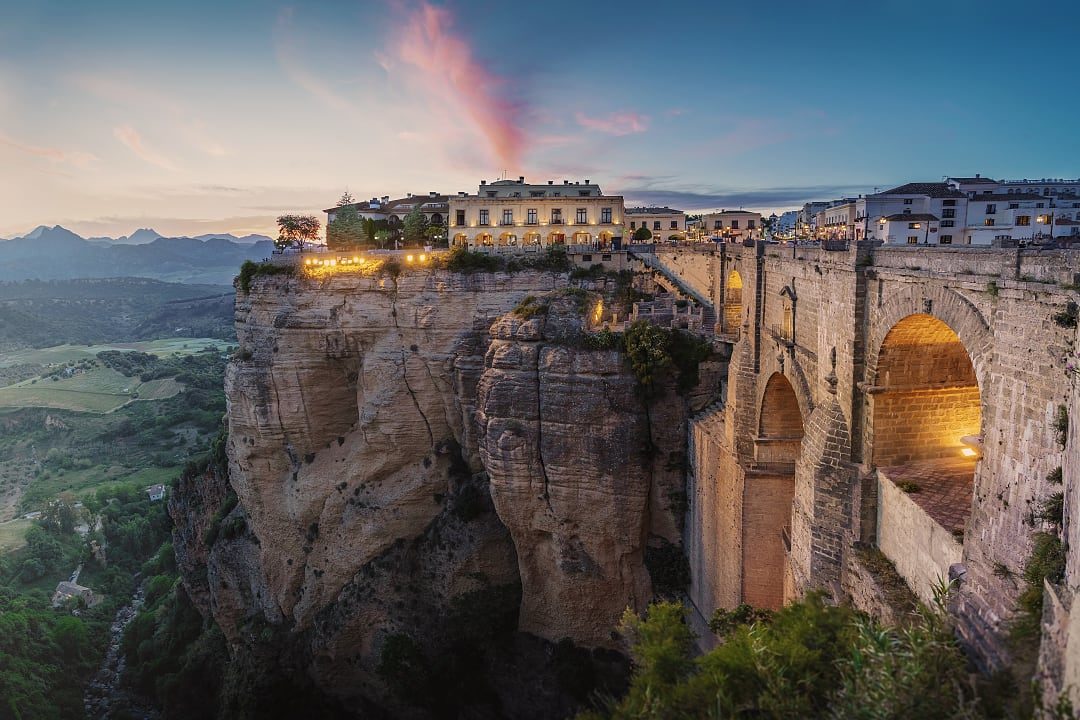
Ronda, Spain
Ronda, Spain

Why Ronda: A Small Town Above El Tajo Gorge

Ronda’s Puente Nuevo, or New Bridge, crosses El Tajo Gorge between the historic old town and newer quarter. The bridge stands about 320 feet above the gorge floor, and the surrounding paths offer changing views of the bridge, cliff faces, and river below.

A History Worth Walking Through

The Puente Nuevo was completed in 1793. Ronda’s Arab Baths date to the 13th and 14th centuries, while much of the historic center took its current form after the Christian conquest of 1485.

What to Expect

  • Puente Nuevo: Cross the bridge, then view it from gorge-side paths.
  • Alameda del Tajo: Walk through the park to its overlook above the cliffs.
  • Local wine: Taste wines from the Serranía de Ronda, where small producers work hillside vineyards.
  • Arab Baths: Explore the brick vaults and star-shaped skylights of the former baths.
  • Morning view: See the gorge early, before moving on to Ronda’s museums and old-town streets.

Beyond the Highlights: La Casa del Rey Moro has garden terraces and a stairway carved down the gorge wall. Allow about one hour.

Recommended length of stay: 2–3 days

Best time to go: April through June and September through October.

Pair it with: Seville or Málaga, each roughly 1.5 to 2 hours by road, or Granada, around two hours by road.

Where to stay: A parador in the historic center near the gorge and Puente Nuevo.

Experience Ronda on our Tour of Andalucia with Historic Paradors.

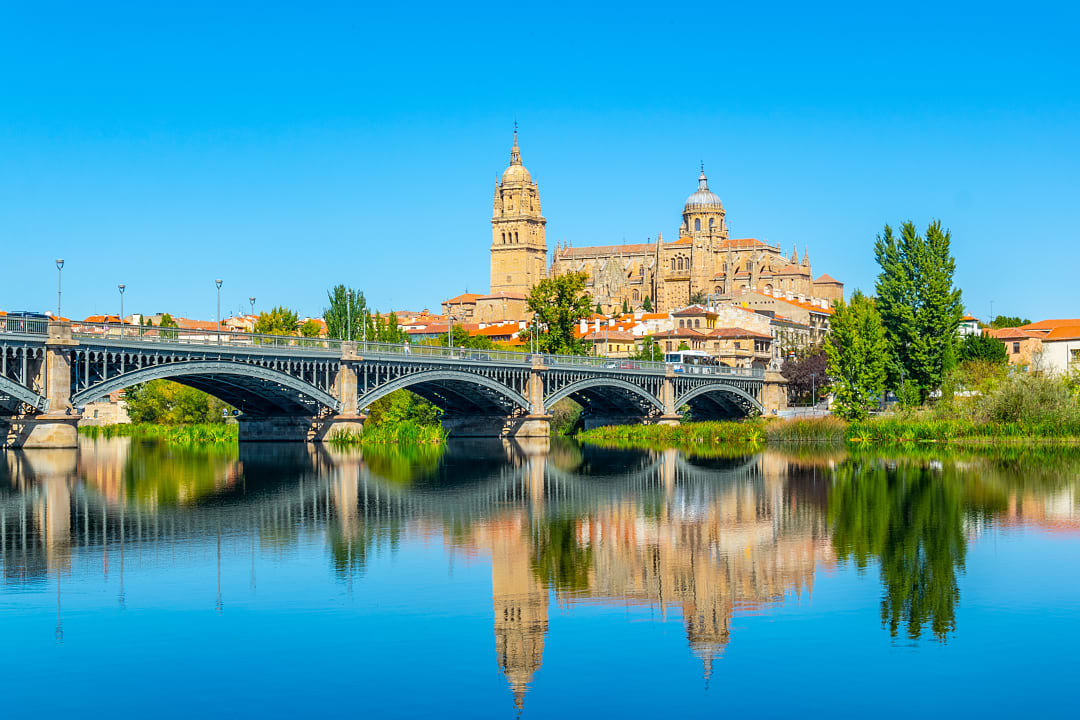
7. Salamanca

Salamanca, Spain
Salamanca, Spain

Salamanca’s local sandstone takes on a gold and rose tone in late-afternoon light. The university, founded in 1218, gives the city a student presence, while the Plaza Mayor remains active into the evening.

A History Worth Walking Through

Salamanca’s university has shaped the city since the Middle Ages. UNESCO designated the Old City a World Heritage Site in 1988. The Romanesque Old Cathedral and Gothic-Renaissance New Cathedral stand side by side near the university quarter.

What to Expect

  • Plaza Mayor: Sit in the square at golden hour, then return after dinner when the arcades are lit.
  • New Cathedral: Find the astronaut carving on the north doorway, added during a 1992 restoration.
  • University facade: Search for the small frog carved into the university facade.
  • Casa de las Conchas: Visit the House of Shells, its facade covered with carved scallop shells.
  • Late dinner: Book a table near Plaza Mayor after 10 p.m.

Beyond the Highlights: Casa Lis, the Art Nouveau and Art Deco Museum, occupies a mansion with stained glass near the old city walls. Allow about one hour.

Recommended length of stay: 1–2 days

Best time to go: April through June and September through October. Winters can be cold.

Pair it with: Ávila, typically about 1 hour and 10 to 20 minutes by direct train, or Madrid, with timing dependent on the train service you choose.

Where to stay: A parador with views toward the cathedral skyline.

Our Couples March Getaway Vacation to Spain includes Salamanca, Segovia, and Ávila.

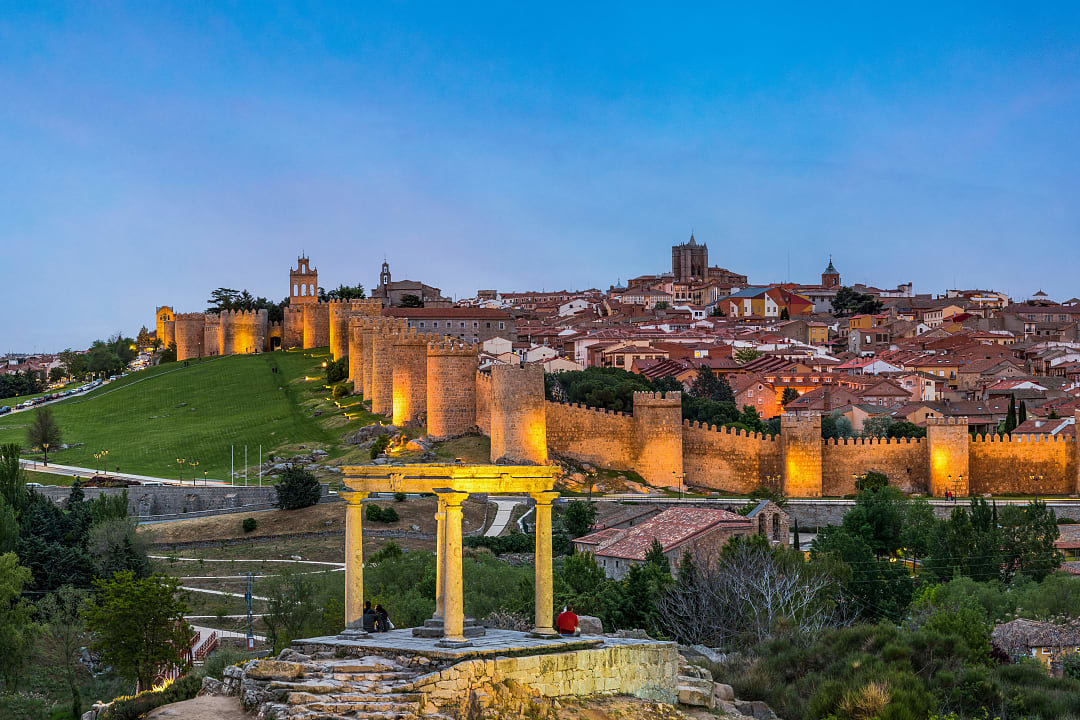
8. Ávila

Couples at viewpoint overlooking Avila, Spain
Avila, Spain

Why Ávila: Medieval Walls on a High Castilian Plateau

Ávila’s walls are among the most complete medieval defenses in Europe. They encircle the old town for about 1.5 miles and include 87 towers and nine gates. At roughly 3,700 feet above sea level, Ávila has cool nights and clear high-plateau light.

A History Worth Walking Through

The walls were built mainly in the 12th century, with stone reused from earlier structures. They underwent substantial restoration in the 20th century. UNESCO designated Ávila’s old town and churches outside the walls a World Heritage Site in 1985.

What to Expect

  • Wall route: Walk the accessible upper-wall sections, then follow the exterior route around the walls. Ávila’s official wall site describes an outer route of about 5,570 feet; upper sections and access times vary, so check the current visitor information.
  • Basilica of San Vicente: Visit this 12th-century Romanesque church just outside the walls.
  • Saint Teresa sites: See the convent built at the site traditionally associated with Saint Teresa of Ávila’s birthplace.
  • Cuatro Postes: Watch the walls at dusk from this viewpoint west of the old town.
  • Old-town dinner: Book a restaurant near the wall circuit, then return through one of the illuminated gates.

Beyond the Highlights: The Royal Monastery of Santo Tomás is a 15th-century monastery outside the old town with three cloisters and the tomb of Prince Juan, son of the Catholic Monarchs.

Recommended length of stay: 1–2 days

Best time to go: May through October. Winters on the plateau are cold.

Pair it with: Madrid by train, with journey times varying by service, or Salamanca, usually around 1 hour and 10 to 20 minutes by direct train. See the Castile route below.

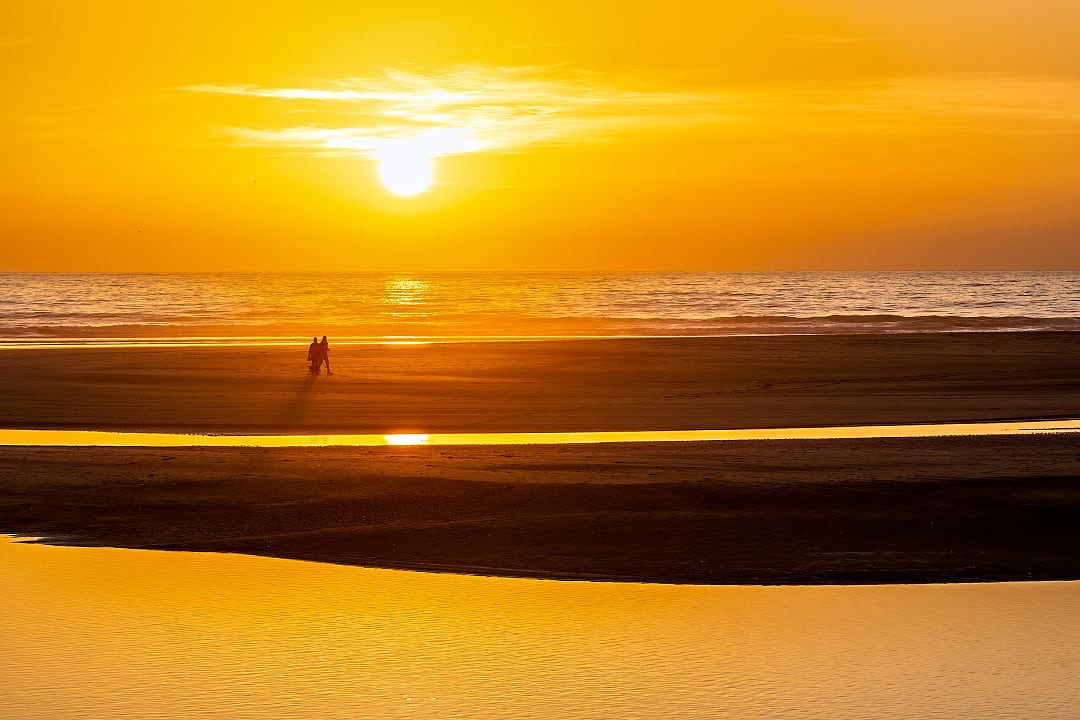
9. Cádiz

Couple walking on the beach at sunset in Cadiz, Spain
Cadiz, Spain

Why Cádiz: A Coastal Town Surrounded by Atlantic Light

Cádiz stands on a narrow peninsula, with the Atlantic visible at the end of many streets in its old town. It is widely cited as one of Western Europe’s oldest continuously inhabited cities, founded by Phoenician traders around 3,000 years ago.

A History Worth Walking Through

Phoenician, Roman, and Spanish maritime trade shaped Cádiz. The city grew wealthy through trade with the Americas in the 18th century. Plaza de España contains the early-20th-century Monument to the 1812 Constitution, which commemorates the constitution drafted in Cádiz.

What to Expect

  • La Caleta: Watch sunset from Playa de la Caleta, between the castles of San Sebastián and Santa Catalina.
  • Plaza de España: Visit the Monument to the 1812 Constitution.
  • Barrio del Pópulo: Explore Cádiz’s old quarter, its medieval arches, and the Roman Theatre.
  • Alegrías: Look for performances featuring Cádiz’s lively flamenco style.
  • Mercado Central: Visit in the morning, when fish and produce stalls are open.

Beyond the Highlights: Torre Tavira is an 18th-century watchtower with a camera obscura that projects a live image of the city. Allow about 30 minutes.

Recommended length of stay: 1–2 days

Best time to go: May through June and September through October, or February for Carnival.

Pair it with: Jerez de la Frontera, around 35 minutes by train, or Seville, around 1 hour 45 minutes by train.

Where to stay: Choose a contemporary hotel near the Atlantic, outside the oldest part of the historic center.

Our Andalucia Luxury Train Trip includes Cádiz.

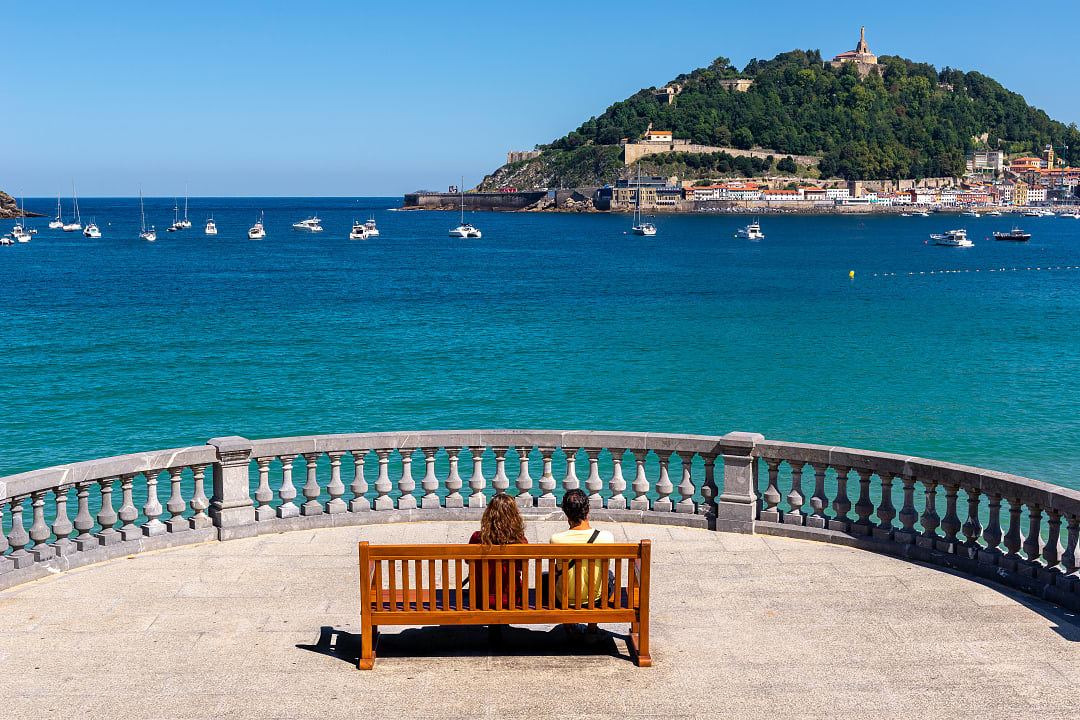
10. San Sebastian

Couple sitting on a bench at the La Concha Promenade in San Sebastian, Spain
La Concha Promenade in San Sebastian, Spain

Why San Sebastián: Pintxos and a Crescent-Shaped Bay

San Sebastián combines a food-focused old town with the curve of La Concha, a scallop-shaped bay framed by hills. The city has one of the highest concentrations of Michelin stars in the world, while its pintxos bars make local cooking accessible one plate at a time.

A History Worth Walking Through

San Sebastián developed as a fashionable resort in the 19th century after Queen Isabel II began spending summers there on medical advice in 1845. Its La Concha promenade and many Belle Époque buildings date from that resort era.

What to Expect

  • La Concha: Walk the bay’s promenade at golden hour.
  • Parte Vieja: Sample pintxos bar by bar in the Old Town.
  • Monte Igueldo: Ride the historic funicular for views over the bay.
  • Peine del Viento: See Eduardo Chillida’s Wind Comb sculptures on the western edge of the city.
  • Gros: Explore bars in the Gros neighborhood across the Urumea River.

Beyond the Highlights: Albaola, the Sea Factory of the Basques, is in Pasaia, a short drive from San Sebastián. Check its current visitor program before you go.

Recommended length of stay: 3–4 days

Best time to go: June through September. The San Sebastián International Film Festival takes place in September, so reserve accommodation early if traveling then.

Pair it with: Bilbao, about 1 hour 15 minutes by road, or Biarritz, about 45 minutes by road.

Our Intimate Exploration of Spain tour includes San Sebastián.

Two Romantic Routes Through Spain

Segovia, Spain
Segovia, Spain

A romantic Spain itinerary works especially well as an Andalusia route or a Castile route from Madrid. The Andalusia route covers four destinations in 10 days, while the Castile route pairs city breaks with historic day trips and only two hotel changes.

Andalusia: Seville, Cádiz, Ronda, and Granada

Days 1–3: Seville, three nightsVisit the Royal Alcázar, Barrio Santa Cruz, Triana, and a flamenco performance. Add Córdoba as a day trip, about 45 minutes away by high-speed train.

Days 4–5: Cádiz, two nightsTravel from Seville by train in around 1 hour 45 minutes. Walk through the Barrio del Pópulo and watch the sunset at La Caleta.

Days 6–7: Ronda, two nightsDrive from Cádiz to Ronda in approximately two hours. See Puente Nuevo from the bridge and gorge viewpoints.

Days 8–9: Granada, two nightsDrive from Ronda to Granada in around two hours. Reserve the Alhambra and plan sunset at the Mirador de San Nicolás.

Day 10: DepartureTravel onward via Granada, Málaga, or Madrid, depending on your flight plans. Train travel between Granada and Madrid commonly takes several hours, so confirm the timetable before booking.

Castile from Madrid: Toledo, Segovia, Ávila, and Salamanca

Days 1–4: Madrid, four nightsStay in Madrid and take day trips to Toledo, usually about 30 to 35 minutes by high-speed train, and Segovia, where some high-speed services take under 30 minutes. Check departure stations and schedules before booking.

Day 5: Ávila, one nightTravel to Ávila by train or private driver from Madrid. Journey times vary by service, so confirm the current timetable before booking.

Days 6–7: Salamanca, two nightsTravel from Ávila to Salamanca by direct train, generally around 1 hour and 10 to 20 minutes. Spend time in the Plaza Mayor and near the cathedral quarter.

Day 8: DepartureReturn to Madrid for onward travel. Allow time for the train journey and confirm the timetable when finalizing plans.

Most Romantic Places in Spain FAQ

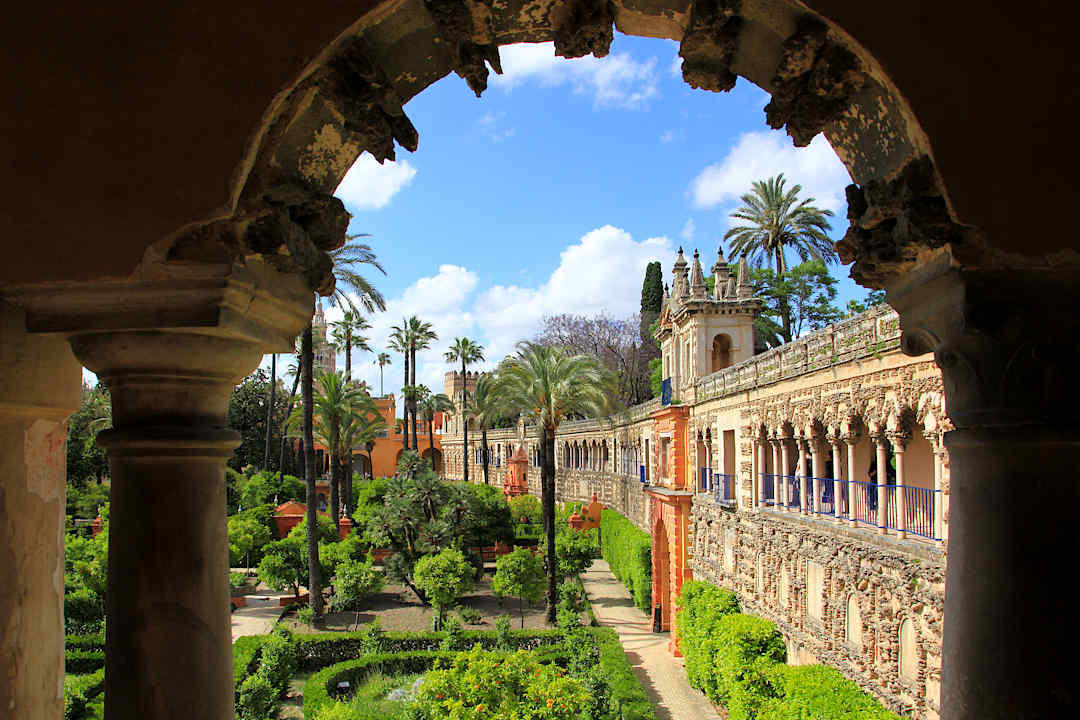
Royal Alcázar, Seville, Spain

What is the most romantic city in Spain?

Granada is the most romantic city in Spain for many couples. The Alhambra, Albaicín, Sacromonte, and the Mirador de San Nicolás create a compact itinerary of palace architecture, hillside views, and evening experiences.

What are the most romantic small towns in Spain?

Ronda, Segovia, and Ávila are among Spain’s most romantic small towns. Ronda is shaped by El Tajo gorge, Segovia combines a Roman aqueduct with its Alcázar, and Ávila is enclosed by major medieval walls.

Is Granada or Seville more romantic?

Choose Granada for a concentrated city break centered on the Alhambra and its hillside viewpoints. Choose Seville for a longer stay focused on historic lanes, the Royal Alcázar, tapas, Triana, and nightlife.

What are the best romantic day trips from Madrid?

Toledo, Segovia, and Ávila are three of the best romantic day trips from Madrid. Toledo takes roughly 30 to 35 minutes by high-speed train, some services to Segovia take under 30 minutes, and Ávila is reachable by rail, with timing dependent on the service.

Which romantic places in Spain are away from the crowds?

The Bañuelo in Granada, Torre Bellesguard in Barcelona, and Torre Tavira in Cádiz offer alternatives to the headline monuments. Each can fit into an itinerary in about an hour or less.

When is the best time to visit Spain as a couple?

Spring and fall are the best overall seasons for a romantic trip to Spain. March through May and September through November generally offer milder temperatures for sightseeing, while San Sebastián is especially appealing from June through September.

Can you stay inside the Alhambra?

Yes. There is a parador inside the Alhambra complex, in a monastery built by the Catholic Monarchs within a Moorish-palace setting. Staying there does not include admission to the palaces, which require separate timed tickets.

Explore the Most Romantic Places in Spain for Couples

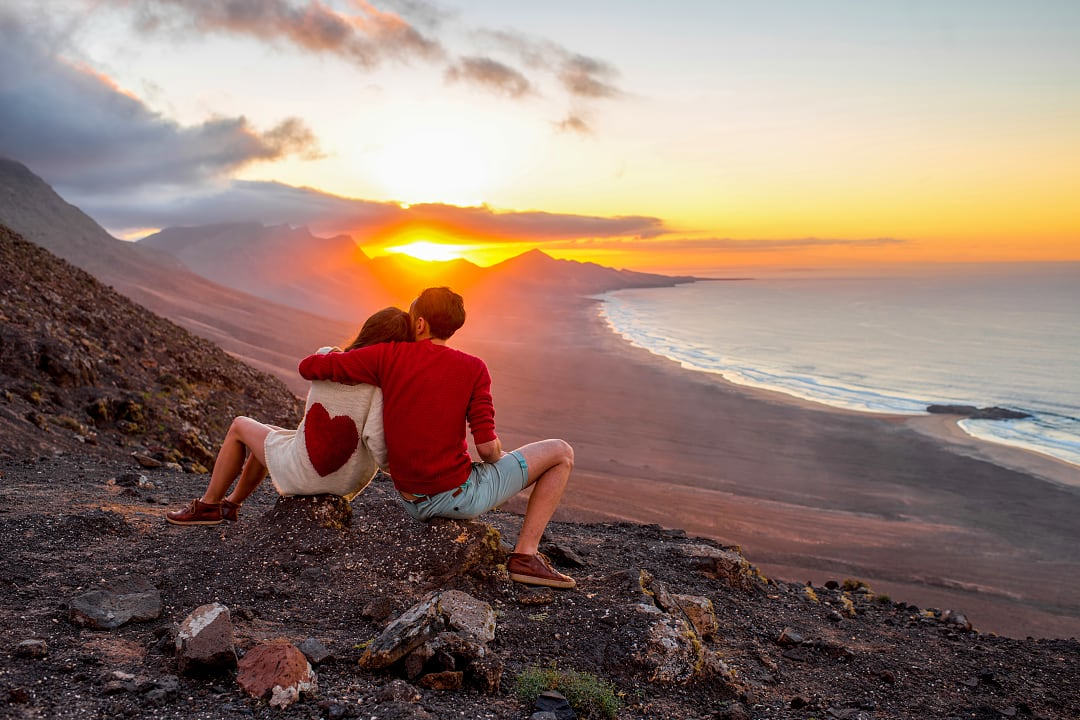
Couple watching the sunset in the Canary Islands, Spain
Fuerteventura, Canary Islands, Spain

For romantic getaways in Spain, choose a route that matches your pace: Andalusia for Seville, Cádiz, Ronda, and Granada; or Castile for Madrid, Toledo, Segovia, Ávila, and Salamanca. Add Mallorca or Menorca for a coastal extension of coves, fishing villages, and time by the sea.

Explore our Spain tours and vacations for couples and our Spain travel guide, then connect with a travel specialist to plan your route.

35,000+ Verified Traveler Reviews