Beyond Santorini and Mykonos: Choosing Quiet Islands

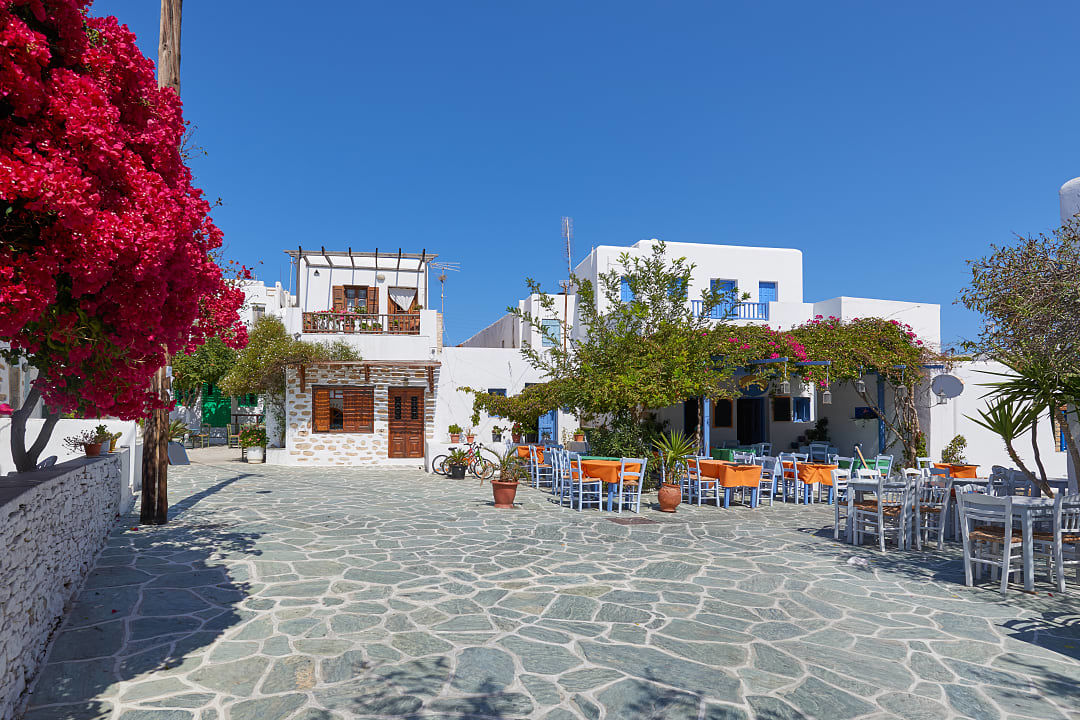
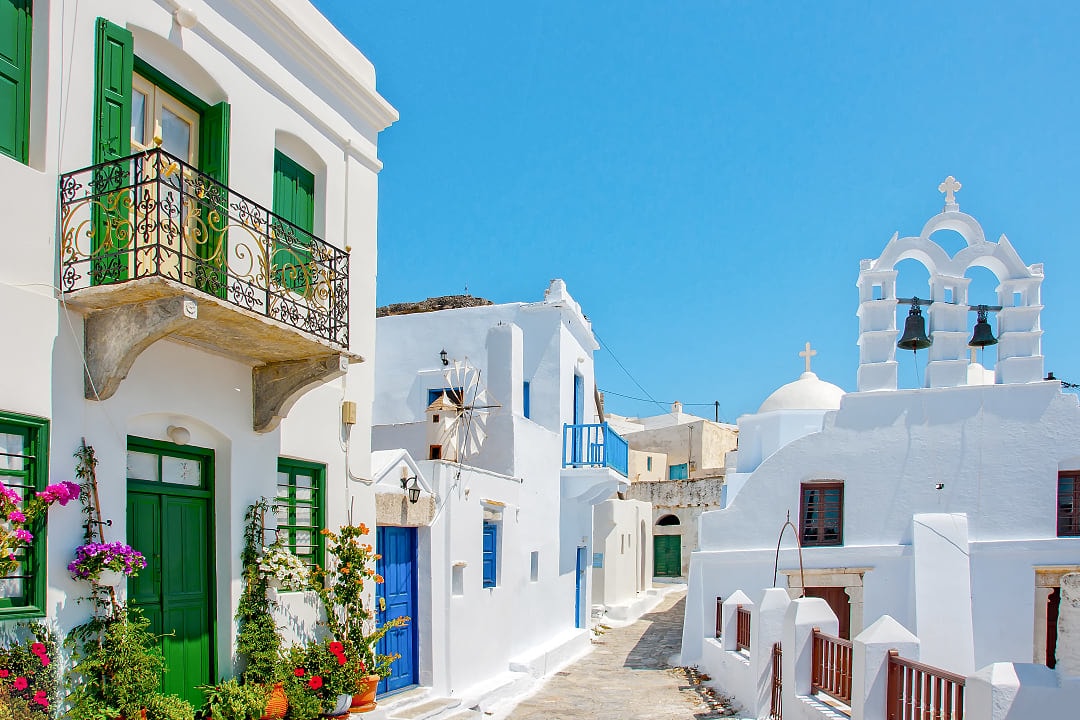
White houses in Mykonos, Greece.

White houses in Mykonos, Greece.

Santorini and Mykonos have become victims of their postcard perfection. The sunset crowd gathers three hours early in Oia, jostling for position along Santorini's caldera rim. Selfie sticks collide, tour guides shout over amplified speakers, and the marble steps grow slick with spilled beverages. In Mykonos, beach clubs blast music at volumes that drown the conversation, while the narrow lanes of Chora Town become impassable with cruise ship passengers photographing the same whitewashed corners.

Yet the Aegean holds over 200 inhabited islands, dozens offering equally dramatic landscapes, more authentic culture, and that essential Greek combination of brilliant light, ancient stone, and sapphire sea. The difference is that you'll share a sunset with 20 people instead of 2,000. You'll taste octopus grilled by the fisherman who caught it that morning, served at a table where he remembers your name. These quieter islands haven't been overlooked because they lack beauty. They've maintained natural barriers to mass tourism through limited accessibility, smaller harbors, or the absence of international airports.

Extraordinary travel begins with a human touch, and our destination specialists design every journey with care, insight, and personal attention. As you consider a visit to Greece, use the following guide before connecting with our travel experts to help you plan your trip to the country’s quiet islands.

Why These Islands Require a Different Approach to Planning

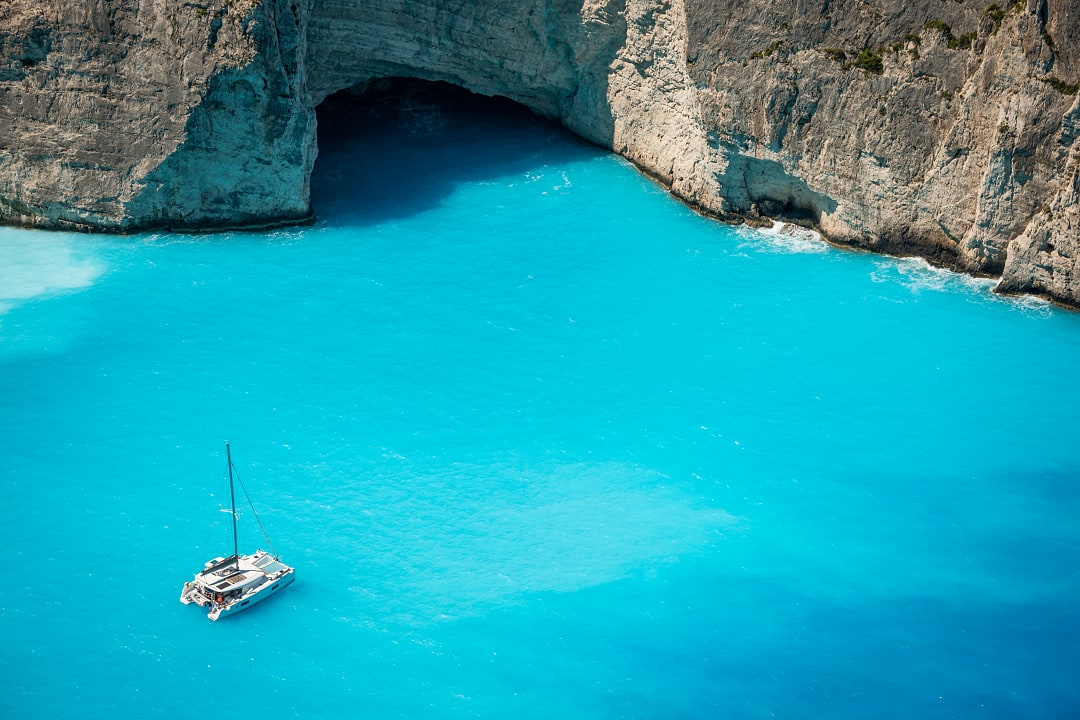
A private charter sailing through Zakynthos in the Ionian Islands, Greece.

Choosing Greece’s quiet islands over their famous counterparts is a decision that rewards you immediately and completely. But it does require a different kind of planning and a different type of travel partner. The same features that preserve these islands, such as their distance from major hubs, limited ferry schedules, and smaller harbors, mean getting to them is not as simple as booking a direct flight and heading straight to your accommodation. The logistics are real and specific. Getting them wrong can mean a midnight ferry, a missed connection, or a room that simply doesn’t exist on any platform worth trusting. This is precisely where Zicasso earns its reputation.

Our destination specialists carry the kind of deep, experience-tested knowledge of the Greek islands that no booking engine can replicate. They know which ferry routes are prone to weather cancellations in the shoulder season, which island airports operate on specific days only, and which of the best small guesthouses have never appeared on a mainstream platform because they’ve never needed to. They manage the complexity so you arrive on each island in the mood it deserve, not frazzled by logistics. What follows are the key planning considerations, followed by our pick of quieter Greek islands to visit.
Ferries, Flights, and What Nobody Tells You

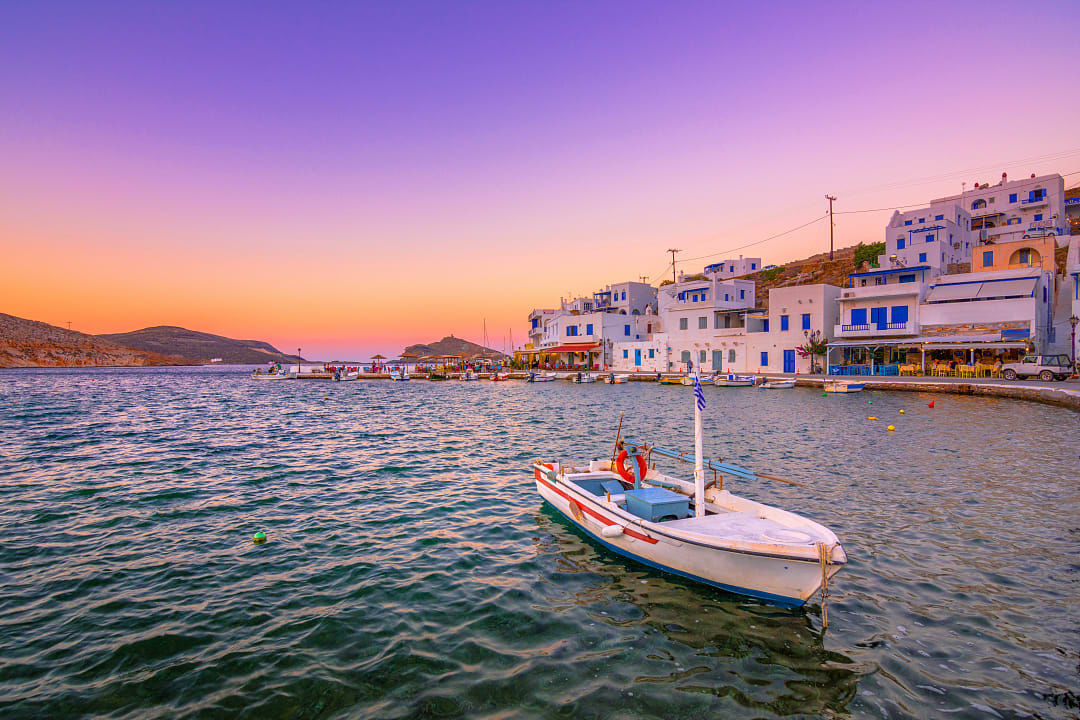
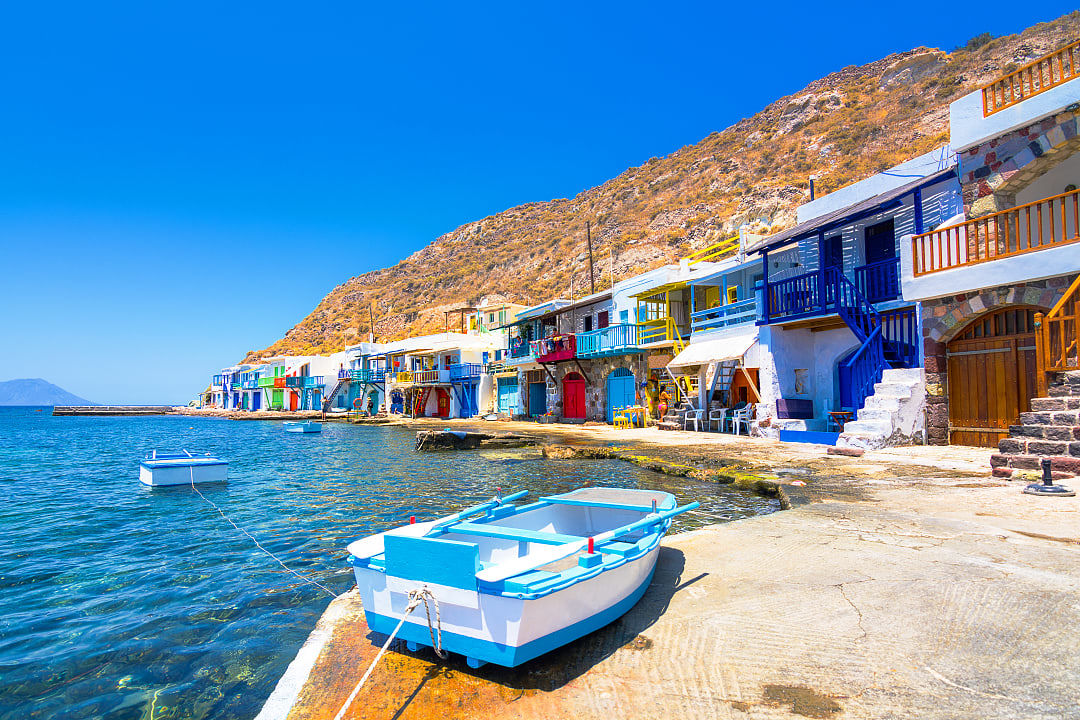
A small fishing village in the Cycladic Islands, Greece.

Every journey to these islands begins with a flight into Athens International Airport, followed by a transfer to Piraeus, the capital city’s main port. From there, high-speed ferries and car ferries serve the Cycladic islands, but schedules, journey times, and onward connections vary dramatically by island and season. The pleasant surprise is that several of these islands are more accessible than travelers assume. The challenge is knowing how to get there, when, and on which type of vessel.

For example, Milos and Paros are the easiest entry points, as they are served by domestic flights from Athens, as well as frequent high-speed ferries from Piraeus. Further out, the logistics become layered: Folegandros has no airport and typically requires an intermediate island stop; Amorgos sits at the eastern edge of the Cyclades with ferry crossings of up to eight hours; and Astypalea, in the Dodecanese, is most practically reached by a domestic flight that operates only on specific days of the week.

Ferry schedules thin dramatically outside summer and a route offering daily departures on fast ferries in August may reduce to two slow crossings a week by October. The ferry timetable is not a detail to check after you’ve booked your accommodation; it is the foundation on which everything else is built.

  • Athens overnight: A night in Athens before your first ferry departure transforms a potentially rushed, anxiety-prone connection into a leisurely dinner in the Plaka neighborhood and a relaxed 8am departure from Piraeus. Zicasso builds this in as standard.
  • Aircraft Constraints: Flights to islands like Milos use smaller aircraft, with stricter baggage weight limits than international carriers. We advise on luggage strategies or arrange excess baggage handling so you aren't caught off guard at the check-in counter.
  • Seasickness and Stability: High-speed catamarans are faster, but can be incredibly bumpy during windy days. Large, conventional ferries are slower, but offer stability and open decks. We help you choose the vessel that matches your comfort level, not just the one that departs earliest.
  • Island sequencing: The Western Cyclades ferry route makes Serifos, Sifnos, and Milos natural companions on a single itinerary. Paros pairs well with Folegandros and Amorgos.
  • The "October Cliff": On many secondary routes, the schedule changes abruptly on October 1. A daily connection can suddenly become a "Tuesday and Friday" service. We cross-reference these shifts to ensure you don't get stranded on a gorgeous, but isolated island.
  • Ground transfers: Ferry ports and town centers are often several miles apart and luggage transfers are not always easy to arrange on arrival. Zicasso pre-books all ground transport, ensuring someone is waiting when you dock rather than leaving you negotiating with a taxi rank in a language you don’t speak.

Zicasso’s How to Get Around Greece: Best Transportation for Travelers provides further detail on moving between islands.

Timing Your Visit

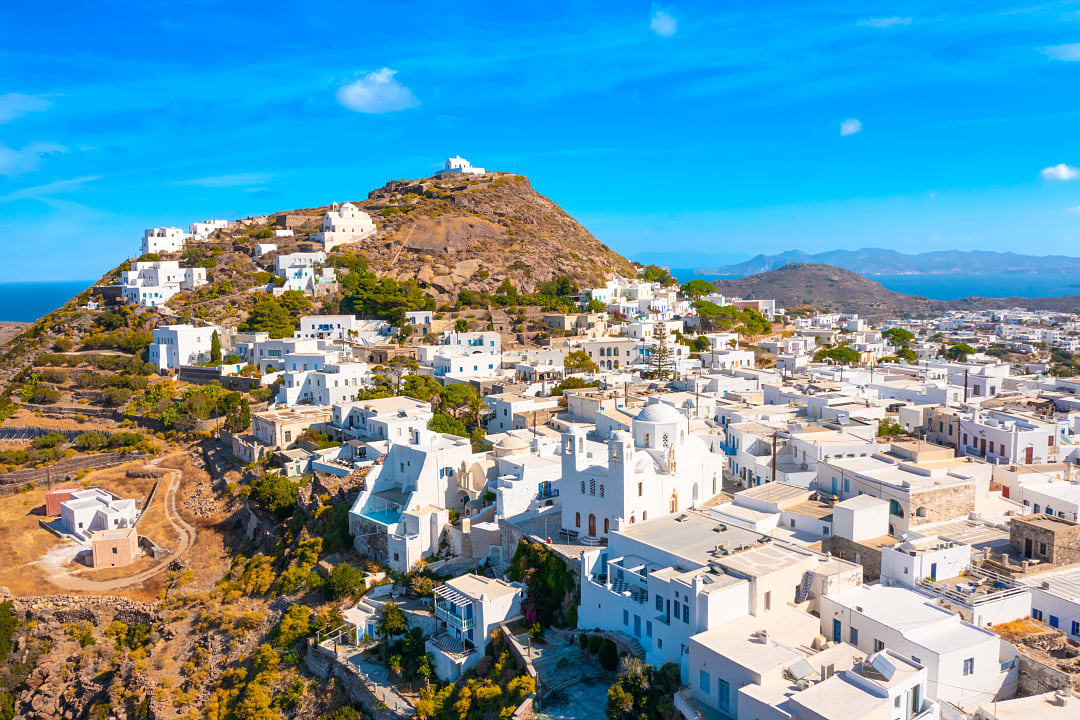
The island of Milos, Greece.

The quiet islands described in this guide are most themselves outside the July-to-August peak. This is not a minor distinction. In high summer, even the less-visited islands feel the pressure of the season: ferries are full, the best tavernas require reservations days in advance, car rentals book out entirely, and the light flattens the very landscapes that make these islands extraordinary. Visit in late May, September, or even early October, and you encounter the islands in their natural state, going about their lives, with enough tourism to keep the restaurants and boats running, but not so much that the experience tips from discovery into management.

September is the month the Aegean keeps for those who know. The sea has spent all summer warming and sits at 76 to 78°F for the best swimming of the year. The light turns golden earlier in the evening and holds longer. Crowds thin after the first week as European school terms resume. The fishermen are still out every morning and taverna owners still have time to sit with you over a glass of wine and explain where each fish came from. It is, in every meaningful sense, the Greece that the brochures are trying to sell, but that July rarely delivers.

  • Late May: Wildflowers are in full bloom on Serifos and Sifnos, water temperatures are comfortable at around 68°F, and beaches that will be crowded in eight weeks are still almost entirely empty. Tavernas open fully and ferry services are well established.
  • June through July: The season is in full swing and all services operate at peak capacity. Water is warm, days are long, and the energy is high, but so are crowds. If this is your only window, Zicasso’s advance booking ensures you still access the best of each island.
  • September sweet spot: The finest month in the Greek islands by most measures: warmest sea, best light, thinning crowds, and a palpable shift in atmosphere as the islands settle back into their pace. Zicasso strongly recommends this window for first-time visitors to the quiet islands.
  • Early October: Still viable for the Western Cyclades islands of Serifos, Sifnos, and Milos, though some smaller establishments begin closing and ferry frequency starts to drop. Water is still warm enough for swimming and the island character is genuinely extraordinary.
  • Festival alignment: Greek Orthodox Easter in late April brings candlelit processions and communal midnight feasts to islands like Sifnos, which has 365 churches. The Assumption Day celebrations on August 15 transform Amorgos. Zicasso can align your itinerary with these events for an entirely different perspective of island life.

For month-by-month guidance on conditions, crowds, and what each season offers, see our Best Time to Visit Greece article.

On-the-Ground Practicalities

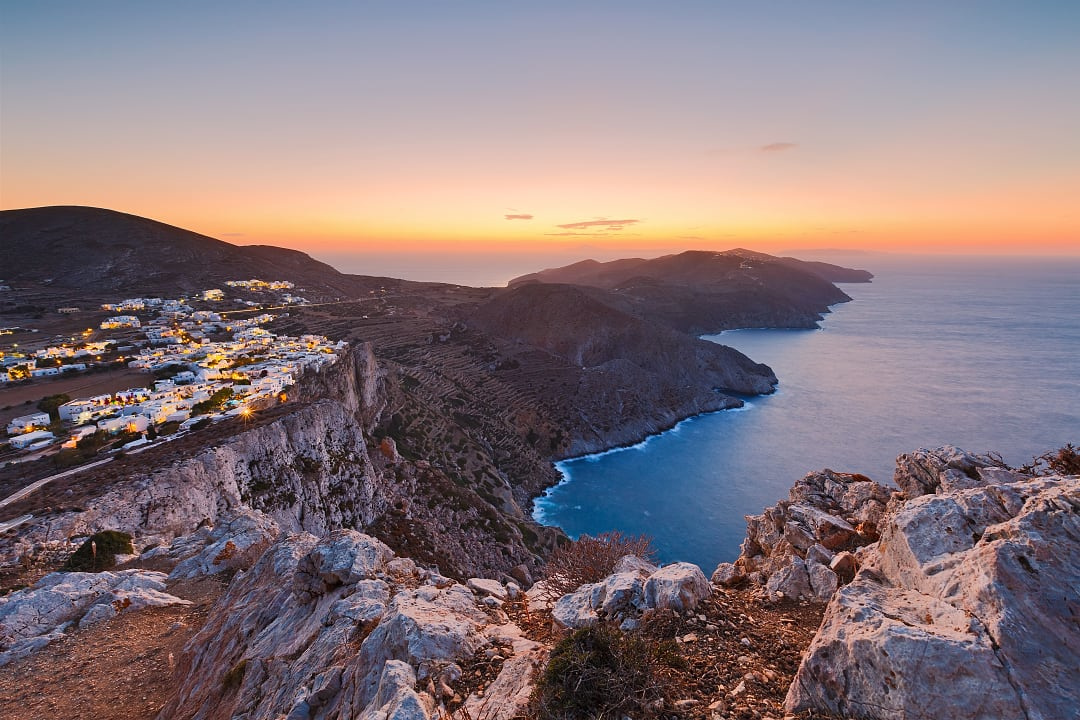
Folegandros Island, Greece.

Smaller islands have less infrastructure than larger islands, and knowing that is the difference between inconvenience and ease. ATMs exist on all of the islands featured here, but can run low or empty during the August peak. Carrying euros is always sensible. Pharmacies exist, but may not stock specialized medications, so if you have specific health needs, you should arrive with a full supply. None of these are reasons to avoid the islands. They are simply the nature of places that have preserved themselves by not over-developing their infrastructure to accommodate mass arrivals.

The most significant practical consideration is transport on the ground. Buses on these islands run infrequently, taxis are scarce, and the extraordinary beaches, hilltop villages, and coastal paths that define each island are rarely within walking distance of the ferry port. A private driver or hired scooter is the difference between experiencing an island and experiencing its harbor. Local rental fleets are small and book out quickly in summer. Restaurant reservations at the tavernas worth seeking out are increasingly in demand during high season. These are all details that Zicasso handles as a matter of course, so none become your problem.

  • Small Bills for Small Islands: While credit cards are widely accepted for dinner, the local bus on Amorgos or the hillside kafeneio on Serifos often operate on cash only. We recommend carrying a reserve of five and 10 euro notes for daily ease.
  • The Transmission Trap: Automatic cars are a minority in Greek rental fleets. If you cannot drive a manual stick-shift, you must book months in advance. We secure automatic vehicles early to ensure you aren't left stranded or forced to learn a new skill on a steep cliff road.
  • Arrival Reality: Ferry ports can be chaotic, with hundreds of people disembarking at once. Having a driver holding a sign with your name cuts through the noise and confusion instantly, transforming a stressful arrival into a smooth transition.
  • Motion Sickness Prep: The Aegean can be choppy. Local pharmacies sell patches and pills, but brands differ from what you may be used to at home. Bringing your preferred motion sickness remedy is a small detail that saves the day on a windy ferry crossing.
  • Dining Strategy: In August, the best tables at the best tavernas are often booked by 9pm. We don't just reserve a table; we request specific locations, like the terrace edge facing the sunset, so you aren't tucked away near the kitchen doors.
  • The "Dead Spot" Reality: On islands like Folegandros, cell service can vanish in deep ravines or secluded beaches. We help you download offline maps and prepare for moments of disconnection, turning a loss of signal into a true escape.

For a comprehensive overview of trip planning in Greece, see our How to Plan a Trip to Greece: Frequently Asked Questions.

The Zicasso Advantage

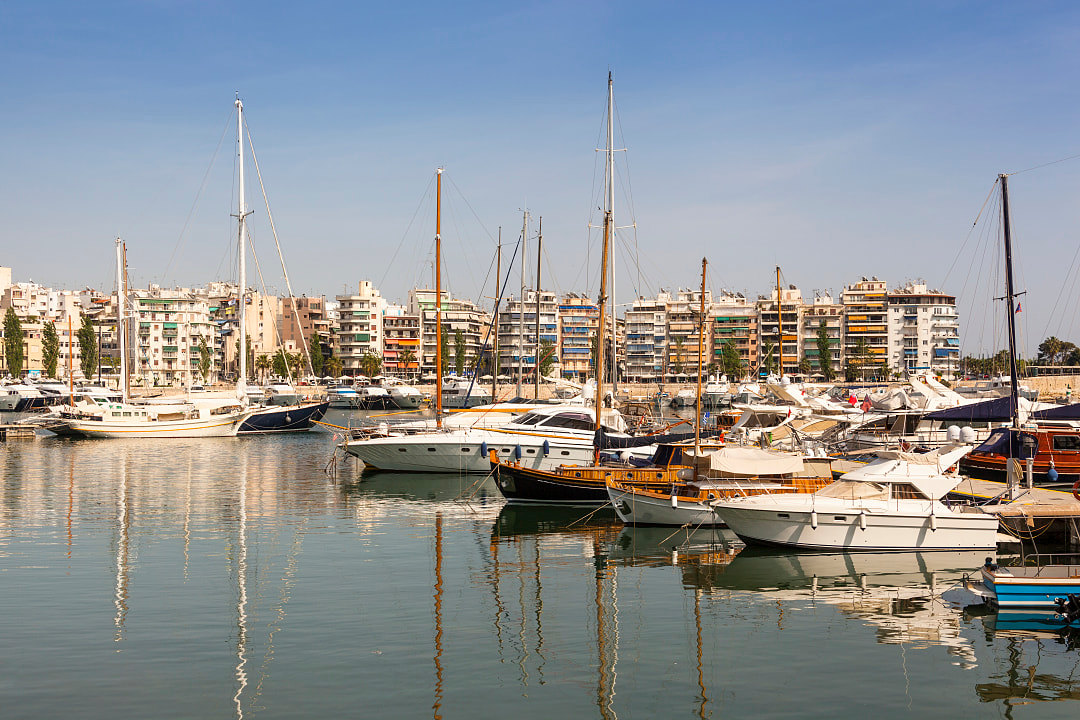
Piraeus Harbour, Greece.

Where a self-booked trip requires hours of cross-referencing ferry websites, domestic airline schedules, harbor transfer options, and accommodation availability, a Zicasso-designed itinerary delivers a seamless journey from your front door to a terrace overlooking the Aegean. The difference is institutional knowledge built through years of on-the-ground experience that no algorithm has yet learned to replicate. Zicasso’s specialists don’t consult the same booking platforms you would. They work from relationships, experience, memory, and a depth of island-specific knowledge that makes their itineraries feel less like travel arrangements and more like inside access.

The best small hotels and guesthouses on quiet islands frequently don’t appear on mainstream platforms. These are family-run properties where the owner brings breakfast to your terrace and tells you which fisherman’s taverna to visit. They operate through reputation and repeat visitors, and Zicasso’s specialists maintain direct relationships with them. Your name is known before you arrive. The caïque for Kleftiko is already booked. The table at the harbor taverna is held for the evening your ferry docks. All of this happens because we planned it that way.

  • The "Buffer" Rule: We know that a 90-minute connection in Piraeus is theoretically possible, but practically risky when the Meltemi winds blow. We build in necessary buffers or suggest alternative routes that ensure a delayed ferry doesn't result in a missed onward connection.
  • The "Phone-Only" Suites: The most exclusive suite in a Sifnos guesthouse often isn't listed online because the owner prefers to rent it to trusted partners. Zicasso’s direct line to these owners unlocks inventory that appears "sold out" to the general public.
  • Curated Captains: Anyone can rent a boat, but we book specific skippers who know the wind patterns of Milos's sea caves intimately. They know exactly which hour the light hits the water perfectly at Kleftiko and, more importantly, when to leave to avoid the afternoon swell.
  • Luggage Logistics: Navigating steep, cobbled lanes with suitcases is the unglamorous reality of island life. We ensure porters or transfers are pre-arranged so your arrival involves a scenic walk to your room, not a physical struggle with your bags.
  • The "Closed" Season: An island might look open online in October, but we know if the only pharmacy is on reduced hours or if the premier seafood restaurant has already packed up its terrace for the winter. We guide you toward islands that are alive during your specific travel dates.

To find out more about how Zicasso works, see our How to Plan a Trip with Zicasso in 4 Easy Steps.

The Islands the Aegean Kept for Itself

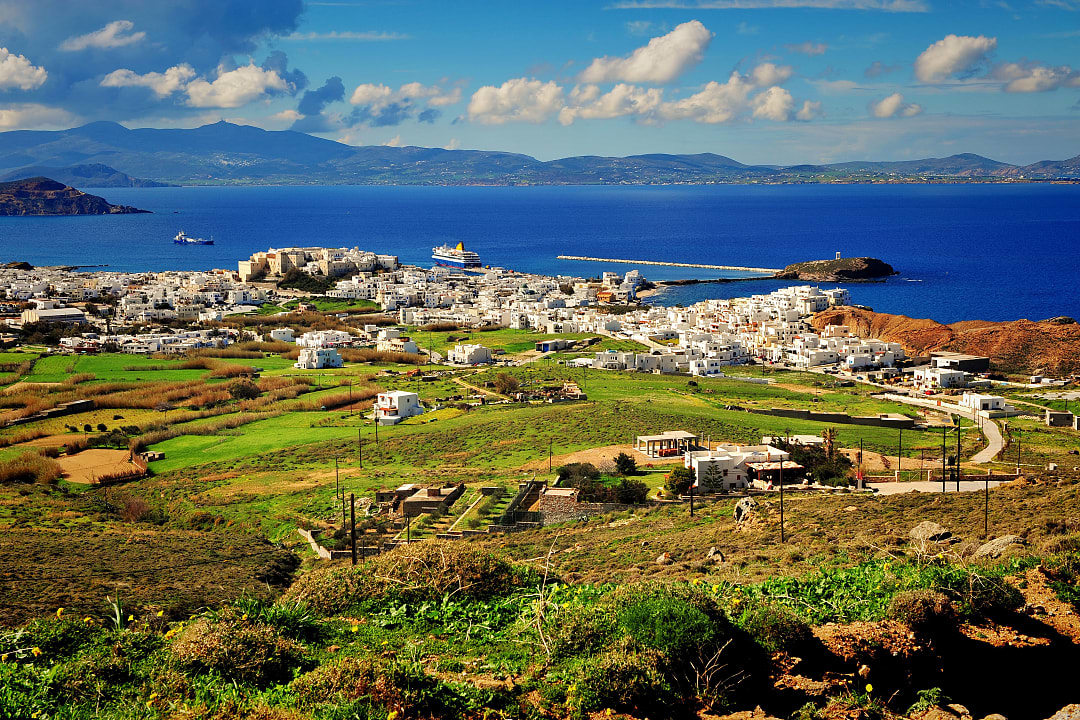
The island of Naxos, Greece.

What lies beyond the narrow itinerary most visitors follow is a different Greece entirely. It starts before most tourists are awake, with the sound of a fishing boat engine in a dark harbor and the smell of salt, olive oil, and fennel pie crisping in a kitchen that has been making the same dish for three generations. The islands featured here embody that. They are places where the taverna owner is not playing a role, where the fishing boats in the harbor are working vessels rather than atmosphere, and where the experience of being there belongs to you rather than to several thousand other people who booked the same package. Each is distinct in character and geography, but all share the quality that their famous counterparts have largely surrendered: the feeling that you have arrived somewhere real.

1. Milos

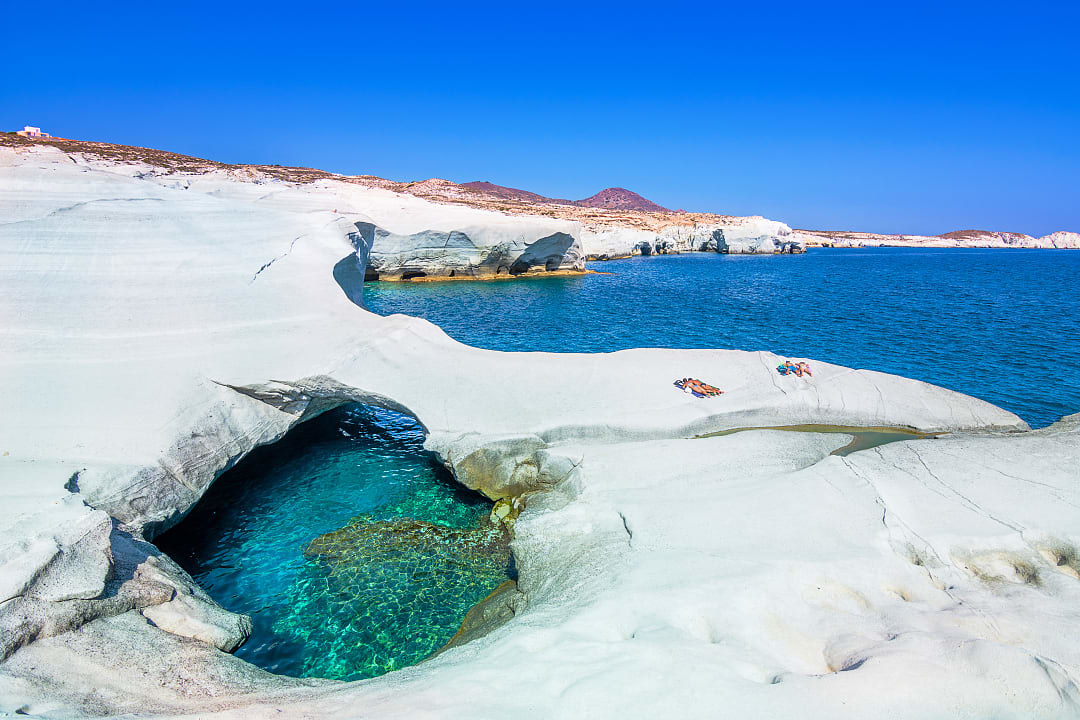
Sarakiniko Beach, Greece.

Your boat rounds the headland at dawn and Sarakiniko Beach emerges like a landscape from another planet. Brilliant white volcanic rock glows amber in the early light. You step onto stone still cool from the night, your footsteps the only sound other than the waves in the inlet below. No beach umbrellas planted in precise rows. No DJ booth. No attendant asking for an excessive amount to rent a sunbed. Just you, this otherworldly geology, and water so clear you can count pebbles at 20 feet.

In the fishing village of Klima, you photograph syrmata, those iconic boat garages carved into volcanic rock and painted in weathered blues, reds, and yellows. A fisherman mends nets in a doorway. He nods, continues his work. No one rushes to sell you something. By mid-morning, you're aboard a private boat threading through the Kleftiko sea caves, where white cliffs tower overhead and hidden grottoes reveal turquoise swimming channels. Your captain cuts the engine. The silence is so complete that you hear water dripping from the cave ceiling. This is what Santorini's caldera offered 50 years ago, before the cruise ships arrived.

  • Sarakiniko at first light: Wade into the turquoise inlet as the sun clears the eastern horizon, casting long shadows across the white volcanic formations.
  • Private Kleftiko charter: Book a private morning departure to explore these sea caves and hidden coves, swimming in water so clear your anchor chain is visible many feet below.
  • Plaka's stone-paved evenings: Dine at tavernas where tables spill onto marble steps under bougainvillea and the chef's mother still makes revithada in the wood oven her grandmother used. The chickpea stew emerges after eight hours, creamy and fragrant with rosemary.
  • Papafragas geological wonder: Slip through the narrow rock channel where the sea has carved a natural swimming pool, cliff walls rising 100 feet on either side to create a private amphitheater of stone and water.
  • May or late September timing: Visit when water temperatures hover at 72°C and beaches that felt crowded in July return to their essential solitude.

For more details to inspire your journey, take a look at our Milos tours and vacations, which can be customized to your exact preferences.

2. Folegandros

A taverna in Folegandros, Greece.

The path smells of thyme and sun-warmed stone as you begin the climb to Panagia Church. Three hundred steps zigzag up the cliff face and by the halfway point, the Aegean has dropped so far below that fishing boats look like punctuation marks on blue paper. On rounding the final turn, a white chapel appears against open sky, its bell tower catching the last gold of the evening. Inside, a single candle burns. An elderly Greek woman in black tends it, moving her lips without sound. She doesn't look up. You are not the point.

This is Folegandros's essential gift: the luxury of solitude in a world where it has become nearly impossible to purchase. The island gives it freely, without theater. Back in Chora, you settle at a taverna table on Plateia Kontarini as the evening volta begins. A grandmother in black passes, arm-in-arm with a granddaughter who's staring at her phone. The smell of charcoal drifts from the kitchen. Your waiter sets down octopus with a wedge of lemon, the char still hissing faintly. Tomorrow, without being asked, he'll bring you to the same table.

  • Panagia's golden-hour ascent: Begin climbing at 6.30pm so you reach the summit as the sun hovers above the western horizon, gilding the white chapel and turning the Aegean into hammered bronze beneath you.
  • Three-square evening promenade: Follow the locals' pattern: aperitivo at a wine bar, dinner at tavernas, digestivo and people-watching as marble reflects lamplight like water.
  • Katergo by caïque: Take a private boat to this cliff-backed pebble beach where a man grills red mullet at his taverna, pulling house wine from barrels and serving tomatoes that taste like sunshine and salt.
  • Ano Meria's timelessness: Drive to this scattered settlement of stone farmhouses, where donkeys still outnumber cars and tavernas serve handmade pasta with rabbit slow-cooked in wine and cinnamon.
  • Post-September 10 transformation: Return after Greek schools resume. This is when ferries reduce to one daily and the island exhales into its contemplative winter personality while September sun keeps water warm.

Visit Folegandros on our sample Greece Sailing Adventure: 8-Day Island Explorer.

3. Sifnos

A traditional pottery workshop in Sifnos, Greece.

You arrive at the harbor before the town is properly awake. The fisherman lifts a lavraki from the crate and holds it toward the taverna owner without speaking. The fish does the talking, its scales still wet and iridescent, its eye clear as glass. The owner presses the flesh with his thumb, nods once. Money changes hands. The fish goes into the kitchen. You file this moment away and come back at eight that evening to find it on your plate, grilled simply with lemon, olive oil, and wild oregano. Nothing has been done to improve it because nothing needed to be done. This is Sifnos, an island so confident in its ingredients that embellishment would be an insult.

In Vathi's pottery quarter, a wheel turns with a low hum and the smell of wet clay hangs in the warm air. The potter's hands move with complete authority, turning what was a lump of ochre earth a moment ago into a pitcher with a graceful neck. Around its shoulder, he paints dolphins. Not the cartoon version you find at tourist markets, but the ancient Sifnian form that his grandfather painted and his grandfather before him, each one subtly different because no human hand ever makes the same mark twice. Three thousand years of this.

  • Morning ritual: Arrive before 9am to watch the catch negotiations between taverna owner and fisherman, then book an evening table where the owner personally describes each fish's story: where it was caught, which technique, how he'll prepare it.
  • Pottery workshop: Visit the studio of a renowned potter, who will explain traditional Sifnian pottery techniques while his hands work the clay, creating pieces that merge ancient designs with contemporary function.
  • Kastro's marble sunset walk: Follow the Byzantine fortress walls as golden hour approaches, passing ancient sarcophagi embedded in house foundations and six medieval churches clustered within approximately 300 feet.
  • Kalderimi trail meditation: Hike the stone-paved donkey path from Apollonia to Vathi, a two-hour descent through terraced hills passing 15 chapels, each one a reason to pause, drink water, and absorb the silence.
  • Greek Orthodox Easter immersion: If your schedule permits late April, experience the island's 365 churches hosting candlelit processions, followed by communal midnight feasts of roasted lamb and wine that flow until dawn illuminates the harbor.

Zicasso’s Luxury 1-Week Greece Vacation will put you on Sifnos, with the added bonus of a visit to Milos.

4. Paros

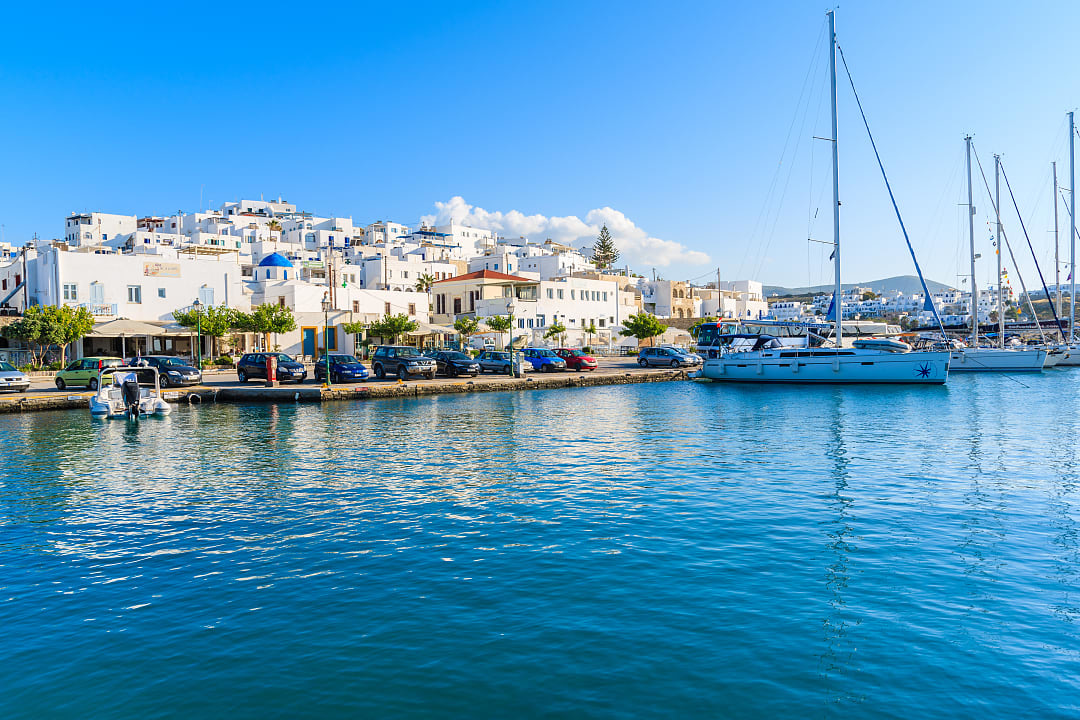
The harbor of Naoussa, Greece.

The harbor at Naoussa smells of diesel and brine, with something sweeter underneath. Jasmine, perhaps, or figs ripening on a tree at the taverna corner. Taverna owners in rubber boots are already in the shallows at sunrise, examining the morning's catch while it's still flipping in wooden crates. The negotiations are fast and physical: a raised eyebrow, a head tilt, a hand turned palm-up in mild outrage, then agreement. You watch it happen and make a mental note of which table you'll want tonight, on the terrace where the jasmine is loudest, facing the harbor.

By 8pm that terrace is lit by candles that gutter in the warm evening air and the octopus arrives charred at its edges, its flesh tender and smoky, dressed only with lemon and a thread of oil from the island just over there. Your waiter pours Moraitis white from vines growing three miles away. This is what Paros offers that the famous islands have largely surrendered: sophistication that hasn't yet crowded out pleasure. Your room has Egyptian cotton sheets and real water pressure, your restaurant understands you don't eat gluten, and you watched your dinner being negotiated at the harbor this morning. You don't have to choose between comfort and authenticity.

  • Naoussa's pre-dawn market: Set your alarm for 7.45am to watch the catch auctions at the harbor, then claim a table at a nearby taverna for dinner. You will recognize the fish you saw 12 hours earlier.
  • Kolymbithres's sculptural swimming: Arrive at this granite-boulder beach mid-morning when the sun illuminates the rock formations, smooth gray stone shaped by millennia into natural diving platforms and protected pools.
  • Lefkes mountain escape: Drive to this marble-paved village, where the Cathedral of Agia Triada houses an ornate wood-carved iconostasis and kafeneia serve thick Greek coffee under plane trees centuries old.
  • Antiparos cave expedition: Take the 10-minute ferry to the satellite island, then descend into the 8,000-year-old cave where stalactites reach 20 feet long and ancient graffiti includes Lord Byron's signature from 1810.
  • Late May or early October balance: Visit when Paros's sophisticated dining scene operates fully, but beach clubs haven't reached capacity. You'll receive attentive service with actual space between tables. This is impossible in July.

For more information to inspire your journey to Paros, see our sample Ultimate 10-Day Greek Islands Vacation.

5. Amorgos

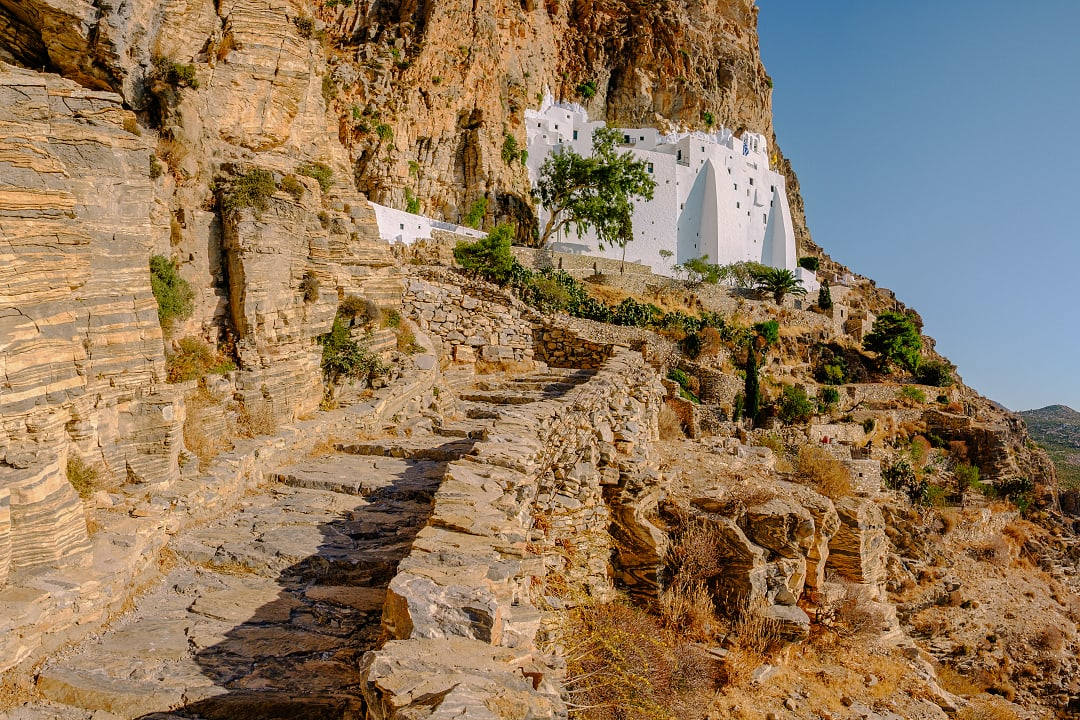
The monastery of Hozoviotissa, Amorgos.

The monastery clings to the cliff face like something humans couldn't build. But here stands Hozoviotissa, 11 centuries old, its white facade pressed against nearly 1,000 feet of sheer ochre rock. You climb the stone steps carved into the mountain, then duck through the low doorway into candlelit dimness. Icons glow gold in the darkness and the air possesses aromas of beeswax and frankincense. A monk in black robes appears silently, offers a shot glass of raki and a piece of loukoumi on a silver tray. You stand in a chapel carved from living rock, waves crashing far below, feeling the weight of a thousand years of prayer echoing in this stone.

At Agia Anna Beach, you understand why Luc Besson filmed The Big Blue here. The water isn't merely clear; it's invisible. Your snorkel mask reveals the seafloor and you feel as if you are floating in air. Fish drift past like thoughts and time becomes elastic. When you finally emerge, the sun has moved handspans across the sky and you've forgotten to check your phone for three hours. Amorgos's gift is the luxury of complete absorption, of time moving at natural rather than notification speed.

  • Hozoviotissa mid-morning ascent: Begin climbing around 10am, when the monastery opens. Wearing respectful clothing, with covered shoulders and knees, pause halfway to absorb the vertiginous view before entering the cave-chapel's candlelit interior.
  • Agia Anna's crystalline depths: Descend the steep footpath to this pebble beach, where 130-foot visibility makes snorkeling feel like flying. Bring underwater cameras to capture the clarity that made this coast famous.
  • Ancient Minoa sunset hike: Walk from Katapola port to this hilltop Hellenistic site, where gymnasium and temple ruins overlook three bays, then continue via the kalderimi path to Chora as twilight turns the stone lanes silver.
  • Mouros Beach expedition: Commit to the rough dirt road or 45-minute hike to reach this remote northern cove, where a family taverna rewards your journey with grilled fish and the satisfaction of effort expended.
  • August 15 festival immersion: Experience Assumption Day celebrations when Katapola, Aegiali, and Chora host traditional music, circle dancing, and communal feasts that continue until dawn colors the eastern sky.

Embark on our fully customizable Ultimate 3-Week Greek Island Vacation. Our travel specialists will arrange your itinerary in a way that gives you as much time as you want on Amorgos.

6. Astypalea

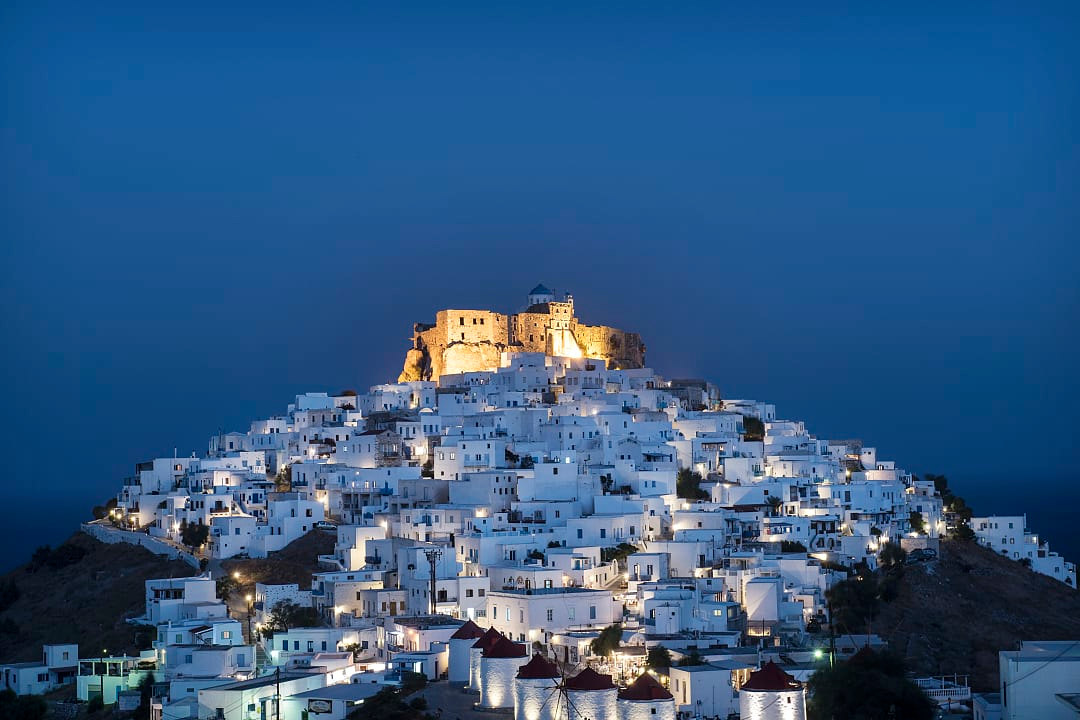
The Astypalea Castle at night, Greece.

The Venetian castle sits atop the hill like a white crown, its fortifications encircling a labyrinth of cube houses, blue-domed churches, and windmills that once ground wheat for the entire island. You navigate the stepped lanes as evening approaches, losing yourself deliberately in the maze. A grandmother waters geraniums in terracotta pots. A cat sleeps on a whitewashed stairway. You emerge at the fortress walls just as the sun touches the horizon and suddenly you understand Astypalea's butterfly shape. Both wings of land spread below you, the narrow isthmus connecting them and the sea surrounding everything in darkening cobalt.

At an afternoon taverna table in the shadow of those same castle walls, your host explains the solar panels powering the kitchen. Astypalea committed to becoming Greece's first carbon-neutral island. Electric cars replaced diesel vehicles, renewable energy powers homes, and water conservation became cultural pride rather than mere necessity. Your lobster pasta tastes even better knowing the tomatoes grew in the owner's garden without chemical assistance. You're experiencing the island as it should be, as it can remain if enough travelers choose preservation over Instagram saturation.

  • Castle ramparts at golden hour: Climb through Chora's upper town to the 13th-century Venetian fortress where eight medieval churches cluster within the walls and sunset reveals both sides of the island's distinctive butterfly silhouette.
  • Kaminakia's solar-powered sanctuary: Follow the coastal path from Chora to this secluded cove backed by eucalyptus trees, where the taverna operates entirely on renewable energy and serves lobster pasta with vegetables from the organic garden.
  • Vathy fjord's deep inlet: Drive or water taxi to this dramatic fjord on the eastern wing, where a tiny fishing hamlet hosts exceptional seafood tavernas in a village of few permanent residents.
  • Livadi's dual beaches: Base in this resort area, where the narrow isthmus creates beaches on both shores. Swim the south coast's sheltered morning waters, then walk five minutes across the island for north coast sunset swimming.
  • June or late September green season: Visit when tourism is minimal, allowing you to experience full services with off-season intimacy while supporting the island's sustainability initiatives.

For all you need to know about arranging a vacation in this beautiful country, see our How to Plan a Trip to Greece: Frequently Asked Questions.

7. Serifos

Traditional white buildings in the town of Chora, Greece.

The ferry rounds the headland and the island announces itself without apology. Hundreds of whitewashed cube houses cascade down a conical mountain in perfect geometric tiers, crowned by Byzantine ruins, and the whole arrangement is so dramatic and so completely un-Instagrammed that for a moment you wonder if you've imagined it. Serifos has never needed to perform.

You climb into Chora's upper town as the heat goes out of the day. The alleys are barely wide enough for two people to pass and the walls on either side hold the warmth of the afternoon sun. Laundry hangs from wrought-iron balconies. Jasmine spills over a whitewashed wall and its perfume in the still air is so concentrated it's almost physical. At the highest point, where the castle ruins command a full circle of sea and sky, you stop. Below, in the main plateia, a group of elderly men are settled around a backgammon board. The click and skitter of dice on wood drifts up clearly in the silence; the specific sound of an evening ritual that has been performed in this square, at this hour, for longer than anyone can say. And that is what Serifos offers: the feeling that you have arrived somewhere real.

  • Chora's vertical exploration: Navigate the stepped maze to the summit, where Byzantine castle ruins and three churches offer panoramic views; then time your descent for dusk, when the white houses in descending tiers are illuminated.
  • Psili Ammos by foot or sea: Hike 20 minutes from the road's end through wild thyme and oregano, or arrive by caïque to this golden-sand beach backed by tamarisk trees, where family tavernas serve grilled octopus.
  • Mining heritage trail: Follow the interpretive path from Megalo Livadi through abandoned iron and copper installations, where rusted ore-cars and equipment create haunting industrial archaeology against the brilliant blue backdrop.
  • Panagia's stone persistence: Drive to this mountain settlement of traditional stone houses. This is where elderly residents maintain Byzantine architecture and a taverna serves goat stew on Sunday afternoons only.
  • May wildflower abundance: Visit during May when hillsides explode in yellow crown daisies, pink cistus, and purple sea lavender, water temperatures reach a comfortable 68°F, and the island is almost entirely local, except for discerning travelers.

For more inspiration on visiting Greece and its islands, take a look at our seven-day Greece itineraries and tours.

Plan Your Trip to Quiet Islands in Greece

Tinos island at sunset, Greece.

These islands require slightly more effort than booking a Santorini package, but our travel specialists are here to help you every step of the way. When you're one of 20 people watching sunset instead of 2,000, when the restaurant owner remembers your name on the second visit, and when you discover a beach cove that isn't geotagged into algorithmic oblivion, these moments justify it all. The choice isn't between famous and unknown islands. It's between being a spectator in someone else's island tour and becoming a participant in your own curated Greece.

These seven islands offer the sense of finding rather than following. They prove that the Greek islands' allure hasn't disappeared; it's simply moved to shores where ferries arrive less frequently, silence still has value, and the welcome feels genuinely personal because you're a guest, not a transaction. For more information, see our Greece travel guide. Further inspiration can be found in our Greece tours and vacations.

30,000+ Verified Traveler Reviews