Top 5 Things to Do in Malta

Birgu City, Malta

Birgu City, Malta

The top things to do in Malta pack an improbable range into one small island, where the ancient world and the present share the same sun-warmed stone. Within a few miles, you can explore a Neolithic temple, walk through a Baroque fortress city, and sit down to cuisine shaped by Arab and Norman rule.

Malta does in an afternoon what larger countries spread across a week. Stand inside Hagar Qim, older than Stonehenge and raised before the pyramids of Egypt, its great stones still in place. Walk Valletta's honey-gold ramparts as the Mediterranean turns copper at dusk. Drop beneath the surface of the Blue Lagoon on Comino into water so clear it barely seems real. From the temples of Gozo to the forts of the Grand Harbour, these are the luxury experiences worth building a trip around.

Extraordinary travel begins with the human touch and our destination specialists design every journey with care, insight, and personal attention. They use their on‑the‑ground relationships to secure genuine after‑hours and private access to add depth to your journey. They listen closely to how you like to travel, then choreograph events that match your desires.

1. Snorkel and Beach-Hop in Turquoise Waters

Gozo Island, Malta
Gozo Island, Malta

Malta’s coastline is one that’s best explored slowly, privately, and from the water.

Why This Activity Is Unmissable

The best of Malta’s coast isn’t on the beach, it’s in the water, and reaching it well is the trick. On an island this small and this frequented, the real luxury is solitude, and solitude here is bought with a private boat and an early alarm. Go that way and a stretch of spectacular sea becomes, for an hour or two, entirely your own.

  • Dawn arrivals: Reaching the Blue Lagoon around eight, before the day boats, gives you its famous water glass-still and nearly empty.
  • Cave access: A small private vessel slips into limestone chambers and sea arches the crowds on the main beaches never reach.
  • Color shift: In the right afternoon light, a single sheltered cove runs through every shade between green and deep blue.
  • Hidden inlets: The shoreline is so fractured that the best coves stay invisible until you round the headland and find them.
  • Water first: Seen from the sea rather than the sand, the coast reads as one long, fractured masterpiece.

A Journey Through History

Few stretches of water have been fought over as persistently as the sea around Malta. Sitting where the Mediterranean pinches narrowest, the island was a prize for anyone who wanted to control the middle of that sea. Traveling the coast by boat today will have you reading a history written entirely in salt water.

  • Phoenician routes: Traders out of the Levant knew these inlets as safe harbors 3,000 years ago.
  • Knights’ command: The Knights of St. John ran their naval power from these channels, reading the currents like a map.
  • British Navy: The Royal Navy later held the same waters for the deep harbors that made Malta a strategic asset.
  • Treacherous inlets: Sailors prized local knowledge of the hidden currents as much as the shelter, learned the hard way.
  • Unchanged water: The sea you swim in now is the same one that linked three continents. Only the vessels have changed.

Where to Enjoy Your Visit

Anchor down in water so clear your private boat seems to hang above its shadow. Spend an hour in the shallows while fish carry on as if you weren’t there, then return into the sun with salt tightening on your skin and nowhere you need to be. These are the places to build that luxury from:

  • Blue Lagoon, Comino: The jewel of the archipelago; arrive by private boat to have it at its best.
  • Comino Sea Caves: Reached by kayak or small vessel, all dramatic limestone and extraordinary light.
  • Golden Bay: A sweeping arc of warm-red sand with calm, clear water, made for unhurried swimming.
  • Wied iz-Zurrieq: A narrow southern creek with boat access to the Blue Grotto cave system.

Discover your private corner of the Mediterranean with a custom Malta escape designed by our travel specialists.

2. Hike Coastal Trails and Take Sunset Cliff Walks

Mnajdra Temple, Malta

Malta’s limestone cliffs and thyme-scented valleys are best experienced on foot, with history and nature meeting at every turn.

Why This Activity Is Unmissable

On foot is the only way to reach the parts of Malta’s coast that have no road, no entrance fee, and no one trying to sell you anything. For the well-judged walker, that emptiness is the reward.

  • Empty paths: Minutes from the nearest road, you can walk for an hour and pass no one at all.
  • Ruins underfoot: Trails run straight past prehistoric temples and cart ruts, unfenced and unticketed.
  • Sheer edges: The cliffs drop clean to the water, an open horizon with nothing built between you and it.
  • Amber dusk: Time the walk for sunset and the limestone glows, the sea going from blue to near-black.
  • Named islets: From the heights, distant islands sit on the horizon as dark shapes you can pick out one by one.

A Journey Through History

The footpaths double as a timeline. Walk them and you cross ground that people have been using, marking, and arguing over for longer than almost anywhere else on Earth. The deep past here isn’t behind glass; it’s underfoot and out in the weather.

  • Cart ruts: At Misrah Ghar il-Kbir, parallel grooves worn into the rock still puzzle archaeologists over who cut them and why.
  • Older temples: Hagar Qim and Mnajdra stand on the southern cliffs, raised before the pyramids of Egypt.
  • Solstice aligned: Both were built to catch the rising sun at the solstices, astronomy set in stone.
  • Ggantija link: On Gozo, the sister temples at Ggantija carry the same prehistoric story across the channel.
  • Lost builders: The people who raised these temples left no writing behind, only engineering that still stands.

Where to Enjoy Your Visit

What stays with you is the sensory detail: wind arriving off the open sea in sudden gusts, then a silence so complete you can hear your footsteps; wild thyme and fennel giving up their scent as you brush past; the far-off clang of a village church marking an hour no one’s watching. Pick your route based on what you want from it:

  • Dingli Cliffs: For Malta’s most dramatic coastal panoramas, especially at sunset.
  • Gozo Island: For quieter, greener trails and the clifftop approach to the Ggantija temples.
  • Ramla Bay, Gozo: For a rare red-sand beach at the end of a walk through terraced farmland.
  • Il-Majjistral Nature and History Park: For wild, largely untouched coastal walking in the northwest.

Breathe in the wild beauty of the islands when you set off on a private coastal walking adventure with your Zicasso guide.

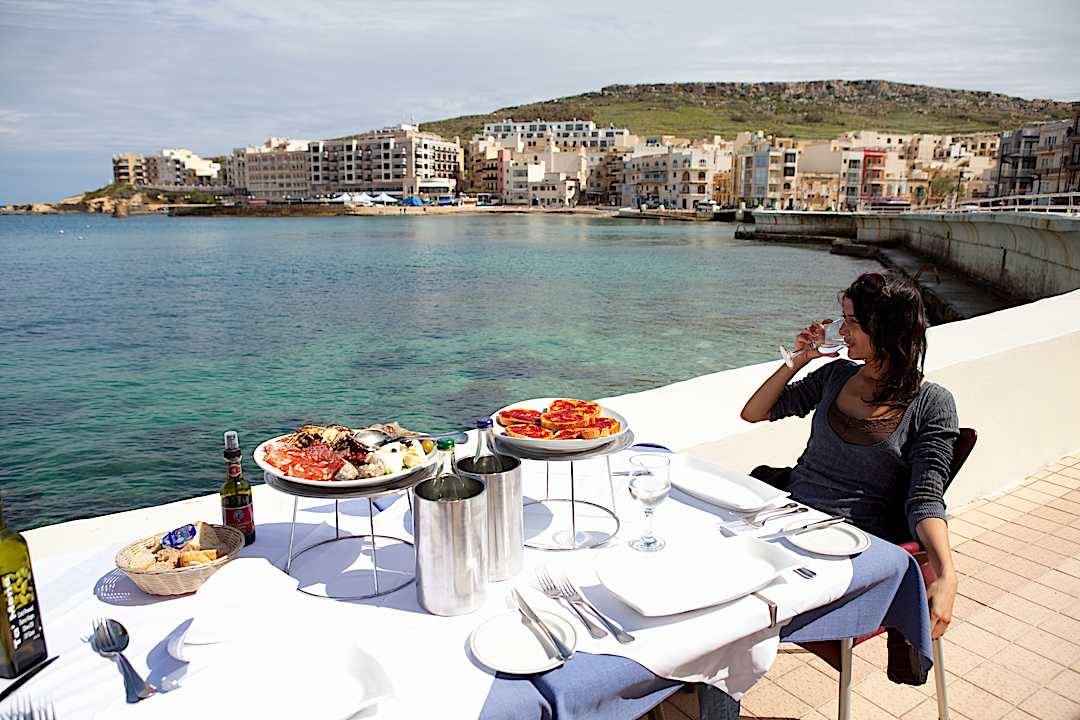
3. Food and Festival Experiences

Marsalforn Village, Gozo Island, Malta

Malta’s food culture is best experienced in its streets and bakeries, as well as village feasts.

Why This Activity Is Unmissable

Maltese food rarely makes the Mediterranean shortlist, which is the food world’s loss and, for now, your gain. Centuries of occupation by the Phoenicians, Arabs, Normans, Spanish, French, or British left something on the plate, and the island folded it all into a cuisine that tastes like nowhere else. Add a summer village feast and you’re not watching a tradition; you’re enjoying the luxury of being inside one.

  • Braised rabbit: Fenek, slow-cooked until it falls off the bone, is the dish Maltese families argue over and cook best at home.
  • Honest bread: Local loaves need nothing more than good olive oil and sea salt to make a meal.
  • Fennel sausage: The charcuterie carries notes of fennel and coriander, with harbor brine and woodsmoke in the air around it.
  • Festa welcome: Wander into a village feast and a stranger is as likely to press a sweet into your hand as to ignore you.
  • Brass bands: The processions move through narrow limestone streets behind full brass bands, deafening and joyful.

A Journey Through History

Much of what you taste and hear at a Maltese feast is older than it looks. The flavors carry an inheritance from rulers long gone and the festivals themselves descend in an unbroken line from the earliest Christian centuries. This is living history you eat and dance to rather than tour.

  • Arab inheritance: Two centuries of Arab rule left citrus, spice, and dried fruit threaded through the island’s cooking.
  • Ancient sweets: Honeyed treats sold at the feasts still go by names a thousand years old.
  • Rabbit roots: The national dish carries that medieval taste for fruit and spice alongside the meat.
  • Saint statues: Each feast centers on a patron saint carried shoulder-high through the crowd, a rite centuries deep.
  • Firework rivalry: Neighboring villages compete with midnight displays, a point of fierce parish pride for generations.

Where to Enjoy Your Visit

Eat the way locals do, with your nose leading: a pastizz still warm from the bakery for a few cents, a ftira dressed in oil, tomato, and capers, a cold glass of Girgentina to wash it down. Here’s where to find the best of it:

  • Valletta: For the full range, from street food to refined dining, and the Central Market at dawn.
  • Mdina: For quieter, historic surroundings and restaurants set in converted palazzos.
  • Rabat: For local, neighborhood eating well off the tourist trail.
  • Village Festas (May–September): For an unforgettable cultural night, ask which village’s feast falls during your visit.

Taste the soul of the island as you savor food and festival flavors.

4. City Walks and Cultural Discoveries

St. John’s Co-Cathedral, Valletta, Malta

Valletta is Europe’s smallest capital and one of its most concentrated, every street a stage set, every building a chapter of living history.

Why This Activity Is Unmissable

Valletta packs more into a square mile than capitals 10 times its size. The Knights of St. John raised it in the 16th century as a working fortress, and though you can cross it end to end in under 20 minutes, almost no one manages it because there’s something arresting at every corner and the right move is to slow down and let it accumulate.

  • Baroque whole: Built in one concentrated push, the city is among the most architecturally unified capitals anywhere.
  • UNESCO core: The entire historic peninsula carries World Heritage status, not just a monument or two.
  • Working palaces: Grand state rooms still host official functions, lived-in rather than roped off.
  • Old theatre: The Manoel, among Europe’s oldest working theatres, still stages performances a few streets from the cathedral.
  • Fortress ramparts: The walls that once held off the Ottoman Empire still wrap the entire peninsula.

A Journey Through History

Everything about Valletta points back to a single summer. In 1565, the Knights of St. John held off a vast Ottoman fleet in what’s still called the Great Siege. The city you walk was laid out immediately afterward by men who had just, against the odds, won.

  • Knights’ city: The Order of St. John ruled here for over two centuries, their eight-pointed cross still cut into half the doorways.
  • Tombstone floor: St. John’s Co-Cathedral is paved entirely with the inlaid graves of the knights, names and arms in a dozen tongues.
  • Caravaggio works: Two of the master’s paintings hang in the oratory, made while he served as a Knight of Malta himself.
  • Baroque interior: Behind that plain stone exterior, the cathedral opens into one of the most lavish interiors in Europe.
  • Living statement: Severe without and gilded within, the whole city reads as a deliberate monument to survival.

Where to Enjoy Your Visit

Time your wandering for the soft hours. Valletta’s limestone soaks up the morning and hands it back in the afternoon as a warmth that’s almost physical; by evening, once the day boats have gone, the streets belong to residents again, with pavement tables, the smell of sun-warmed stone, and a church bell somewhere counting the hour. These are the views and experiences worth arranging your day around:

  • St. John’s Co-Cathedral: For Caravaggio’s originals, the tombstone floor, and one of Europe’s finest Baroque interiors.
  • Upper Barrakka Gardens: For the Grand Harbour view and the midday cannon salute, fired daily without fail.
  • Mdina (The Silent City): For a walled medieval city of rare atmosphere, best at dawn or dusk.
  • The Three Cities: Vittoriosa, Senglea, and Cospicua dish up the same richness as Valletta, with a fraction of the visitors.

Step into one of Europe’s great Baroque capitals on your private guided city walk.

5. Film-Set Exploration and Family Adventure

Popeye Village, Anchor Bay, Malta

Malta offers an adventure that is equally exciting for every age, keeping young minds curious day after day while older travelers wander sun-baked villages and everyone cools down in clear water.

Why This Activity Is Unmissable

The hardest trip to plan is the one with a six-year-old and a grandparent in the same party. Malta quietly solves it. Without anyone having to sit out or grit their teeth, the island serves up days that read as adventure to a child and as easy pleasure to everyone else.

  • Short distances: Nothing is far, so several big experiences can fit into one unhurried day.
  • Kayak caves: A paddle into a sheltered sea cave feels like mild exercise to some, pure adventure to others.
  • Popeye Village: A 1980 film set has become a working adventure park, oddly winning for parents and children alike.
  • Gentle beaches: Calm, shallow bays let the youngest swimmers and the most cautious wade in without worry.
  • Real wow: Even jaded teenagers tend to look up when the boat rounds into a cove or the cliffs open out.

A Journey Through History

There’s an instinct for spectacle in Malta that predates cinema by centuries. The Knights of St. John were among the great showmen of early modern Europe, staging ceremonies and sea pageants that pulled audiences from across the continent. The film industry simply found an island that already knew how to perform.

  • Decades onscreen: Malta has hosted productions continuously since at least the 1970s, rarely playing itself.
  • King’s Landing: Its Baroque streets and harbors served as the capital of Westeros in early Game of Thrones seasons.
  • Midnight Express: The island’s forts and prisons stood in for far grimmer places as early as 1978.
  • Lasting set: The 1980 Popeye set was built so solidly on its bay that it outlived the film entirely.
  • Why here: Ancient harbors, walled cities, and clean light handed directors centuries of backdrops in one place.

Where to Enjoy Your Visit

The shape of a good family day runs from active to easy. Mornings are for the water, with kayaks nosing past brightly painted huts and ropes and ladders trailing into the shallows, the kind of low-stakes adventure that produces unambiguous joy in children and quiet relief in parents. By late afternoon, the pace drops to warm sand and gentle waves under a gold sky. Build it around these:

  • Popeye Village, Anchor Bay: For the film-set park, kayaking, and a cove unlike anywhere else on the island.
  • Golden Bay: For Malta’s best family beach: calm water, warm sand, a reliable sunset.
  • Mellieħa Bay: For the island’s longest sandy beach, shallow and safe, with watersports for older kids.
  • Blue Lagoon, Comino: For a full-day family boat trip of snorkeling, swimming, and the archipelago’s clearest water.

Create memories that belong to the whole family when planning your Malta adventure with Zicasso travel specialists.

Experience the Top Things to Do in Malta

Mdina, Malta
Mdina, Malta

Malta gives itself up in small moments more than grand ones: a warm pastizz on a Valletta side street, the absolute quiet at the top of the Dingli Cliffs as the light goes, the first cold shock of dropping into the Blue Lagoon. It’s a small island that’s easy to come to know and rich enough that one trip is rarely enough.

Let one of our destination specialists shape a journey that does it justice. They know the side streets, the quieter beaches, and the village feasts worth building a trip around, so fill out a trip request to start planning your visit. You can find further Mediterranean inspiration by taking a look at our Mediterranean travel guide.

31,000+ Verified Traveler Reviews