Zicasso Travel Stories: When Plans Collapse and Everything Improves

What would it take for a place you've never been to feel like it was made for you? Not comfortable. Not well-organized. Made for you. The specific weight of your curiosity, the pace at which you actually want to move, the things you will remember in 20 years versus the things you will forget on the flight home.

Dennis Burke and his wife have been traveling long enough to know the difference between a trip that delivers and one that merely happens. Five continents between them and working toward seven, they have planned their own itineraries, navigated their own complications, and learned what that labor costs. When they came to Zicasso for the first time, they were not looking to be taken care of. They were looking for something more specific: a three-week journey through Chile, Patagonia, Antarctica, and Argentina that was too large and too consequential to leave to chance. They needed a specialist who could be trusted if “chance” materialized.

What they found was a partnership that proved its value most, not when everything went right, but when a transportation strike grounded their plans and stranded them in Patagonia for five unplanned days.

"Decision fatigue was real; what do you even choose from?"

The problem with planning a trip like this yourself is not a shortage of information, but the opposite: an overwhelming amount of detail from every corner of the globe without the ability to curate any of it. Every lodge, glacier, and wine valley in Patagonia has a website, a set of reviews, and a booking page. Information without judgment produces paralysis. You can read for 40 hours and still not know whether one night at a particular destination is right or whether two nights is the version that tips your trip from extraordinary to tedious. You can know a vineyard is organic and well-reviewed without knowing it digs a trench in the earth to show you the gradient layers beneath the vines that explain exactly how the soil becomes the wine, with livestock standing nearby as evidence.

Knowledge is knowing what a place is. Judgment is knowing what it will mean to you. Only one of those is searchable.

When Dennis and his wife began mapping out their vacation, working through three itinerary drafts with their Zicasso South America specialist, the relief from handing off responsibility came only in part. Mainly, the pressure eased when the specialist replaced Dennis’s inconclusive research with first-hand knowledge of the accommodations, restaurants, and activities.

It is worth noting early that when a trip runs through three countries, a continent most people will never visit, and a region where a transportation strike can rewrite your plans in an afternoon, the question of who answers the phone is not a small one. A large booking platform connects you to a call center, reading from the same screen you could access on an app. AI can pattern-match against past itineraries, but cannot call the local operator in El Calafate or negotiate with the airline. What Dennis had was a specialist on WhatsApp who was already working on the problem before he finished explaining it. That distinction would matter more than either of them expected.
“We landed in Santiago and Bernardo was there; that set the tone for the experience”

Getting off a long international flight in an unfamiliar country and walking out to find someone waiting with your name is a small detail that carries a disproportionate emotional weight. You are no longer navigating. You are being met.

"We landed in Santiago not entirely sure what to expect, and Bernardo was already there at the airport. In a country where we didn't speak the language, with that touch of anxiety about not knowing what came next, being met like that took the weight right off," Dennis said. "And that was true everywhere we went. Every local guide knew what we wanted to see and do. They took us to restaurants we never would have found on our own. The knowledge they carried about their place is not something you get from a website."

From Santiago south through Patagonia, there was always someone standing with them to guide them through a destination better than the couple ever could have on their own.

“A transportation strike stranded us in Patagonia and it turned out to be the best part of the trip”

A transportation strike in Argentina hit mid-way through Dennis’s trip. The plan that had been built across three itinerary drafts and months of preparation came apart in a single day. Dennis and his wife were stranded in El Calafate. Two planned nights became five. This is where the earlier question about who answers the phone stops being theoretical.

"We would have had to deal with the airline entirely on our own," Dennis said, "in a language we don't speak well, in a country we didn't know."

Their Zicasso Argentina specialist handled the airline. While that was happening, the local team in El Calafate, a ground operation Dennis describes as five-star without hesitation, took five unplanned days and built something for them. One afternoon, Dennis found himself on the only golf course in all of Patagonia, six greens across 18 tee boxes spread over four converted tennis courts, mountains filling every sight line. One night, because a music festival had pulled travelers from around the globe into a city that had little reason to be full, the streets were alive in a way no itinerary could have scheduled. Dennis and his wife ended the evening outside a Patagonian pub in conversation with two women who turned out to be connected to the University of Illinois.

"None of that was replicable," Dennis said. "None of it was on any list."

It only existed because five unplanned days landed in the hands of a local team who knew what to do with the time. The best moments of the trip were unplanned, but were only possible because the infrastructure behind the trip was solid enough to absorb the chaos that had unfolded.

“The icebergs looked like marble carvings”

Antarctica was, from the beginning, non-negotiable. Dennis's wife said so early in the planning and their Zicasso specialist designed around that non-negotiable. The choice to fly over the Drake Passage rather than endure the 48-hour crossing by ship was a specific recommendation that proved right.

Their cruise carried fewer than 70 passengers over five days on the water, giving them time to step onto the continent.

"The icebergs looked like marble carvings," Dennis said. "You could have been standing in a chapel in Italy. The colors, the scale, the silence. It looked artificial. It looked like something someone had made."

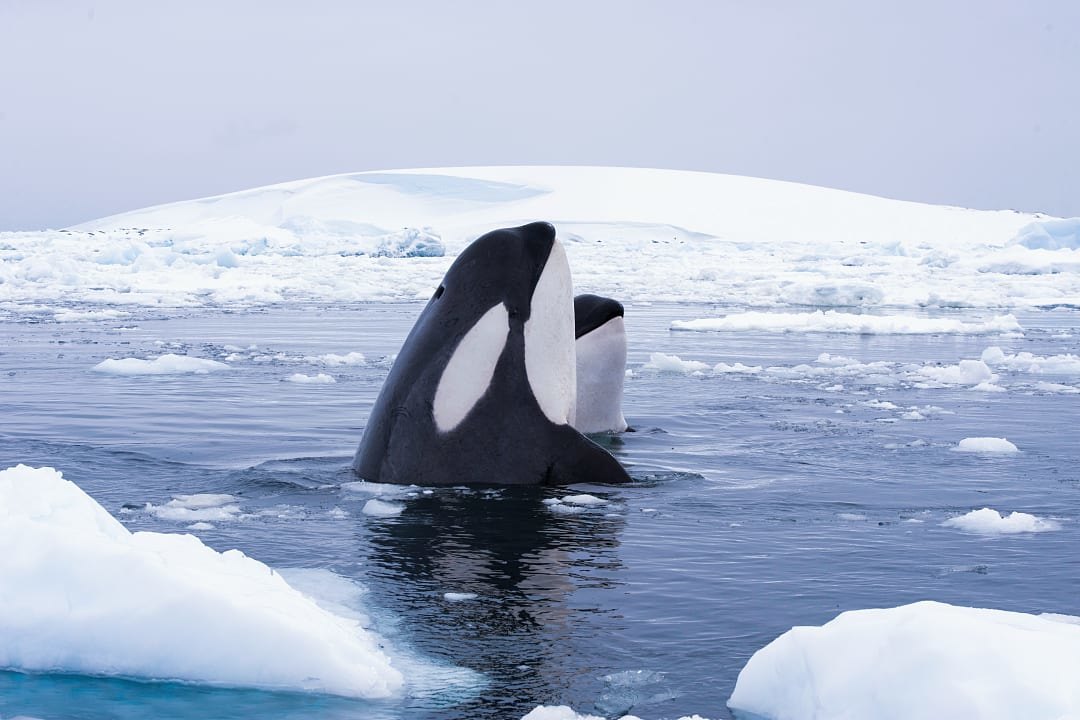
The wildlife held up in Dennis’s mind as well. Penguins, seals, whales breaking the surface. They didn’t see any orcas as the whales were too far south for the season, but the couple is already planning a return. One evening, the expedition crew left champagne on ice in their cabin with a handwritten note, a hand-drawn map, and a small sketch of a penguin to mark Dennis and his wife’s 40th wedding anniversary. Dennis plans on framing the card and hanging it in his office.

Another meaningful moment came at the edge of Patagonia. "Standing in the Strait of Magellan," Dennis said, "thinking about the people who got in wooden boats in Europe and found their way through that passage—that is the kind of thing you carry home."

“You are not going to find a vineyard like that on your own”

In Chile's wine country, the afternoon that stood out was not at a famous label or a name-brand estate, but an organic vineyard where the winemaker has built his entire practice around a theory about soil, demonstrating it by walking visitors to a trench cut into the earth to show the gradient layers beneath the vines.

The vineyard raises its own livestock. The manure from those animals feeds the soil in a ratio calibrated to produce specific aromatic compounds in the grapes. The winemaker can identify which layer of earth corresponds to which note in the wine and points to the earth to prove it.

"I have been to vineyards all over the world," Dennis said. "That was the most compelling one I have ever visited. You are not going to find a place like that on your own. You need someone who knows it personally."

"This is not a package deal"

Dennis has already recommended Zicasso to his friends. His pitch is not about luxury or convenience, though both are delivered. It is structural.

"This is not a package deal," he said. "It is tailored to what you want to see, in the time you have, at the pace that works for you. It seems like it should be enormously expensive, but it wasn't. The value for what we got was impressive."

The recommendation carries the most weight, he says, for travelers heading somewhere the infrastructure is complicated, the language is a barrier, or the consequences of a bad day are real. Antarctica. Patagonia. Anywhere the margin for error is thin enough that who answers the phone on a Tuesday afternoon actually matters.

"Our specialist was there from the first planning conversation through the last day of the trip. Months of back and forth. Real questions, real answers, suggestions on both sides. And when we needed her mid-trip, she was there within minutes. That is not something you get anywhere else,” said Dennis.

More to come

Two orcas breach the surface in Antarctica
Orcas in Antarctica

The seventh continent is on their list. So is a return to South America to find the orcas. Dennis and his wife will be working with Zicasso again.

If you are considering a journey through Chile, Patagonia, and Antarctica, our specialists bring the local knowledge, ground-level relationships, and practical judgment that can turn five unplanned days into the best stretch of a trip.

Find inspiration for your exploration with our South America tours and vacations or uncover more insights with our Patagonia travel guide.

30,000+ Verified Traveler Reviews