Cambodia

Essential Cambodia travel information, such as Cambodia tours and itineraries, must-see places, best times to go, and pre-qualified Cambodia travel agents and Cambodia tour operators that provide custom tours for Cambodia.
Formal Name: 
Kingdom of Cambodia
Capital: 
Phnom Penh
Currency: 
Riels
Telephone Code: 
855

Traveler Reviews

Cambodia/Vietnam Tailor-Made Holiday

"The trip was great. Haivenu Tours is top notch...."

Trip to Vietnam and Cambodia

"...We loved the trip and thought Haivenu Tours did a great job..."

Cambodia, Thailand, and Vietnam Tour

"Just about everything was great...Mongol Tours was really excellent..."

Thailand and Cambodia

"Mongol did an excellent job arranging everything.....Sightseeing with excellent guides"

Unique Cultural Tour to Cambodia

"We were very pleased with the trip, the guides, the drivers and the travel company overall."

Custom Cultural Exploration of Cambodia and Thailand

"Zicasso, and...Buffalo Tours provided everything promised and more."

Sample Cambodia Trips

Photos

Places to See

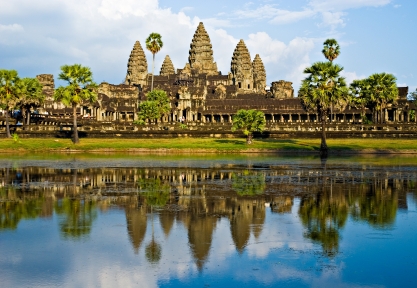
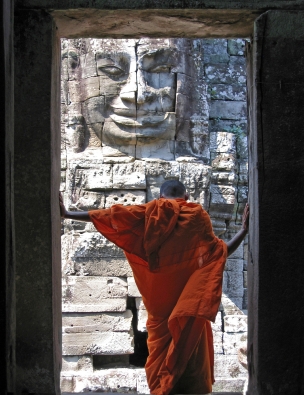
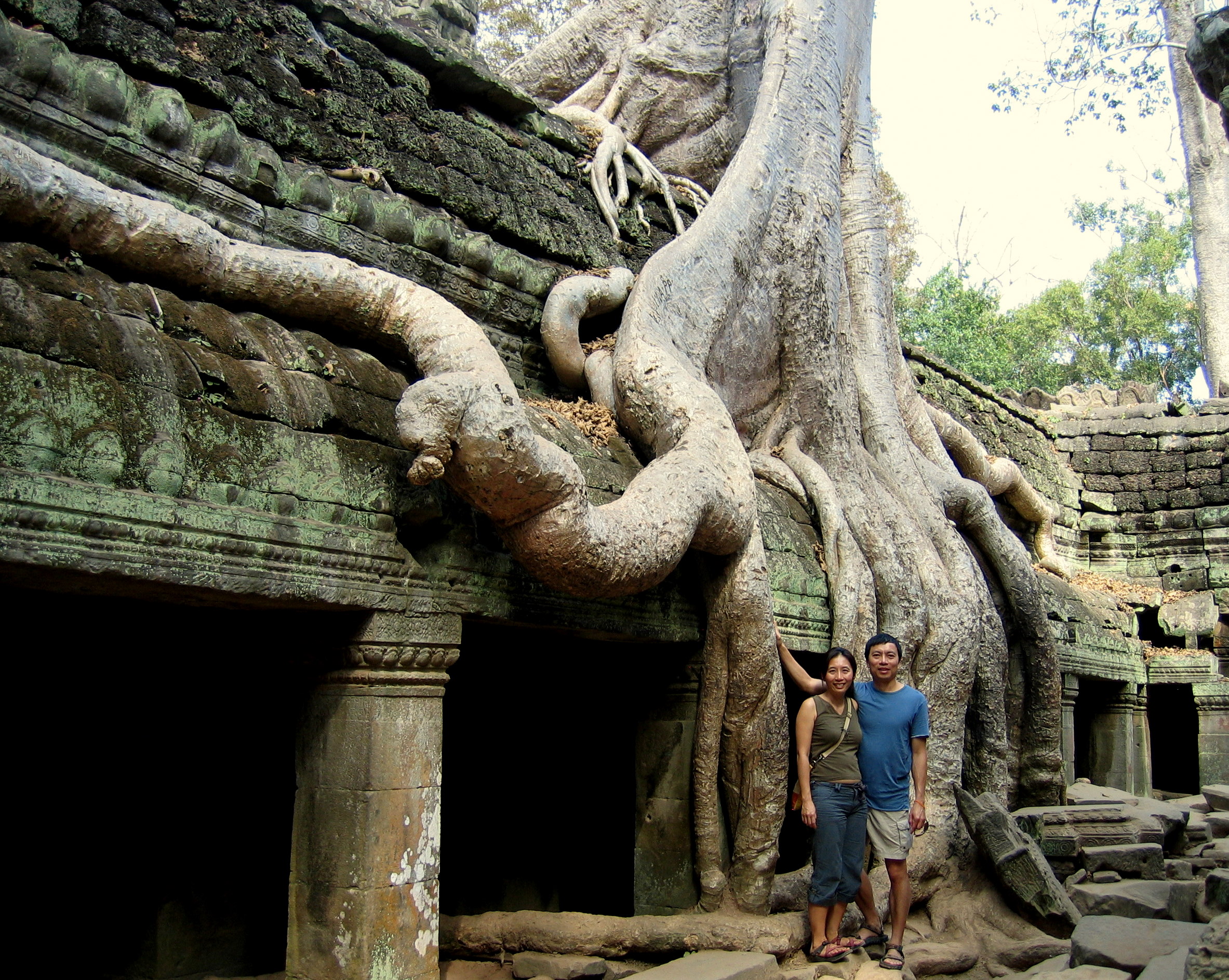
Angkor Archaeological Park – covering over 400 sq. km, Angkor contains the magnificent remains of several capitals of the Khmer Empire, from the 9th to the 15th century CE. Home of the imposing ruins of ancient Khmer civilization, including the famous temples of Angkor Wat, Bayon Temple, etc.
Phnom Penh - the capital, with good national museums
Banlung - the capital of a northeastern province located near some great waterfalls and national parks
Kratie - a river town in the north-east on the Mekong. It is an excellent place to get close look at endangered river dolphins
Siem Reap - the access point for Angkor temple complex; most international visitors arrive at Siem Reap as the point of entry
Tonle Sap Lake - take a cruise across the lake past floating villages and spend a day or two at Prek Toal Biosphere Reserve, Southeast Asia's premier bird sanctuary

Best Time to Visit

November to January are the best months to visit Cambodia. The temperatures are cooler (you might even need a light jacket early in the morning and late at night.) From early February, the temperatures start rising. The hottest month is April, when the temperatures often exceed 100°F. May to October is the rainy season. May and June (monsoon season) are hot and humid…if you can, avoid traveling in Cambodia during this time. Fall is also a nice time to visit Cambodia to enjoy temples in the foliage.

Bonn Om Tuk is the biggest festival in Cambodian (lunar) calendar. It is usually held in early November to celebrate the end of the rainy season. Celebrations are all over the country, but the boat races on the Tonle Sap river in Phnom Penh make it most special to visit there.

Budget

Updated: July 2008

Cambodia is one of the poorest countries in the world and has a high concentration of international NGOs (non-profit organizations). The cost of travel in Cambodia is polarized – Siem Reap (home of Angklor temples) and Phnom Penh (capital) vs. the rest of the country. You can find the most fancy brand new 5+ star resorts in Siem Reap, and 5 minutes away by car, you can see devastating slums.

However, even the more expensive Siem Reap and Phnom Penh hotels give good value for your travel dollars.

A decent mid-range hotel room costs around $50 - $100 per night. $5 - $10 will get you a good meal.

A luxury five star hotel room starts around $100 - $150 per night. $12 - $20 will get you a gourmet meal.

A one week private guided tour (in and around Siem Reap and Phnom Penh) with mid-range accommodations will cost around $1000 per person (double occupancy) Traveling outside Siem Reap and Phnom Penh is cheaper, but accommodations are really basic.

A one week private guided tour (in and around Siem Reap and Phnom Penh) with five star luxury accommodations will start around $2000 per person (double occupancy). Outside Siem Reap and Phnom Penh, luxury accommodation is non-existent.

Tips: You can use USD easily in major cities in Cambodia. Many places also accept Thai Baht, although the exchange rates for Thai Baht are usually not as good.

Description

The Kingdom of Cambodia, formerly known as Kampuchea, is a country in South East Asia with a population of over 13 million people. The kingdom's capital and largest city is Phnom Penh. Cambodia is the successor state of the once powerful Hindu and Buddhist Khmer Empire, which ruled most of the Indochinese Peninsula between the eleventh and fourteenth centuries.

A citizen of Cambodia is usually identified as "Cambodian" or "Khmer," though the latter strictly refers to ethnic Khmers. Most Cambodians are Theravada Buddhists of Khmer extraction, but the country also has a substantial number of predominantly Muslim Cham, as well as ethnic Chinese, Vietnamese and small animist hill tribes.

The country borders Thailand to its west and northwest, Laos to its northeast, and Vietnam to its east and southeast. In the south it faces the Gulf of Thailand. The geography of Cambodia is dominated by the Mekong river (colloquial Khmer: Tonle Thom or "the great river") and the Tonlé Sap ("the fresh water lake"), an important source of fish.

Cambodia's main industries are garments, tourism, and construction. In 2007, foreign visitors to Angkor Wat alone almost hit the 4 million mark. In 2005, oil and natural gas deposits were found beneath Cambodia's territorial water, and once commercial extraction begins in 2011, the oil revenues could profoundly affect Cambodia's economy.

History

The first advanced civilizations in present-day Cambodia appeared in the 1st millennium AD. During the 3rd, 4th, and 5th centuries, the Indianised states of Funan and Chenla coalesced in what is now present-day Cambodia and southwestern Vietnam. These states, which are assumed by most scholars to have been Khmer, had close relations with China and Thailand.Their collapse was followed by the rise of the Khmer Empire, a civilization which flourished in the area from the 9th century to the 13th century.

The Khmer Empire declined yet remained powerful in the region until the 15th century. The empire's center of power was Angkor, where a series of capitals was constructed during the empire's zenith. Angkor Wat, the most famous and best-preserved religious temple at the site, is a reminder of Cambodia's past as a major regional power.

The period following the demise of the Khmer Empire has been described as Cambodia's dark ages.

French colonial expansion in the area known then as Indochina included coming to dominate Cambodia as a protectorate under French political control. However, the French were always more concerned with their possessions in Vietnam. Education of Cambodians was neglected for all but the established Elite. It was from this eite that many "Red Khmers" would emerge. Japan's hold on Southeast Asia during the Second world War undermined French prestige and following the Allied victory Prince Sihanouk soon declared independence. This was a relatively peaceful transition; France was too absorbed with its struggle in Vietnam, which it saw as more important to its conception of L'indochine Francais.

Prince Sihanouk was the main power figure in the country after this. He was noted for making very strange movies in which he starred, wrote and directed. His rule was characterized at this point with a Buddhist revival and an emphasis on education. This was a mixed blessing however. He succeeded in making an educated elite who became increasingly disenchanted with the lack of jobs available. As the economic situation in Cambodia deteriorated, many of these young people were attracted to the Indochinese Communist Party, and later the Khmer Rouge.

As the Second Indochina War spread to Cambodia's border (an important part of the "Ho Chi Minh trail"), the USA became increasingly concerned with events in the country. Sihanouk abdicated and supported the Khmer Rouge. This change influenced many to follow suit, he was after all considered a Boddhisatva. Meanwhile the Khmer Rouge followed the Vietnamese example and began to engender themselves to the rural poor.
Following a five-year struggle, Communist Khmer Rouge forces captured Phnom Penh in 1975 and ordered the evacuation of all cities and towns. Over 1 million people (and possibly many more) died from execution or enforced hardships. Those from the cities were known as "new" people and suffered worst at first. A 1978 Vietnamese invasion drove the Khmer Rouge into the countryside and ended 13 years of fighting.

As a result of the devastating politics of the Khmer Rouge regime, there was virtually no infrastructure left. Institutions of higher education, money, and all forms of commerce industries were destroyed in 1978, so the country had to be built up from scratch. UN-sponsored elections in 1993 helped restore some semblance of normalcy, as did the rapid diminution of the Khmer Rouge in the mid-1990s. A coalition government, formed after national elections in 1998, brought renewed political stability and the surrender of remaining Khmer Rouge forces.

Travel Companies Serving Cambodia

Description and History courtesy of wikipedia.com